Showing posts with label Discuss. Show all posts

Thursday, August 22, 2024

You Tube Channel Updated

I know that I'm stretched too thin, but I've updated my You Tube channel for the first time in a year or so. It's one more thing that I've let fall behind. I don't go to many concerts (except during the summer on Friday mornings), but when I do, I take a few videos. Not too many because a) I want to enjoy the show, and b) sometimes I want to sing along and I do NOT want to record my voice when recording the professionals.


If you go to You Tube, you'll find videos by Chris Janson, Donny Osmond, Kameron Marlowe, Whiskey Myers, Shilelagh Law NYC, Celtic Cross and Kathleen Fee and more.

The address for my channel, which does NOT have any advertising, is https://www.youtube.com/channel/UCI_Zhn-uAQ8Yn6FKrbLxB6A/. No ads unless the copyright holders put them there. I make no income on You Tube. I started doing it for fun, and I will continue to do so. And there's only so much I can do since basically everything I post contains music that is owned by someone else.

There's more to come, of course. I haven't even finished the past 2 months, and I have shows going back for a year to post.

More comics soon.

And my new book is available on Amazon on September 1!


I also write Fiction!


The NEW COLLECTION IS AVIALABLE! A Bucket Full of Moonlight, written by Christopher J. Burke, contains 30+ pieces of short stories and flash fiction. It's available from eSpec Books!
Order the softcover or ebook at Amazon.

Vampires, werewolves, angels, demons, used-car salesmen, fairies, superheroes, space and time travel, and little gray aliens talking to rock creatures and living plants.

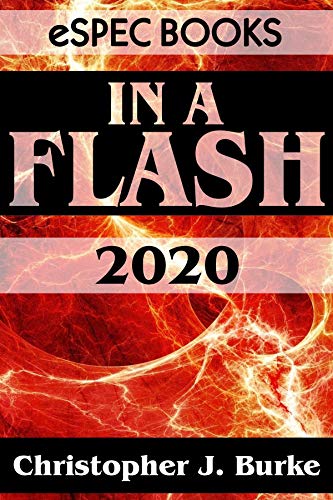
My older books include my Burke's Lore Briefs series and In A Flash 2020.

If you enjoy my books, please consider leaving a rating or review on Amazon or on Good Reads. Thank you!


Wednesday, May 03, 2023

HeliosphereNY 2023 Con Report

This blog isn't dead. I realize that I haven't had a lot of time to devote to it (or to any of my other blogs), but more updates will occur. In the meantime, here is the "after con" report from this past weekend.

HeliosphereNY
Piscataway, NJ

Yes, I get the irony. After the pandemic, the con and the previous hotel parted ways. We moved to Piscatawy for two years, and now it appears that the con will continue to exist here. Luckily I drive because it doesn't seem to be close to public transportation. I could be wrong on this -- I haven't checked.

From Williamsburg, Brooklyn, the trip took about two hours on a Friday afternoon. I had to choose between getting around Manhattan and into the Holland Tunnel, or down the BQE and make it to Staten Island before the expressway got nuts. I can't say I picked wrong, but I might not have picked the quicker of two evils. I made it there just before my first panel started.

I had a busy con this year. I always tell them to put me where they need me, and this year they did. I was on four panels plus I had a reading. So I was scheduled for five things even before I picked discussions that I wanted to sit in on. And then there were signings and launch parties, too. Let me take them all in order, staring with Friday afternoon.

What is Streaming Doing?" It was a "miracle" that I found the Miracle Room. I was the final panelist to arive, and we only had one audience member to start. More arrived after. It was a lively discussion on the problems with programming for streaming. There's a vicious cycle that people won't watch streaming series until a full series has been completed, or worse, people wait until the series is complete. No one wants to invest time in a show that gets cancelled prematurely. The downside to this is that shows don't get ratings right away, so they get cancelled before people even find them.

The Ice Cream Social is always fun because I like ice cream. I had plenty of toppings so I didn't need to go back for seconds. As it turned out, my Pandemic Book Club was meeting at the same time, so I found a quiet corner for my Zoom call.

After that, I missed the later panel because I honestly didn't realize that there were any after the Social. I had a nice time having cocktails and hors d'oeuvres, courtesy of Dr. James Prego, who was a panelist on my earlier panel. A number of peple joined us later, and we called it a night not long afer midnight.

Saturday morning, I had the pool to myself. It was heated. The pool house at the Holiday Inn isn't much to speak of. For one thing, there isn't any furniture to put your stuff down on.

This year, the breakfast buffet was included with the room, so I didn't have to leave to go to IHOP. Standard fare, but the place was a bit crowded because of a tour group which had stayed the night. (There was two buses outside waiting for people.)

Don’t Ruin the Moment! Paying Attention to the Little Things: This was a panel I suggested, but it wasn't the panel I suggested. I wanted to talk about suspension of disbelief, but the wording of the panel description made it sound more like a writing panel than a viewing panel. The writers and editors on the panel ran with this. I had no problem going along with this -- I had plenty of material. I'd been told that there had been a lot of interest in this panel. Given the folks I shared the dias with, I can believe this. It was like an all-star panel and me. (Imposter syndrome anyone?) It was fun and informative. Maybe next year, I'll suggest my panel again and stress the viewing angle. I could even plug my Bored Panda interview.

Jersey Pines Ink (Dina Leacock and Ann Stolinsky) Launch Party: I probably should've used this time to get lunch, but I was curious about the launch party. There were a couple of readings from the new anthology Trees, and there were prizes. Books were giving away, and I had the first choice. Since most of the books were dark fantasy or horror, I gravitated toward the Whodunit anthology. (I noticed that Gordon Litzner was included among the authors, but I didn't get a chance to have him sign it.) My lunch that day consisted of a bit of crudité and some jelly beans.

Making Our Monsters or Finding Them: I sat in this discussion about cryptids, which featured several authors of cryptid novellas, which were part of a line from Systema Paradoxa (from eSpec Books). I need to read a few of these so I can propose one of my own -- and I need to do this before they run out of cryptids. Not likely that they're run out, but the remaining ones aren't as well known.

Reading: I had a reading with two others, which should've mention 20-25 minutes per person. The first reader was ready to stop at 10-15 minutes because it was a good spot, but another author said, "No, you have a lot of time." These readings, at other cons, don't usually run this long. I had a bunch of stories on my iPad, ready to read in a ridiculously large font. I read "The Feast of Groggry the Cronaut" from In A Flash 2020, which is under 2000 words long. The third author was ready to jump in. I said I had a quickie I could read after, which was 1000 words long and had been published in Daily Science Fiction. (This impressed one of the other readers as DSF was a tough market to crack. Sadly, they ceased publishing in 2022.) Anyway, the last story seemed to last a lot longer than mine did, and in fact spanned several chapters. I sat there quietly steaming becasue as an author of flash, I could've easily have read one or two more quick stories. Last year, I read at least 5 stories in did it in under 20 minutes.

Books & Brews, with Charles Gannon: Again, I should've gotten something ot eat, but I discovered a sign-up list for a Books & Brews, which was not on the official schedule. The last time Chuck Gannon was at Heliosphere, a couple years before the pandemic, there were several B & B's going on, and I signed up in advance. After all, he was a Guest of Honor. The funny thing was that he asked more about us than we asked about him. He even remembered me (back then) when he saw me later that night, and recalled that I was trying to get published again after a long dry spell. This time, we had been on a panel together, and I had two books in front of me: my collection of flash stories, In A Flash 2020, and an anthology that I'm in, Devilish & Divine. He was impressed by this and wanted me to tell him about it. And then we got into what's coming in the Caine Riordan universe. He kept spoilers to a minimum because he didn't know how many books we'd each had read. I would've admitted to reading the first 3 if anyone asked, but that would've been slightly bending the truth. I am reading the books now, at least the first three because that's generally my pattern with series.

The eSpec Books Launch Party: I showed up prepared to read, but in the interest of time and because of the raffle to come, they only had readings from authors in books that were launching. (That is, books from the past year, since the last Heliosphere, but particularly the ones that just "Kickstartered".) And there should've been another reading, but one participant had to miss the con for medical reasons.

When that ended, I retrieved my books from my room because there was an autograph session for every author at the con. I don't know how many fans wandered in or if it was mostly authors buying from authors and signing books for other authors. (As it was, there was one person in the room who was in Devilish & Divine whose signature I didn't have yet, but I didn't realize it at the time.) I sold one book. That paid for dinner which I finally took instead of a later panel. A couple hours were spent in a room with a private party afterward.

Evening came and morning followed ...

Breakfast was not as good, but I learned that next year, I need to come back later because they bring out different stuff later. No crossiant, just bread. The toaster was way back at the start of the line along with a couple hard bagels that I could cut through. No pancakes, but waffles showed up later on, as did the bacon. Bacon, good, these waffles, meh. Even later, there was corn-beef hash. I didn't try any. Maybe next year.

Weirdest New Words I Learned in 2023: I didn't know what to expect from this panel, but it was fun. A lot of it dealt with Tik Tok driving words, and unlike in Mean Girls, "influencers" can make words happen. Fellow panelist Lancelot Schaubert has been deconstructing English and learning language in general, so he had a lot of interesting insights to contribute. Amusing aside: when I mentioned that "plumbago" was another word for graphite (courtesy of Jeopardy), he could pull out the etymology of it but wouldn't have realized that it was a word to begin with.) Our moderator, Sarena Strauss, had us (audience included) do a writing exercise with five words or phrases that popped up in the discussion, included "weirorange", coined by Jenifer Rosenberg, meaning the color you see weird you close your eyes tight and rub them.

This is what I wrote: The night sky was illuminated bright shades of weirorange as fireworks exploded in sync with the stridulations of the orchestra. My family was oblivious, kitlepitching their own snarky remarks about my mulkvisti brother who'd just crushed out.

a few definitions: stridulations are the sounds insects make rubbing body parts, kittlepitching is hogging the conversation, crushed out is slang for breaking out of prison (and had I more time, I might've used it figuratively instead of literally), and mulkvisti is a Scandinavian word from an audience member which means the one I don't hate as much as the rest of you.

As interesting as the Wednesday Addams panel might've been (and I was curious about the "audience participation" part), I went to readings from the upcoming book, The Four ______ of the Apocalypse. We got to hear Dany Ackley-McPhail's "Four Lunchladies", Hildy Silverman's "Four Batchelors", and Keith R. A. DeCandido's "Four Septagenarians". It promises to be a great book.

I missed the GoH Interview because I had ...

Fan Fiction as Practice: I dug out my old fanzines for this one, but sadly I shouldn't have bothered. This was the panel that got away, even more than the Disbelief panel. It went off the rails pretty quickly, and any and every attempt to right the train was immediately tipped over again. Basically, it turned into a very long discussion, or rather multiple discussions about the problems of Mary Sues in fan fiction, fiction in general, and original works, and what the actual definition of a Mary Sue actually is, and what the problems of Mary Sues in fan fiction, fiction in general, and original works, and what ... and what the hell happened to the time. It didn't stop until we were over time, so no one got any closing comments. I also didn't get to mention my fanzine, which I was told the first time I tried mentioning my fan writing background, I was told we'd get back to that. We did not. There was also very little talk about "practice" and more about "fixing" the source material, which seems rude when your in someone else's sandbox, but sometimes the sandbox owner took their shovel and went home. And others stopped writing fanfiction because they moved on to writing official licensed material. For my part, I mostly haven't written in the universe of a single show, but in the Car Wars universe, which doesn't have main characters. So I was an odd fit for the panel, even if fan fiction was my practice for writing.

Last panel I attended was Genre Blending ~ You Got Ghosts in My Steampunk!, which seems to be all the rage with anthologies these days, but goes back quite a ways. There was some history of blending genres (a little pendantic at times) and when the moderator was asked if he had any specific questions to discuss, he pulled out a couple of books and read examples. I exclused myself and walked out into the deluge in the parking lot and started home, hoping the lousy weather would keep people off the roads.

Not the greatest end to the weekend, but I did pick up a nice hero for the ride home. Next year, we'll be back in the same hotel, so it seems HeliosphereNY will be in NJ for the forseeable future. Hopefully, I'll have a new book to read from next time around, and I'll have them limit the number of panels I'm on so I can attend others that I might like. One member did apologize for keeping me so busy. But it was okay, I had fun. And I was fed.

Saturday, September 11, 2021

9/11 Twenty Years Later

Twenty years have passed since that fateful morning that changed the world, and I wanted to be sure that I made a note of the date on the blog. I did a check, and I've done exactly one comic, ten years ago for the tenth anniversary, but that was all that was needed. I wasn't going to harp on it and I couldn't make math problems out of it. I didn't want to trivialize it or be morbid about it. So a handful of times, I had a simple entry like this one to wish everyone a Somber September 11th.

What follows below are the comic from 2011, and a post from a few years later, which was actually written in 2005 about my day walking home in Brooklyn with a bunch of strangers, none of whom I ever met again, but we were important to each other in that moment.

(C)Copyright 2011, C. Burke. All rights reserved. Real-world examples shouldn't be overlooked nor forgotten.


As requested (and as promised):

This was originally posted (I think) in 2005. It's been an annual repost since then.

At about 8:40am on that morning, I was walking into the Court building on Adams Street (actually, the Court St. entrance) in Downtown Brooklyn to start serving jury duty. As luck would have it, I had been halfway to the train station before I’d realized that I’d left my Walkman on the kitchen table, so I didn’t bother going back for it. I figured I’d just get a newspaper. Besides, I didn’t know how well I’d be able to pick up AM inside the building anyway.

I sat in a dark room watching a video on How to Be a Good Juror, oblivious to what was going on right across the river. We were told to relax in the room that they have, and I looked out the window at the Marriot Hotel. Traffic on Adams St was snarled, not moving. Must’ve been an accident on the Brooklyn Bridge, I thought. (It was a block away.)

People were standing around outside the hotel. Must be waiting for a tour bus or something. What did I know.

Fire trucks and ambulances started flying by on the wrong side of Adams Street, which had no traffic. Okay, traffic doesn’t come into Brooklyn much in the morning, but something was odd here. I had been facing 180 degrees from where I needed to be looking.

Finally, they had made an announcement. America was at war, under attack. The World Trade Center and the Pentagon had been destroyed. They were trying to get coverage on the TV sets in the jury rooms. I don’t think they succeeded. Even if they wanted to, only CBS would be available because it still broadcast from the Empire State Building.

People were beside themselves, many broke down, everyone was rushing for the payphones. I met a woman who had been listening to her radio. She let me share her earbuds. She was shaken and needed a cigarette. I don’t smoke, but I walked her to the smoking room. (There was one on the floor. Quite a few people were there.)

We were dismissed. Not much was going to get done in the Court building that week. Groups of people huddled outside with questions, comments, gossip and hearsay. Some of the lawyers said they saw it happen. What kind of plane was it?

Does anyone know if the trains are running? What about the buses? No trains. No LIRR. A few buses and they’re all packed. It was time to start walking and no one wanted to walk alone. We walked in groups.

Dust was falling from the sky in downtown Brooklyn like a dirty snow that was covering the cars. Papers fell too. We started walking up Atlantic Avenue. People were wandering around with their cell phones out trying to get a signal. no luck.

We took a turn down Third Avenue. I needed to. I wanted to stop at my mother’s house. It was a good resting point for me. The group I’d tagged along with decided to join me. One guy stopped in a hardware store for masks and passed them out.

When we passed Third St and reached the Gowanus Canal, we had our first real look. It was like a scene out of a bad movie. The skyline was there. But the Towers were missing. Just a terrible column of smoke and a cloud drifting our way.

We didn’t stay long. We kept walking. I made it to my mother’s house and said good-bye to the others. Some were walking all the way to Staten Island. One who had joined our group had walked over the Brooklyn Bridge — after having walked down 50 floors of Tower 1. God was looking out for him.

I watched some of the coverage until the trains were running again. I took one that left me about a mile or so from my inlaws, the meeting place for the rest of the family. I stopped in at St. Athanasius on the way. I hadn’t been there since a wedding about 15-20 years earlier. I stayed for a little while and walked the rest of the way.

Thankfully, my wife, who worked at the foot of the Brooklyn Bridge on the Manhattan side had evacuated immediately before the trains had stopped running.

It’s not a walk that I’ll ever forget.


Mom isn't there anymore and my "resting place" has since been bulldozed, sadly. Just more things to remember about that day.

Saturday, August 08, 2020

Cast of Characters Page

I've started on a Cast of Characters page, a project which I've put off for the longest time.

At one point, I had a wiki page which had a handful of them. That was a decade ago, and it would be long outdated, if a copy existed.

Right now, I haven't even gone through 200 comics. And I have to leave the AntroNumerics for later -- there are too many of them! It seems like an infinite number!!

Anyway, you can have a peek at http://mrburkemath.net/xwhy/characters.html.

Let me know what you think? What should I add? What's missing? (Keep in mind, I haven't gotten that far yet!) But what do you hope to see?

Monday, July 27, 2020

Shameless Plug

(Click on the comic if you can't see the full image.)

(C)Copyright 2020, C. Burke. "AnthroNumerics" is a trademark of Christopher J. Burke and (x, why?).

Looks like they're ready for some kind of ''revoltage''.

You have to hate those Shameless Plugs!!

Speaking of Shameless Plugs: I have a new anthology of flash fiction published by eSpec Books called In A Flash 2020, and it's now available in paperback and as an ebook.

Among the twenty stories is The Feast of Groggry, the Cronaut, which features a time traveler to the future. He does not meet any robots there.

On the other hand, there is a future inhabited by retro sci-fi robots in the tale Revoltage. The robots above, "Tomorrow's Teachers of Tommorrow", were the picture in my mind of the boxy and cylindrical AI robots of the future. I've never given names to these machines, but the AM series came from two sources: I think therefore I AM, of course, and the bandwidth where some of us used to get our music. (I can include my kids in this, thanks to Radio Disney.) As for the model number 388, it's a reference to Comic 388: Recharge, which was their first appearance, back in 2009.


Come back often for more funny math and geeky comics.


Tuesday, July 14, 2020

In A Flash: 2020, by Christopher J. Burke

In A Flash: 2020, by Christopher J. Burke (2020)

Excuse the blatant plug, but if I can't promote my book here, where can I?

Over the past few years (since before In A Flash: 2016, which contains a story of mine), I have been writing flash fiction on and off. Naturally, I've been working toward longer pieces, but there was a market for these. Twenty stories have been collected into this anthology. Note: this book reprints the story from the previous volume.

There are, in total, 20 flash fiction stories that range from fantasy to science fiction to "realism". The Realism is sort of a "catch-all" section gives you horror, noir, and pirates. (Not at the same time.)

$1.99 for the ebook. The paperback is forthcoming.

Amazon: https://www.amazon.com/Flash-2020-Christopher-J-Burke-ebook/dp/B08CWQTYBR

Wednesday, April 08, 2020

HeliosphereNY: Beyond the Corona, Con Report, Part II

Note: Part I of this report appeared Monday, and can be found here.

One of the panels on Friday started off slowly for a few reasons: first, two of the panelists hadn't shown; second, no moderator had been chosen in advance and it didn't appear that either panelist was particularly interested in leading the discussion; and, third, it didn't seem like they had much to say. Basically, they seemed unprepared. Now I know this con was put together quickly, but people were only put on panels that they had shown interest in a month earlier when preparing for the full-scale, on-site convention.

However, this post isn't meant to gripe about any particular panel. What happened, happened, and it told me one thing. Specifically, I needed to be prepared for my panel.

To this end, on Saturday, I sat down with a notebook and mind dumped whatever came into my head about the topic of Serial Vs. Episodic.

I managed to fill an entire page. As luck would have it, I barely had reason to look at it. A few points were fresh in my mind, and the rest didn't matter because of the directions the hour moved.

On the other hand, I still had some thoughts and opinions on the matter. So I'm going to jot them down here. If it's not a topic of interest to you, you might want to back out now. There is no seconfary topics afterward.

Okay, then.

First and foremost, I miss episodic TV. Everything is going serial, and that's not necessarily a good thing. Don't get me wrong: there are good serials out there, and I even enjoy a few of them. But there are so many on cable. And if you don't know about them early enough, you're likely going to just skip it and wait for it on a streaming service.

Episodic TV will never go away, as long as we have sitcoms, and independent stations have schedules that need filling with syndicated programming. If it's evening and you want to relax, but you don't want to start something, what are you going to do? Scroll through the programming guide until you hit Friends or Frasier or Big Bang Theory or Golden Girls. Maybe your tastes from more toward drama and some variation of Law & Order or C.S.I.. You have a story with a start and a finish, and you can switch it off. (Or watch another if you're up for it!)

With serials, it's all or nothing. You're not going to tune into whichever episode is on tonight -- not even if it's a rerun of an episode you've already seen. Out of context, the show loses something. Generally speaking, for me, most of these shows lose something in the retelling. For me, it's one and done. I rarely rewatch them.

In fact, when some of these 10-12 episode series come back after 9 months off the air, my viewing schedule is probably to busy to binge the previous season, to refresh my memory of the characters and the plotlines. Especially if it's going to remind me that nothing of substance happened for nine episodes, so that everything could come to a head in the final episode -- AND THEN there was a cliffhanger anyway! And the "entire season is one story" went right out the window.

This happens in longer, network series as well, when they hire one villain for the season. You know that they will fail to catch them, week after week, until the finale. Some of the show needs to be about something else.

This isn't to say that a show can't have seasonal themes, multi-episode arcs, and character growth. It's not the 60s anymore, so the reset button doesn't need to be hit at the end of every single episode. But have some part of the story start on one show and finish on the same show. And don't undo it the following week.

I had a note in the margin about Marvel's Agents of SHIELD, which had a good season where they went through three story arcs, even doing a callback to the first (Ghost Rider) in the third. There was some good storytelling that year.

By contrast, you have shows like Marvel's Jessica Jones and The Runaways. I thought Jessica Jones was a great show, but the first season got a little formulaic in the middle episodes. Jessica wants to catch Kilgrave, but she won't kill him. Because of this, he continually manipulates her, putting her into situations where she has to let him go so she can save someone else. (Now, okay, a hero won't let the innocent person die in order to catch the villain, but she seems to put herself into that kind of situation, repeatedly.) This problem was compoundd by the person she saved being killed anyway in a later episode, so nothing she did actually mattered. (Then again, that might've been the point that they were trying to hit home. In which case, message received.)

The Runaways is a show I only recently encountered. I'd heard about it, and knew it was somehow comic-related, which knowing anything about the comic. Had it been on the CW or Fox, running for 20 episodes, the first season would've been better. For one thing, so much of the first season could have (and should have) been dealt with in THREE episodes, not ten. And without trying to spoil things, everything again builds up all-eggs-in-one-basket for the finale ... and it ends on a cliffhanger anyways, with the story unresolved.

(Side note: cf Arrow, season 1.)

One of the "probelms" people sight about 22-24 episode shows is that they run out of material, and there's always *that one* episode, every year. Funny thing is, "THAT" episode will be the one that everyone remembers, either because they love it, or they love to hate it. That said, I'll acknowledge that stretching The Prisoner from six to 17 episodes caused a clunker or two.

I'm rambling now, but I covered most of the points I was ready to make, should they come up.

But here's a final note: I grew up watching cartoons, rerun endlessly, and we had no problem watching them again and again. Speed Racer could be repeated viewing forever. On the other hand, when Star Blazers came out, it was something totally new. And then, the second season came on with the the Comet Empire. And then ... it started showing the first season again, and my friends were like, "we already saw this." Not that the handful of us affect the ratings much, but the show was taken off the air withing weeks of starting reruns. Fans didn't need to watch the entire serial again. But maybe another episode of Gilligan's Island ...

Monday, April 06, 2020

HeliosphereNY: Beyond the Corona, Con Report, Part I

Long-time readers and followers may know that I enjoy going to science fiction conventions, and they may also know that I tend to go to one of them per year as my weekend away. I'm not talking about Comic-Con, which is a bit "too much" for me -- all hype and promotion. No, I mean a smaller con, located a little (but not much) farther away, where I spend the weekend.

In the past, that was Lunacon, which has fallen into the annals (or "annuals"?) of sci-fi history. Now, there is it's pseudo-replacement, HeliosphereNY, held in the spring in Tarrytown, NY (a stone's throw from Sleepy Hollow). This past weekend was supposed to be my weekend away, but, like everything else in the country right now, it was cancelled.

However, you can't keep sci-fi fans down for long. They were like, Let's Go! It was On with the Con!

HeliosphereNY held a virtual convention online. I was impressed that it came together so quickly, and that it ran as smoothly as it did considering they didn't even know if they would have panelists.

A couple of things led to its success: first, much of the programming work had already been done. It was just a matter of finding panelists who were available and scheduling some of talks which they had expressed interest in.

Second, and this is the biggie, I have to send kudos to the Filk community. I'm not a filker, and I don't spend much time in the filk room, listening to their concerts or open singing. But they are a very organized group, a close-knit one, a society unto their own. And they had an entire slate of performers ready to fill one track of programming. I don't think there was a point during the weekend where there wasn't some concert or other going on, even when there were no discussion panels.

Side note, here: A number of years ago, at one of the last Lunacons, the filkers wanted to invite Leslie Fish, a well-known filker on the West Coast, to the con. However, they needed to raise money to bring her to NY. So they started an indiegogo campaign. I donated to that fundraiser, without asking for any reward, for the simple reason that I wanted it to succeed. Not because I wanted to hear the concert, but because if it did succeed (which it did), that meant it could be used as a viable route for other guests (or events) in the future. (Which didn't happen, alas.)

Back to the weekend: Friday night was a little touch and go. The participants had to accustom themselves to using zoom, and the moderators and administrators had to deal with "zoom boomers" who came in to disrupt. The convention was free, and word was put out online in places where people ho might attend generally congregate. This also brought out the wackos. Despite the waiting room feature, people slipped in and had their little fun. As a results, for many of the panels, the microphones had to be turned off for all participates but the panelists. There was a chat window for questions. Thankfully, I didn't encounter anything rude or lewd on video.

For me, Friday was a mixed bag. One panel had no moderator and it seemed to lack direction, like the panelists weren't sure what they would talk about even after it started. The Horror panel, which featured readings, was going well, but was getting "bombed". Unfortunately, I was a casualty of that, as the incorrect person who removed from the room. (I got sincere apologies from the admin and the panelist after that one. No hard feelings.)

The "big" panel for me on Saturday was "I Wrote a Thing, Now What?", with advice from writers/editors on what to do, and what not to do. And a reminder that I need to write another story for another shot at another anthology, even though it may not get funded. Sadly, given this downturn, people are watching more TV, but reading less. Book sales are down. Even audio books, but they mostly sold to people driving to work. Notable about this (for me) was that Alex Shvartsman and Ian Randal Strock were both panelists. I was on two panels at HeliosphereNY 2019, and I sat next to both of them, one at each panel.

I was on two panels this year as well, both on Sunday. The first was Episodic or Serial, and I seemed to be the lone voice of dissent. It was the opinion of the panel that serial is the way TV is going now. Actually, I didn't disagree with that, but I wasn't enthused that this is where we're heading. I miss episodic TV, and many people at home in the evening, will flip on a half-hour sitcom and just enjoy. I think the other panelists agreed with me here. I'll have more to say about this panel in Part II of this report.

The second panel was "Privacy in the Information Age". I volunteered for this one because I thought it an interesting topic. I used to work programming computers, and now I use them in education. I signed up before the teaching world was turned upside down. This panel came along at the right time. Speaking of time, it was probably the best-attended Sunday 3pm panel that I've ever been to. Shoutout to Joseph R. Kennedy for stepping up and leading the discussion with lots of information and stories at his disposal. Most of my contributions were anecdotal, but the three panelists had a good hour.

Not much to gripe about during the Gripe session, and I even stopped in for a while during the Dead Dog filk.

Overwhelming approval by the organizers, presenters, and participants. We thought it great, and would love to do it again. However ... we'd all rather just be there in person next year. So here's hoping for 2021!

Tuesday, March 13, 2018

Putting the Science (& History!) in Science Fiction Convention: Heliosphere NY

As longtime readers of this blog may know, I generally go away for one science fiction convention weekend per year. For the past two years (last one in this one), that convention is Heliosphere, a new convention held in Tarrytown, NY, right off the Hudson River and the Tappan Zee Bridge, and just a stone's throw from Sleepy Hallow.

Heliosphere is a small con, but growing. It's not one of the big flashy events with all the media guests. It has writers and editors in attendance, and they'll happily offer advice along with telling you of their latest projects.

Unlike the inaugural outing last year, I was not a panelist or program participant this time around. I was a plain old fan, with no commitments, free to go where I wanted. (That also make this review a tad more independent, I guess.) And there was pretty to do.

For the science fan, there were panels devoted to the mechanics of sci-fi, including a Sunday morning discussion on Quantum Mechanics, and their applications in real life.

But the big draw would be for the History buffs (and the Alternate History buffs), because the con hosted a 1632 Mini-con, based on the works of, and the world created, by Guest of Honor. In this alternate timeline, a piece of land that included the fictional town of Grantville, West Virginia, was transported in time and space to Germany in 1632, in the middle of the Thirty Years War. The residents had to adapt to their new home and survive hostile encounters. Their "future" tech is helpful to a point, but they have to start an industrial revolution of their own even as they form their own United States over a century early.

A fun panel on Friday consisted of the "Weird Tech" that they could create based on the knowledge they brought with them and the raw materials on hand.

The Gaming room was a good place to pass some time, although I didn't play too much. Personally, I don't want to start a game that'll pull me in for a couple of hours when there are other things going on. Card games and word games usually work best for me -- but those can fool you, too, so be wary!

Another highlight is the popular Books & Brews panels, where the "brew" is coffee. I had signed up in advance to sit in with a group with another Guest of Honor, Dr. Charles E. Gannon, author of the Caine Riordan series of novels, as well as some entries in the 1632 series. Rather than took about his own work, Gannon quite eagerly chose to speak to the attendees about their writing, as nearly everyone at the table had done some kind of writing, or was at least trying. He sympathized with my comment that most of my writing credits happened in a different century.

What made this a highlight was running into Dr. Gannon again, later in the evening, at one of the parties. He came up to me, and asked me about my writing, and where I wanted it to go. If he hadn't had a fan before, well, he sealed the deal here. The guy's for real. (And now I have to make sure I have something written and submitted -- and accepted?? -- if I encounter him again next year.)

I've already registered for next year, April 5-7, 2019. Guests to be announced. More information can be found on their website: http://www.heliosphereny.org/

Tuesday, March 15, 2016

My Panel Schedule at Lunacon 2016


It's that time of year again, when I usually go to Lunacon, New York's longest-running science fiction convention, and then blog about my trip!

I say "Usually" because: a) I don't always blog about it, and b) last year, there was no Lunacon because of reorganization (to put it kindly). Part of that reorganization saw me getting involved with the con that I've enjoyed for a quarter-century now. And that meant eventually volunteering for something, some committee or other. Well, they also needed people to appear on the panels. I've had others (not committee members) suggest to me that I should, and I've been reluctant to. Who, me?

Well, this year, I volunteered. I have to remind myself sometimes that I am, in fact, a published author, even if I'm not as prolific as those I usually go to see. Hey, at least my bio won't be boring.

In case anyone can make it to Rye Brook this weekend, here is my schedule (barring the unforeseen):

  • Fan Interest Welcome! Is this your first Lunacon? Bartell, Fri 5:00 PM
  • Literary Travelling in time Westchester Ballroom D4, Sat 10:00 AM Edit: Maybe not
  • Comics Happy Anniversary Captain Marvel Bartell, Sat 1:00 PM
  • Literary Natural History of Barsoom? Westchester Ballroom A2, Sat 2:00 PM
  • Media TV Shows you love even after cancellation. Birch, Sat 5:00 PM Edit: Maybe not

No "web comics" panel, but there is always the option to "make your own panel". Maybe on Sunday morning, since Saturday is so crazy. We could call it Webcomics for Fun and ... Well, Just Fun, Really.

If I'm not mistaken "Westchester Ballroom D4" has been part of the Dealers Room for the past bunch of years. I don't remember that designation for any panels. That would mean that they've shaken things up a bit, or at least rearranged things.

But Change is Good! (Like volunteering after all these years!)

EDIT: It turns out that I misunderstood my email because of the way it was formatted. It listed a couple that I was interested in, but was not included in. I didn't realize this until I viewed the program. I doubt I'm needed as an alternate -- both of those panels have 4 or 5 panels on them already.

Sunday, February 21, 2016

January 2016 Geometry (not Common Core) Regents, Part 2

Below are the questions with answers and explanations for Part 2 of the New York State Geometry Regents (not Common Core) exam for January 2016. Part I questions appeared in here.

Part II

29. The sides of a triangle measure 7, 4, and 9. If the longest side of a similar triangle measures 36, determine and state the length of the shortest side of this triangle.

The triangles are similar so the sides are proportional. Write a proportion:
4 / 9 = x / 36
9x = (4)(36)
9x = 144
x = 16. The shortest side of the triangle is 16.

Or, you can state that 36/9 = 4. The Scale factor is 4. Therefore the shortest side is 4 * 4 = 16.

30. Triangle ABC has coordinates A(6, -4), B(0,2), and C(6,2). On the set of axes below, graph and label triangle A'B'C', the image of triangle ABC after a dilation of 1/2.

Graph the points A'(3, -2), B'(0, 1), C'(3, 1) and draw the lines. Don't forget to label the points.

31. In parallelogram RSTU, m<R = 5x - 2 and m<S = 3x + 10. Determine and state the value of x.

R and S are consecutive angles in a parallelogram, so they are supplementary.
Therefore, 5x - 2 + 3x + 10 = 180
8x + 8 = 180
8x = 172
x = 22

If you set them equal to each other, that would be a conceptual error. You would have lost one point for that. You could get one point if your answer is consistent with the error.

32. Determine and state the length of a line segment whose endpoints are (6,4) and (-9, -4).

Use the Distance Formula, or Pythagorean Theorem.
Sqrt ( (-9-6)2 + (-4-4)2) =
Sqrt ( (-15)2 + (-8)2) =
Sqrt ( 225 + 64 ) =
sqrt ( 289 ) = 17.

If you figured that the change in x was 15 and change in y was 8, you could have used Pythagroean Theorem to get 17, also.

33. The base of a right pentagonal prism has an area of 20 square inches. If the prism has an altitude of 8 inches, determine and state the volume of the prism, in cubic inches.

V = Area of Base * Height = 20 * 8 = 160.
That seems like the easiest two points you'll get. I reread it three times thinking I missed something.

34. Using a compass and a straightedge, construct the bisector of <CDE. [Leave all construction marks.]

Construction coming soon. They aren't easy to do on the computer.

Steps: 1. From D make an arc that intersects DE and DC.
2. From the point you made on ED, make an arc inside the pentagon.
3. From the point you made on DC, make another arc the same size as the last one so that they overlap.
4. With the straightedge, draw the angle bisector from point D to the point where the two arcs intersected.

Thursday, February 18, 2016

January 2016 Geometry (not Common Core) Regents, Part 1

Below are the questions with answers and explanations for Part 1 of the New York State Geometry Regents (not Common Core) exam for January 2016.

Part I

1. What is the equation of a circle with its center at (5,-2) and a radius of 3?

(2) (x - 5)2 + (y + 2)2 = 9. Flip the signs on (h, k) and square the radius.

2. In the diagram below, <ABC is inscribed in circle 0.


The ratio of the measure of <ABC to the measure of arc AC is

(2) 1:2. The ratio of the inscribed angle to the arc it intercepts is 1:2. In other words, the arc is twice the size of the inscribed angle.

3. In the diagram below of rectangle RSTU, diagonals RT and SU intersect at 0.


If RT = 6x + 4 and SO = 7x - 6, what is the length of US?

(3) 16. The diagonals of a rectangle are congruent so RT = US. The diagonals of a rectangle also bisect each other, so the length of UO = SO, and US = 2(SO). So US = 14x - 12.

14x - 12 = 6x + 4
8x = 16
x = 2
US = 14(2) - 12 = 28 - 12 = 16

4. How many points are 3 units from the origin and also equidistant from both the x-axis and y-axis?

(4) 4. Three units away from the origin is a circle. Equidistant from the x-axis and y-axis are two diagonal lines (y = x and y = -x). The circle intersects each line twice. Four points.

5. The converse of the statement "If a triangle has one right angle, the triangle has two acute angles" is

(1) If a triangle has two acute angles, the triangle has one right angle. Note that the converse does not have the same Truth value as the statement.

6. The surface area of a sphere is 2304(pi) square inches. The length of a radius of the sphere, in inches, is

(2) 24. The formula for the Surface Area of a sphere is 4(pi)r2 = 2304(pi). Dividing by 4 gives you 576. Take the square root, and the radius is 24.

7. As shown in the diagram below of triangle ABC, BC is extended through D, m<A = 70, and m<ACD = 115.


Which statement is true?

(4) AC < AB. Angle ACB is 65o and angle B is 45o. So AC < AB < BC

8. In trapezoid LMNO below, median PQ is drawn.
If LM = x + 7, ON = 3x + 11, and PQ = 25, what is the value of x?

(3) 8. The length of the median of a trapezoid is half the sum of the base heights. That is, it's is the average of the length of the two bases. So x + 7 + 3x + 11 = 25 * 2.
4x + 18 = 50
4x = 32
x = 8. The three lines would be 15, 25 and 35.

9. Points A and B are on line L. How many points are 3 units from line L and also equidistant from A and B?

(2) 2. Second Locus question. Equidistant from line L are two lines parallel to L. Equidistant to points A and B is the perpendicular bisector of AB, which will intersect each of the two parallel lines.

10. The lines whose equations are 2x + 3y = 4 and y = mx + 6 will be perpendicular when m is

(3) 3/2. The slope of the perpendicular line is the inverse reciprocal of the first line. Subtract 2x from both sides and divide by three, and the slope of the first line is -2/3. The inverse reciprocal is 3/2.

11. As shown in the diagram below, M, R, and T are midpoints of the sides of triangle ABC.


If AB = 18, AC 14, and BC 10, what is the perimeter of quadrilateral ACRM?

(1) 35. MR is a midsegment, so it is parallel to AC and half of its size. AM is 9, AC is 14, CR is 5 and RM is 7. Add 9 + 14 + 5 + 7 = 35.

12. In the diagram below, ABC || DEFG. Transversal BHE and line segment HF are drawn.


If m<HFG = 130 and m<EHF = 70, what is m<ABE?

(3) 60. Angle HFG is an exterior angle to triangle EFH. Angles EHF and HEF are remote angles with a sum of 130 degrees. Angle EHF = 70, so HEF = 60. Angle ABE and HEF are alternate interior angles, so they are congruent.

13. The graphs of the lines represented by the equations y = (1/3)x + 7 and y = -(1/3)x - 2 are

(4) intersecting, but not perpendicular. Second question about the slopes of perpendicular lines. The product of (1/3) and (-1/3) is NOT -1, so they are not perpendicular.

14. Which graph represents a circle whose equation is (x + 3)2 + (y - 1)2 = 4?

(1). The circle with the center at (-3, 1) with a radius of 2. Second question about the equation of a circle.

15. In triangle ABC, m<CAB = 2x and m<ACB = x + 30. If AB is extended through point B to point D, m<CBD = 5x - 50. What is the value of x?

(3) 40. Make a diagram if it helps. Angles CAB and ACB are remote angles to exterior angle CBD. So the sum of 2x + x + 30 = 5x - 50.
3x + 30 = 5x - 50
80 = 2x
40 = x.
The angles of ABC are 80, 70 and 30. The exterior angle is 150.

16. In circle O shown below, chord AB and diameter CD are parallel, and chords AD and BC intersect at point E.


Which statement is false

(2) BE = CE. The two triangles, ABE and CDE, will be similar but not congruent, so point E is NOT the midpoint of BC. If you draw in AC and BD, you will have an isosceles trapezoid. The diagonals of an isosceles trapezoid do NOT bisect each other.

17. When the transformation T(2,-1) is performed on point A, its image is point A'(-3,4). What are the coordinates of A?
(2) (-5, 5). (-5 + 2 = -3, 5 - 1 = 4).

18. If the sum of the interior angles of a polygon is 1440°, then the polygon must be

(2) a decagon. I should go as far as to say that you should recognize the number if you did any of these problems, but I'll explain anyway. The formula is (n - 2) * 180 = 1440, so n - 2 = 8, n = 10. Ten sides is a decagon. If you didn't remember the formula, you could have started with a triangle and kept adding 180 degrees until you hit 1440.

19. In triangle ABC shown below, medians AD, BE, and CF intersect at point R.


If CR = 24 and R F= 2x - 6, what is the value of x?

(1) 9. Medians meet at the centroid, and the distance from the angle to the centroid is twice the distance from the centroid to the midpoint of the opposite side.
CR is twice the size of RF, so 2x - 6 = 12. Then 2x = 18 and x = 9.

20. Which equation represents a line that passes through the point (-2,6) and is parallel to the line whose equation is 3x - 4y = 6?

(3) -3x + 4y = 30. Parallel lines have the same slope. The slope of each line is 3/4.
-3(-2) + 4(6) = 6 + 24 = 30. Check. (Note that choice (3) was the only possibility based on slope alone, but it's a good idea to check the point anyway. Just in case.)

21. The bases of a right prism are triangles in which triangle MNP = triangle RST. If MP = 9, MR = 18, and MN = 12, what is the length of NS?

(4) 18. I had to read that one twice to see if this was a trick question. But that depends on what you think is a trick question. If it is a prism, then the bases are parallel to each other. That makes MR, NS and PT are the same size, which is 12. If you set up ratios or tried the Pythagorean Theorem, you were incorrect.

22. Triangle ABC has the coordinates A(3,0), B(3,8), and C(6,6). If triangle ABC is reflected over the line y = x, which statement is true about the image of triangle ABC?

(1) One point remains fixed. If you reflect it over y = x, the point (6, 6) will remain at (6, 6) because it is on the line y = x. (e.g., 6 = 6) The size remains the same. The orientation changes. And the final statement, besides not being true, has nothing to do with the image or the reflection.

23. A right circular cone has a diameter of 10(sqrt(2)) and a height of 12. What is the volume of the cone in terms of pi?

(1) 200 pi. The volume is (1/3)(pi)r2h = (1/3)(pi)(5(sqrt(2))(12) = 200 pi.
Choice (2) is if you forgot the (1/3). Choices (3) and (4) if you forgot to halve the diameter before squaring.

24. Which statement is not always true when triangle ABC = triangle XYZ?

(2) CA = XY. If you didn't get this one correct, it might be because your teacher wasn't careful enough in examples. Or because you didn't pay attention the time they mentioned that when written properly, each letter, in order, should correspond. So A to X, B to Y, C to Z.

25. If two sides of a triangle have lengths of (1/4) and (1/5), which fraction can not be the length of the third side?

(4) 1/2. The third side cannot be bigger than 1/4 + 1/5 nor smaller than 1/4 - 1/5. One half is greater than 9/20. Also, 1/2 = 1/4 + 1/4 which is bigger than 1/4 + 1/5.

26. In the diagram below of triangle ABC, CDA, CEB, DE || AB, DE = 4, AB = 10, CD = x, and DA = x + 3.


What is the value of x?

(4) 6. Set-up the proportion CD/DE = CA/AB
x / 4 = (2x + 3) / 10. (Don't forget to add x and x + 3.)
10x = 8x +12
2x = 12
x = 6.

27. Given: AE bisects BD at C
AB and DE are drawn
<ABC = <EDC


Which statement is needed to prove ABC = EDC using ASA?

(3) <BCA = <DCE. You are given a pair of angles. The bisecting gives the included side. The two vertical angles are the other pair of angles.

28. In the construction shown below, CD is drawn.


In triangle ABC, CD is the

(2) median to side AB. From the marks, a perpendicular bisector of AB was constructed. Point D is therefore the midpoint of AB, making CD the median.

End of Part I.

Tuesday, February 09, 2016

January 2016 New York Geometry (Common Core) Parts 3 and 4

Below are the questions with answers and explanations for Parts 3 and 4 of the Geometry (Common Core) Regents exam for January 2016. Part I questions appeared in a here. Part II questions appeared in a Here.

Part III

Question 32 was answered in the post for Part II. It is reprinted here because it was actually a Part III question.

32. The aspect ratio (the ratio of screen width to height) of a rectangular flat-screen television I s16:9. The length of the diagonal of the screen is the television’s screen size. Determine and state, to the nearest inch, the screen size (diagonal) of this flat-screen television with a screen height of 20.6 inches.

This can be solved using ratios and Pythagorean Theorem, or by using Trigonometric Ratios.

First, set up a proportion 16/9 = x/20.6 and cross-multiply.
9x = 329.6, x = 36.6
20.62 + 36.62 = c2
424.36 + 1339.56 = c2
1763.02 = c2
C = 41.999 = 42 inches

Second, the ratio 16:9 represents the opposite over the adjacent, which is the tangent of the top angle of the set. So tan(y) = 16/9 and y = tan-1(16/9) = 60.64 degrees.

Using the adjacent and the hypotenuse and cosine, we get the following:
cos(60.64) = 20.6/x, so x = 9/cos(60.64) = 42.0155… = 42 inches.

33. Given the theorem, "The sum of the the measures of the interior angles of a triangle is 180o," complete the proof for this theorem.


Fill in the missing reasons below.

This problem caused students a bit of trouble. First, many students had no idea what to write as a reason for Statement (2). What they wrote might have been a correct statement, but not a correct reason for the statement that was made. There is a difference between the two.

Another problem is that many students gave the reason that "The sum of the angles of a triangle is 180 degrees." While this is a true statement, it cannot be used as a Reason when that is exactly what you are trying to prove!

Most of the papers I graded score only 2 of the 4 points. (One point for each correct reason. "Given" was preprinted.)

(1) Triangle ABC. Given
(2) Through point C, draw DCE parallel to AB. Through any line and a point not on the line, there is exactly one line passing through that point parallel to the line.
(3)m<l = m<ACD, m<3 = m<BCE When two parallel lines are cut by a transversal, alternate interior angles are congruent.
(4) m<ACD + m<2 + m<BCE = 180° The sum of angles creating a straight line is 180 degrees.
(5) mLl + mL2 + mL3 = 180° Substitution Property

I saw many students who didn't label angles as "alternate interior", leaving out one word or the other. And a number of them mentioned supplementary angles in statement (4), but "supplementary" applies to two angles, not three.

34. Triangle XYZ is shown below. Using a compass and straightedge, on the line below, construct and label triangle ABC, such that triangle ABC = triangle XYZ. [Leave all construction marks.]
Based on your construction, state the theorem that justifies why triangle ABC is congruent to triangle XYZ.

Sorry, but I can't illustrate constructions very well. I promise to get back to it.

Simple steps: From point X, measure the distance to Y. On the line, make point A and mark the distance to with an arc, and label where the arc intersects the line as B. Go back to X and measure the distance to Z. Go to X and make another arc. Go back to Y and measure the length to Z. Put the compass on B and make an arc. Where the two arcs intercept, label that point C. Using the straightedge, make lines AC and BC. The theorem used was SSS.

Note: It is possible that you could have used SAS to create the triangles. Whichever theorem you stated, the construction marks had to match it to get full credit.

You also could have gotten 1 point for saying SSS, SAS, or ASA without any construction at all.

Part IV

35. Given: Parallelogram ANDR with AW and DE bisecting NWD and REA at points W and E, respectively


Prove that triangle ANW = triangle DRE.
Prove that quadrilateral AWDE is a parallelogram.

There are many variations of this proof which will be acceptable. When using SAS to prove two triangles congruent, be sure that you have included statements regarding the two pairs of sides and the included pairs of angles.

(1) Parallelogram ANDR with AW and DE bisecting NWD and REA. Given
(2) AE = RE and DW = NW Definition of segment bisector.
(3) RA = DN and RD = NA Opposite sides of a parallelogram are congruent.
(4) RE = NW Halves of congruent segments are congruent.
(5) Angle R = Angle N Opposite angles of a parallelogram are congruent.
(6) Triangle DRE = Triangle ANW SAS
(7)ED = WA CPCTC
(8)AE = DW Halves of congruent segments are congruent.
(9) AWDE is a parallelogram If both pairs of opposite sides of a quadrilateral are congruent, then the quadrilateral is a parallelogram

Parallelograms have many properties that apply only to them. Proving any of those would be sufficient proof that AWDE was a parallelogram.

36. Cathy wants to determine the height of the flagpole shown in the diagram below. She uses a survey instrument to measure the angle of elevation to the top of the flagpole, and determines it to be 34.9°. She walks 8 meters closer and determines the new measure of the angle of elevation to be 52.8°. At each measurement, the survey instrument is 1.7 meters above the ground.


Determine and state, to the nearest tenth of a meter, the height of the flagpole.

Personally, I hate problems that force you to add 1.7 meters at the end for no good reason. It's just an added step for people to forget about and lose a point.

One also wonder why Cathy didn't walk to the pole and measure that distance rather than walking an extra 8 meters away from it. But this is the problem we are given.

We are looking for the height of the pole. That is the opposite side to both angles. We have some information about the distance along the ground. That is the adjacent side to the angles. We have no information about the hypotenuse, nor are we looking for it.

Opposite and adjacent means that we are using tangent.

Let h be the height and x be the distance along the ground to the first measurement.
tan 52.8 = h / x
so h = x (tan 52.8)
And tan 34.9 = h / (x + 8)
so h = (x + 8)(tan 34.9)
This means that x (tan 52.8) = (x + 8)(tan 34.9). We need to isolate x.
Distribute: x (tan 52.8) = x (tan 34.9) + 8(tan 34.9)
Subtract: x (tan 52.8) - x (tan 34.9) = 8(tan 34.9)
Factor: x (tan 52.8 - tan 34.9) = 8(tan 34.9)
Divide: x = 8(tan 34.9) / (tan 52.8 - tan 34.9)
Calculate: x = 9.00371 = 9 meters
Use x to get h:
h = 9.00371(tan 52.8) = 11.8619
And the height of the survey instrument: 11.86 + 1.7 = 13.56 = 13.6 meters.

An amazing amount of work, but it was worth 6 points.
You lost credit if you forgot the 1.7 meters, used the wrong functions, or rounded in the middle of the problem so that your answer didn't round to 13.6

Oddly, if you multiplied 1.7 * 8 you get EXACTLY 13.6. If you wrote 13.6 with NO WORK WHATSOEVER, you got one point. If you wrote 1.7 * 8 = 13.6, you got ZERO POINTS for a totally incorrect response or a correct response found through a totally incorrect method. Those are the breaks.

END OF PART IV.

How did you do?

Monday, February 08, 2016

January 2016 New York Geometry (Common Core) Part 1

Sorry for the delays. These things happen.

Below are the questions with answers and explanations for Part 1 the Geometry (Common Core) Regents exam for January 2016. Part II questions appeared in a another post.

Part I

1. William is drawing pictures of cross sections of the right circular cone below. (image omitted)
Which drawing can not be a cross section of a cone?

(1) the square. You can make a slice through that cone and get an oval (or circle), a semicircle with a diameter on the bottom or even triangle if you split it vertically. You can't get a square.

2. An equation of a line perpendicular to the line represented by the equation y = -(1/2)x - 5 and passing through (6, -4) is

(4) y = 2x - 16. A line perpendicular to a line with a slope of -1/2 would have a slope of 2, so (1) and (2) are out. If you plug in 6 for x, -4 = 2(6) + b, b = -16.

3. In parallelogram QRST shown below, diagonal TR is drawn, U and V are points on TS and QR, respectively, and UV intersects TR at W.


If m<S = 60°, m<SRT = 83°, and m<TWU = 35°, what is m< WVQ?

(3) 72°. Look at quadrilateral QTWV, which has 360°. Angle Q = S = 60. Angle QTV = SRT = 83. Angle TWV = 180 - TWU = 180 - 35 = 145. 60 + 83 + 145 = 288. 360 = 288 = 72°.

4. A fish tank in the shape of a rectangular prism has dimensions of 14 inches, 16 inches, and 10 inches. The tank contains 1680 cubic inches of water. What percent of the fish tank is empty?

(2) 25. The volume of the tank is 14 * 16 * 10 = 2240. 2240 - 1680 = 560 gallons empty. 560 / 2240 = .25 = 25%

5. Which transformation would result in the perimeter of a triangle being different from the perimeter of its image?

(3) (x,y)--> (4x,4y). A dilation would change the distance between the vertices, and therefore the perimeter. Reflections and translations do not affect the size, so the image would have the same perimeter.

6. In the diagram below, FE bisects AC at B, and GE bisects BD at C.


Which statement is always true?

(1) AB = DC. Because of bisecting AB = BC and BC = CD. Therefore, AB = CD. We have no information about where points F or G are, so you cannot make any assumptions about those lines being bisected or the segments being equal.

7. As shown in the diagram below, a regular pyramid has a square base whose side measures 6 inches. (image omitted)
If the altitude of the pyramid measures 12 inches, its volume, in cubic inches, is

(2) 144. The Volume is (1/3)(Area of the Base)(height) = (1/3)(6 * 6)(12) = (12)(12) = 144.

8. Triangle ABC and triangle DEF are graphed on the set of axes below.


Which sequence of transformations maps triangle ABC onto triangle DEF?

(1) a reflection over the x-axis followed by a reflection over the y-axis. It is also a 180 degree rotation about the origin, but it would NOT be followed by a reflection in y = x.

9. In triangle ABC, the complement of <B is <A. Which statement is always true?

(4) sin <A =cos <B. The sine of one complementary angle is the cosine of the other in a right triangle. The side opposite angle A will be adjacent to angle B.

10. A line that passes through the points whose coordinates are (1,1) and (5,7) is dilated by a scale factor of 3 and centered at the origin. The image of the line

(2) is parallel to the original line. As long as the line does not go through the origin, its dilation will be a parallel line (having the same slope). If the line went through the origin, it would be the same line. The slope of the line is 6/4 = 3/2. The line y = 3/2x does not go through (1, 1), so the line being dilated does not go through the origin.

11. Quadrilateral ABCD is graphed on the set of axes below.


When ABCD is rotated 90° in a counterclockwise direction about the origin, its image is quadrilateral A' B 'C 'D'. Is distance preserved under this rotation, and which coordinates are correct for the given vertex?

(4) yes and B'(-3,4) . Yes, distance is preserved, (1) and (2) are eliminated. A(-2, 6) will move to A'(-6, -2). Choice (3) would have been correct for a clockwise rotation.

12. In the diagram below of circle 0, the area of the shaded sector LOM is 2(pi) cm2.


If the length of NL is 6 cm, what is m<N?

(3) 40°. The diameter is 6 cm, so the radius is 3 cm. That makes the Area of the entire circle = (pi)(3)2 = 9pi.
if the shaded sector is 2pi, then that sector and that arc is 2/9 of the circle, which is 2/9(360) = 80 degrees. Angle N is an inscribed angle that intercepts arc LM, so it is half of 80 degrees, or 40 degrees.

13. In the diagram below, triangle ABC ~ triangle DEF.


If AB = 6 and AC = 8, which statement will justify similarity by SAS?

(1) DE = 9, DF = 12, and <A = <D. Angles A and D are the included angles, so (3) and (4) are eliminated. 6/8 = .75 and 9/12 = .75, so they are proportional.

14. The diameter of a basketball is approximately 9.5 inches and the diameter of a tennis ball is approximately 2.5 inches. The volume of the basketball is about how many times greater than the volume of the tennis ball?

(3) 55. The radius of the basketball is 4.75. The radius of the tennis ball is 1.25. Volume requires cubing the radii. Divide (4.753 / 1.253) = 54.872, which is approximately 55.

15. The endpoints of one side of a regular pentagon are (-1,4) and (2,3). What is the perimeter of the pentagon?

(2) 5*SQRT(10). Using the Distance formula (or the Pythagorean Theorem), we can find the length of the segment joining those two endpoints to be SQRT(32 + 12), which is SQRT(10). Since there are five sides to a pentagon, the perimeter is 5*Sqrt(10). [5 radical 10]

16. In the diagram of right triangle ABC shown below, AB = 14 and AC= 9. (image omitted)
What is the measure of <A, to the nearest degree?

(3) 50. AC is the adjacent side and AB is the hypotenuse, so cos A = 9/14. That means <A = cos-1(9/14) = 49.99... degrees.

17. What are the coordinates of the center and length of the radius of the circle whose equation is x2 + 6x + y2 - 4y = 23?

(4) (-3,2) and 6 You need to complete the squares to find the equation for the circle. (I could make a comic out of that sentence.)
Half of +6 is +3, and half of -4 is -2, but you have to flip the signs to find (h, k). Remember: (x - h)2 + (y - k)2.
So the center is at (-3, 2) and you eliminate (1) and (2).
To complete the square you need to add (3)2 add (-2)2 to both sides of the equations. That adds 9 + 4 to 23, giving 36, which is r2. So the radius is 6 (not 36).

18. The coordinates of the vertices of triangle RST are R(-2, -3), S(8,2), and T(4,5). Which type of triangle is triangle RST?

(1) right. Eliminate (4) equiangular, because equiangular/equilateral triangles are always acute, and you can't have two correct answers.
If the triangle is right, then two of the sides will have perpendicular slopes -- that is, they will be negative reciprocals. If that is not true, then you have to find the lengths of the three sides to determine if the triangle is acute or obtuse.

Slope of RS = (2 - -3)/(8 - -2) = 5/10 = 1/2. Slope of ST = (5 - 2)/(4 - 8) = 3/(-4) = -(3/4). Slope of TR = (-3 - 5)/(-2 - 4) = -8/-6 = 4/3. ST is perpendicular to TR because (-3/4)(4/3) = -1. It is a right triangle.

19. Molly wishes to make a lawn ornament in the form of a solid sphere. The clay being used to make the sphere weighs .075 pound per cubic inch. If the sphere's radius is 4 inches, what is the weight of the sphere, to the nearest pound?

(2) 20. Multiply the Volume of the sphere by .075, so .075(4/3)(pi)(4)3 = 20.1..., which is about 20.

20. The ratio of similarity of triangle BOY to triangle GRL is 1:2. If BO = x + 3 and GR = 3x - 1, then the length of GR is

(4) 20. Because GR is twice as big as BO, start with 2(x + 3) = 3x - 1,
So 2x + 6 = 3x - 1
and 7 = x. (note that this is choice (2).)
The length of GR is 3(7) - 1 = 20.

21. In the diagram below, DC, AC, DOB, CB, and AB are chords of circle O, FDE is tangent at point D, and radius AO is drawn. Sam decides to apply this theorem to the diagram: "An angle inscribed in a semi-circle is a right angle."


Which angle is Sam referring to?

(3) <DCB. DOB is a diameter of the triangle and arc DAB is a semi-circle. Angle DCB is an inscribed angle that intercepts the semi-circle. Since it is half the measure of the 180 degrees, it must be 90 degrees, making it a right angle.

22. In the diagram below, CD is the altitude drawn to the hypotenuse AB of right triangle ABC. (image omitted)
Which lengths would not produce an altitude that measures 6*SQRT(2)?

(2) AD = 3 and AB = 24 Square (6*SQRT(2)) and you get 36 * 2 = 72 as the altitude. The product of AD and DB must be 72 for the altitude to be 6*SQRT(2). Read the choices carefully. Two of the choices give you AB, not DB. You need to subtract AD from AB to get DB. While 3 * 24 equals 72, you are supposed to be multiplying 3 * 21, which is only 63.

23. A designer needs to create perfectly circular necklaces. The necklaces each need to have a radius of 10 cm. What is the largest number of necklaces that can be made from 1000 cm of wire?

(1) 15. If the radius is 10 cm, then the length of the wire to produce one necklace, (2)(10)(pi), is approximately 62.83 cm. Divide 1000/62.83 and you get 15.9. However, you cannot round up because you don't have enough wire to finish the 16th necklace.

24. In triangle SCU shown below, points T and O are on SU and CU, respectively. Segment OT is drawn so that <C = <OTU.


If TU = 4, OU = 5, and OC = 7, what is the length of ST?

(3) 11. Triangles OUT and CUS are similar, and the sides are proportional, but make sure you set up the proportion correctly. OT is NOT parallel to CS. The correct proportion is 4/(7 + 5) = 5/(4 + x), so 16 + 4x = 60.
4x = 44, x = 11.

END OF PART 1.

I also write Fiction!


Check out In A Flash 2020, by Christopher J. Burke for 20 great flash fiction stories, perfectly sized for your train rides.
Available in softcover or ebook at Amazon.

If you enjoy it, please consider leaving a rating or review on Amazon or on Good Reads.

Thank you.


Sunday, January 31, 2016

January 2016 New York Algebra I (Common Core) Parts 3 and 4

Below are the questions with answers and explanations for Part 3 and 4 of the Algebra I (Common Core) Regents exam for January 2016. The multiple-choice questions appeared in a previous post. Part II questions appeared in a another post.

As always, in order to get this thread up quickly, the images have been omitted. They will be added at a later date.

Each question in Part 3 is worth 4 credits, for a total of 16 credits. Partial credit will be given. The one question in Part 4 is worth 6 credits.

January 2016 Algebra 1 (Common Core) Regents, Part 3

33. Let h(t) = -16t2 + 64t + 80 represent the height of an object above the ground after t seconds. Determine the number of seconds it takes to achieve its maximum height. Justify your answer.

State the time interval, in seconds, during which the height of the object decreases. Explain your reasoning.

The maximum height is at the vertex, and the vertex is on the axis of symmetry.
The axis of symmetry is x = -b/(2a) = -64/(2(-16)) = -64/-32 = 2 seconds.
h(2) = -16(2)2 + 64(2) + 80 = -16(4) + 128 + 80 = -64 + 128 + 80 = 144. It will be 144 feet off the ground.

It will decrease in height from 2 seconds until it hits the ground, which is when h(t) = 0.
Solve -16t2 + 64t + 80 = 0
Divide by -16: t2 - 4t - 5 = 0
Factor: (t - 5)(t + 1) = 0
Solve t = 5 or t = -1.
Discard the negative time value. The object hits the ground at 5 seconds.

The object is descending from 2 < t < 5.
At 5 seconds, it is no longer descending. Before 2, it was still rising.

34. Fred's teacher gave the class the quadratic function f(x) = 4x2 + 16x + 9.
a) State two different methods Fred could use to solve the equation f(x) = 0.
b) Using one of the methods stated in part a, solve f(x) = 0 for x, to the nearest tenth.

a) Pick any two methods for solving are factoring, completing the square and the quadratic formula. There is also graphing, but that won't be helpful if the answer is not an integer.

Note that factoring may not be possible. If it turns out that it isn't, cross that one out and use the other two.
4x2 + 16x + 9 = 0 -- 4 and 9 are the squares of 2 and 3 and (2)(2)(3) = 12, not 16, so it is (2x + 3)2. (One could hope it would be easy.)

Personally, I prefer the Quadratic formula is Completing the Square is going to involve fractions anyway, so look at the illustration:


So the solutions are {-3.3, -.7}

35. Erica, the manager at Stellarbeans, collected data on the daily high temperature and revenue from coffee sales. Data from nine days this past fall are shown in the table below. (image omitted)

State the linear regression function, f(t) that estimates the day's coffee sales with a high temperature of t. Round all values to the nearest integer.

State the correlation coefficient, r, of the data to the nearest hundredth. Does r indicate a strong linear relationship between the variables? Explain your reasoning.

You need to put the data into LISTs in the graphing calculator and then do a Linear Regression. Before the exam, your calculator should have had its memory reset. After that, the two things that should have happened were that it was put back into Degree Mode, and DiagnosticsON should have been executed. It's a function in the CATALOG. With that on, the correlation coefficient will appear on the screen when you run a Linear Regression.

Put the temperatures in L1, and the sales in L2. Double check your work. (I had one typo, and that would have skewed my answer!)
Hit Stat, go to the Calc menu, and press 4: Linear Regression. Press ENTER.

f(t) = -58t + 6182 -- use f(t) and t. Don't use y and x.

The correlation coefficient is -.94 (to the nearest hundredth). This indicates a strong negative relationship because the number is close to -1, meaning that it is almost a straight line.

36. A contractor has 48 meters of fencing that he is going to use as the perimeter of a rectangular garden. The length of one side of the garden is represented by x, and the area of the garden is 108 square meters.

Determine, algebraically, the dimensions of the garden in meters.

P = 2x + 2w = 48; 2w = 48 - 2x; w = 24 - x
A = L * W = x (24 - x) = 108
24x - x2 = 108
0 = x2 - 24x + 108
0 = (x - 6)(x - 18)
x = 6 or x = 18

The dimensions of the garden are 6 m X 18 m.
Check: 6 * 18 = 108. 2(6) + 2(18) = 12 + 36 = 48. Check.

January 2016 Algebra 1 (Common Core) Regents, Part 4

37. The Reel Good Cinema is conducting a mathematical study. In its theater, there are 200 seats. Adult tickets cost $12.50 and child tickets cost $6.25. The cinema's goal is to sell at least $1500 worth of tickets for the theater.

Write a system of linear inequalities that can be used to find the possible combinations of adult tickets, x, and child tickets, y, that would satisfy the cinema's goals.

Graph the solution to this system of inequalities on the set of axes on the next page. Label the solution S.

Marta claims that selling 30 adult tickets and 80 child tickets will result in meeting the cinema's goal. Explain whether she is correct or incorrect, based on the graph drawn.

The graph will be coming shortly. Please be patient.

The system of inequalities is:

x + y < 200
12.50x + 6.25y >1500

When you graph them, both will have solid lines. The first inequality (# of tickets) will be shaded below. The second inequality (money from the sales) will be shaded above the line. The area shaded twice will be get the S.

Marta is incorrect. (If you graphed correctly) If you look at the graph, (30, 80) is not in the section with the S, so it is not a solution to the system of inequalities. (You needed to refer to the graph, so just plugging the numbers into both inequalities is not sufficient.)

EDIT: Graph added

End of Test

How'd you do?

Saturday, January 30, 2016

January 2016 New York Algebra I (Common Core) Part 2

Below are the questions with answers and explanations for Part 2 of the Algebra I (Common Core) Regents exam for January 2016. The multiple-choice questions appeared in a previous post. The rest of the questions will appear in a later post.

As always, in order to get this thread up quickly, the images have been omitted. They will be added at a later date.

Each question in Part 2 is worth 2 credits, for a total of 16 credits. Partial credit will be given. Basically, you can have one computational, conceptual, graphing or rounding error, but as long as you have a consistent answer, you can still get a point. Two different mistakes, and there is no credit for the answer.

January 2016 Algebra 1 (Common Core) Regents, Part 2

25. The function, t(x) is shown in the table below. (image omitted)
Determine whether t(x) is linear or exponential. Explain your answer.

The function t(x) is linear because the slope is consistent. Take any pair of points and you will find the slope is -2.5/2 or -1.25. Use a couple of pairs of points as examples to prove your point.

If you're curious, the function is t(x) = -1.25x + 6.25, but that isn't necessary for the question. In fact, that answer isn't any good unless you had the work to back it up.

26. Marcel claims that the graph below represents a function. (image omitted)
State whether Marcel is correct. Justify your answer.

Marcel is incorrect. It is not a function because when the graph does not pass the vertical line test. The line x = 2 goes through two points on the graph. Both are closed circles.

27. Solve the equation for y.

(y - 3)2 = 4y - 12

Square the binomial: y2 - 6y + 9 = 4y - 12
Move everything to the left: y2 - 10y + 21 = 0
Factor: (y - 7)(y - 3) = 0
solve y = 7 or y = 3.

You could have also completed the square or used the quadratic formula after putting it in standard form. If you made one computational error, but continued until the end and gave an answer, you would've gotten one point.

28. The graph below shows the variation in the average temperature of Earth's surface from 1950-2000, according to one source. (image omitted)
During which years did the temperature variation change the most per until time? Explain how you determined your answer.

The largest change was between 1960 and 1965 when the slope of the graph was -.15/5. It is the steepest part of the graph. The increase from 1975 to 2000 is a constant .1/5.

Be careful with the fractions and decimals. I just typed them incorrectly, but I caught the mistake before I posted them. (Had the decimal point in the wrong position.)

29. The cost of belonging to a gym can be modeled by C(m) = 50m + 79.50, where C(m) is the total cost for m months of membership.

State the meaning of the slope and y-intercept of this function with respect to the costs associated with the gym membership.

It costs $79.50 to joint the gym. That is a one-time fee that you pay even if you go for zero months. $50 is the monthly fee, which is paid for the number of months, m.

Note that this was just a definition question with nothing to work out. Common Core is doing a lot of that.

30. A statistics class surveryed some students during one lunch period to obtain opinions about television programming preferences. The results of the survey are summarized in the table below. (image omitted)
Based on the sample, predict how many of the schools 351 males would prefer comedy. Justify your answer.

70 out of (70 + 35) males preferred comedy. That is 70/105 or 2/3.

Multiply (2/3)(351) = 234 males.

31. Given that a > b, solve for x in terms of a and b.

b(x - 3) > ax + 7b

Follow the steps:

bx - 3b > ax + 7b
bx > ax + 10b
bx - ax > 10b
x(b - a) > 10b
x < 10b/(b - a)

Because a > b, that makes (b - a) a negative number, and when you divide by a negative number, the inequality symbol has to flip around.
(Also, since a > b, (b - a) cannot equal zero, so it is okay to divide by it.)

32. Jacob and Jessica are studying the spread of dandelions. Jacob discovers that the growth over t weeks can be defined by the funtion f(t) = (8)*2t. Jessica finds that the growth function over t weeks is g(t) = 2t+3.

Calculate the number of dandelions that Jacob and Jessica will each have after 5 weeks.

Based on the growth from both function, explain the relationship between f(t) and g(t).

f(t) = 8(2)5 = 8(32) = 256.
g(t) = 25+3 = 28 = 256.

Based on the growth, the two functions are the same.
This is because g(t) = 2t+3 = 2t * 23 = 2t * 8 = f(t).

I'll be honest here. I have no clue what they are going for in this last question. Based on only one data point, you can only conclude that the are the same function for that one input. It isn't enough to say the functions are the same. It is easy to prove that they are the same (as I showed above) but that isn't what they asked.

End of Part 2
How did you do?