Friday, April 22, 2022

Gnomon

(Click on the comic if you can't see the full image.)
(C)Copyright 2022, C. Burke. "AnthroNumerics" is a trademark of Christopher J. Burke and (x, why?).

I feel a sense of ignomony about this one...

This one has had a sticky note for a week waiting for me to look at it and say, "Oh, yeah, let me draw that."

ObMath: There's a parallelogram in the garden. If you remove the similar parallelogram with the gourds, then the L-shaped remainder is called the gnomon.

And it's filled with gnomes.


I also write Fiction!


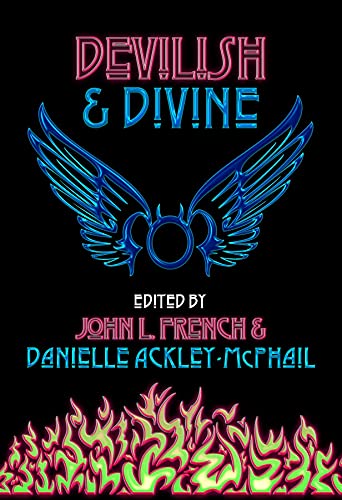
You can now preorder Devilish And Divine, edited by John L. French and Danielle Ackley-McPhail, which contains (among many, many others) three stories by me, Christopher J. Burke about those above us and from down below.
Preorder the softcover or ebook at Amazon.

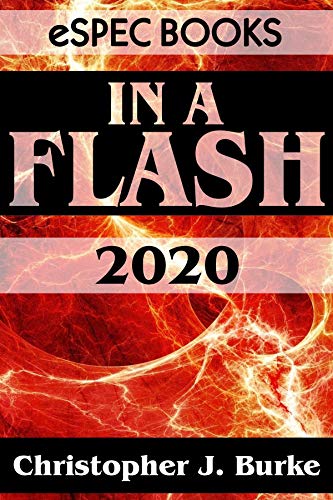
Also, check out In A Flash 2020, by Christopher J. Burke for 20 great flash fiction stories, perfectly sized for your train rides.
Available in softcover or ebook at Amazon.

If you enjoy it, please consider leaving a rating or review on Amazon or on Good Reads.


Come back often for more funny math and geeky comics.


Thursday, April 21, 2022

Geometry Problems of the Day (Geometry Regents, January 2011)


Now that I'm caught up with the current New York State Regents exams, I'm revisiting some older ones.

More Regents problems.

Geometry Regents, January 2011

Part II: Each correct answer will receive 2 credits. Partial credit is possible.


29. In the diagram below of △ACD, B is a point on AC such that △ADB is an equilateral triangle, and △DBC is an isosceles triangle with DB ≅ BC. Find m∠C.


Answer:


Look at the image below:

All of the angles in the equilateral triangle are 60 degrees. Angles ABD and DBC are supplementary, so angle DBC is 120 degrees.

Angle DBC is also the vertex angle of the isosceles triangle making angles BDC and C the base angles, which must be congruent.

180 - 120 = 60 and 60 / 2 = 30, so m∠C = 30.


30. Triangle ABC has vertices A(−2,2), B(−1,−3), and C(4,0). Find the coordinates of the vertices of △A′B′C′, the image of △ABC after the transformation rx-axis.
[The use of the grid below is optional.]

Answer:


A reflection across the x-axis would flip the sign of the y-coordinate. If the original is positive, then the image is negative and vice versa. A point on the x-axis will reflect onto itself. If this doesn't seem correct to you, then graph it.

A(−2,2) is reflected to A'(-2,-2).

B(−1,−3) is reflected to B'(-1,3).

C(4,0) is reflected onto itself, C'(4, 0).


31. Find, in degrees, the measures of both an interior angle and an exterior angle of a regular pentagon.

Answer:


A pentagon has five sides and angles. The total number of degrees in any pentagon is (5 - 2)*180 = 540.

In a regular pentagon, each angle is the same size, so 540 / 5 = 108 degrees for each interior angle.

The exterior angles are supplementary, so 180 - 108 = 72 degrees.

You could also do these in the opposite order.

The sum of the exterior angles of any convex polygon is 360 degrees. Therefore each individual exterior angle in a regular pentagon must be 360 / 5 = 72 degrees.

Each interior angle is supplementary to the exterior angle, so 180 - 72 = 108 degrees.


More to come. Comments and questions welcome.

More Regents problems.

I also write Fiction!


You can now preorder Devilish And Divine, edited by John L. French and Danielle Ackley-McPhail, which contains (among many, many others) three stories by me, Christopher J. Burke about those above us and from down below.
Preorder the softcover or ebook at Amazon.

Also, check out In A Flash 2020, by Christopher J. Burke for 20 great flash fiction stories, perfectly sized for your train rides.
Available in softcover or ebook at Amazon.

If you enjoy it, please consider leaving a rating or review on Amazon or on Good Reads.


Algebra Problems of the Day (Integrated Algebra Regents, January 2011)


Now that I'm caught up with the current New York State Regents exams, I'm revisiting some older ones. The Integrated Algebra Regents covered most of the same material as the current Algebra Regents, with a few differences.

More Regents problems.

Integrated Algebra Regents, January 2011

Part I: Each correct answer will receive 2 credits.


21. What is 3 √2 + √8 expressed in simplest radical form?

1) 3 √10
2) 3 √16
3) 5 √2
4) 7 √2

Answer: 3) 5 √2


Hopefully, you eliminated Choice (1) immediately, because radical addition doesn't work like that any more than 32 + 42 would equal 72.

Secondly, you should realize that √16 couldn't possible be simplest radical form because √16 is equal to 4, which is much simpler!

Like with fractions, you can only add radicals if they have the same radicand (number under the radical sign). Luckily, we can change the 8 into a 2.

√8 is not in simplest form because it factors in √((4)(2)), which is √4 √2, which is 2 √2.

So the sum of 3 √2 + √8 = 3 √2 + 2 √2 = 5 √2, which is Choice (3).


22. What is the slope of the line whose equation is 3x − 7y = 9?

1) -3/7
2) 3/7
3) -7/3
4) 7/3

Answer: 2) 3/7


The equation is in Standard Form, Ax + By = C, and the slope of a line in Standard Form is -A/B. So the slope is -(3)/(-7) = 3/7, which is Choice (2).

If you didn't remember that rule, you could have rewritten the equaion in slope-intercept form.

3x − 7y = 9

−7y = -3x + 9

y = (-3)/(-7)x + 9/(-7)

The slope is 3/7.


23. The figure shown below is composed of two rectangles and a quarter circle.


What is the area of this figure, to the nearest square centimeter?

1) 33
2) 37
3) 44
4) 58

Answer: 2) 37


Calculate the three pieces separately and then add them.

The rectangles are both 5 x 3, so each one is 15, and 15 + 15 = 30.

The quarter circle has a radius of 3, so A = 1/4 (3.14)(3)2 = 7.065.

Add 30 and 7.065 and you get approximately 37.


24. The expression (10w3)2 / (5w) is equivalent to

1) 2w5
2) 2w8
3) 20w5
4) 20w8

Answer: 3) 20w5


The exponent of 2 applies to everything in the parentheses. So (10w3)2 = 10w3 * 10w3 = 100w6.

Divide 100w6 by 5w1 and the quotient is 20w5, which is Choice (3).

You would have gotten a coefficient of 2 if you forgot to square the 10. You would have ended up with an exponent of 8 if you sqaured the exponent of 3 instead of doubling it before subtracting 1.


25. If ey/n + k = t, what is y in terms of e, n, k, and t?

1) y = (tn + k)/e
2) y = (tn - k)/e
3) y = n(t + k)/e
4) y = n(t - k)/e

Answer: 4) y = n(t - k)/e


use inverse operations to isolate y.

ey/n + k = t

ey/n = t - k

ey = n(t - k)

y = n(t - k)/e

The answer is Choice (4).


More to come. Comments and questions welcome.

More Regents problems.

I also write Fiction!


You can now preorder Devilish And Divine, edited by John L. French and Danielle Ackley-McPhail, which contains (among many, many others) three stories by me, Christopher J. Burke about those above us and from down below.
Preorder the softcover or ebook at Amazon.

Also, check out In A Flash 2020, by Christopher J. Burke for 20 great flash fiction stories, perfectly sized for your train rides.
Available in softcover or ebook at Amazon.

If you enjoy it, please consider leaving a rating or review on Amazon or on Good Reads.


Wednesday, April 20, 2022

Algebra Problems of the Day (Integrated Algebra Regents, January 2011)


Now that I'm caught up with the current New York State Regents exams, I'm revisiting some older ones. The Integrated Algebra Regents covered most of the same material as the current Algebra Regents, with a few differences.

More Regents problems.

Integrated Algebra Regents, January 2011

Part I: Each correct answer will receive 2 credits.


16. Which data set describes a situation that could be classified as quantitative?

1) the phone numbers in a telephone book
2) the addresses for students at Hopkins High School
3) the zip codes of residents in the city of Buffalo, New York
4) the time it takes each of Mr. Harper’s students to complete a test

Answer: 4) the time it takes each of Mr. Harper’s students to complete a test


This problem is a great reminder that just because data is numeric, it doesn't mean that it's automatically quantitative. All four choices are at least partly numeric.

This is also a good instance of "one of these things is not like the others" if you are apt to confuse quantitative with qualitative data.

Three of the choices are descriptions of things. Three of these are things that you wouldn't find averages of, and medians would have no statistical significance at all.

The only one that have values that you might want to put on, say, a box-and-whisker plot would be the time it takes students to complete a test, which is Choice (4).


17. Which is the graph of y = |x| + 2?

Answer: 3) [See image]


The graph of an absolute value function is V-shaped or the inverse, which is Choice (3).

Choice (1) shows a linear function.

Choices (2) and (4) show quadratic functions.


18. Sam’s grades on eleven chemistry tests were 90, 85, 76, 63, 94, 89, 81, 76, 78, 69, and 97. Which statement is true about the measures of central tendency?

1) mean > mode
2) mean < mode
3) mode > median
4) median = mode

Answer: 1) mean > mode


Put the data in order to find the median. This will also make it easier to find the mode.

63, 69, 76, 76, 78, 81, 85, 89, 90, 94, 97.

The median is the 6th number, which is 81. The mode is 76 because it's the only number to appear twice.

The median =/= the mode, so eliminate Choice (4), and it isn't greater than the mode, so eliminate Choice (3).

That means you need to find the mean, which is the sum of the data, divided by 11 (because there are 11 pieces of data).

63 + 69 + 76 + 76 + 78 + 81 + 85 + 89 + 90 + 94 + 97 = 898

898 / 11 = 88

So the mean is greater than the mode, which is Choice (1).


19. Which interval notation represents the set of all real numbers greater than 2 and less than or equal to 20?

1) (2,20)
2) (2,20]
3) [2,20)
4) [2,20]

Answer: 2) (2,20]


Note that it says greater than 2 but not equal to 2. However, it also says less than or equal to.

This should clue you in that you want two different symbols. Now, if you had to guess (and I hope you know and don't have to guess), would think ">" was the same at "(" or "[". Think about the Open and Closed circles on number lines. Think of the solid and dashed lines on coordinate planes.

Okay, x > 2 and x < 20 can be written as 2 < x < 20. The first < becomes a parenthesis in the front. The x is dropped because this is shorthand and it isn't needed. It's understood to be there. The final < becomes a square bracket.

Choice (1) shows 2 < x < 20.

Choice (2) shows 2 < x < 20, which is what we want.

Choice (3) shows 2 < x < 20.

Choice (4) shows 2 < x < 20.


20. What is the sum of 3/(2x) and 7/(4x)?

1) 21/(8x2)
2) 13/(4x)
3) 10/(6x)
4) 13/(8x)

Answer: 2) 13/(4x)


To add two fractions, you need a common denominator. You can find one by multiplying the first fraction by 2/2.

6/(4x) + 7/(4x) = 13/(4x), which is Choice (2).

the whole point of a common denominator is that is doesn't change. One-half a dollar plus one-half a dollar is a whole dollar. So 1/2 + 1/2 would not equal 2/4, which simplifies to 1/2. Right?


More to come. Comments and questions welcome.

More Regents problems.

I also write Fiction!


You can now preorder Devilish And Divine, edited by John L. French and Danielle Ackley-McPhail, which contains (among many, many others) three stories by me, Christopher J. Burke about those above us and from down below.
Preorder the softcover or ebook at Amazon.

Also, check out In A Flash 2020, by Christopher J. Burke for 20 great flash fiction stories, perfectly sized for your train rides.
Available in softcover or ebook at Amazon.

If you enjoy it, please consider leaving a rating or review on Amazon or on Good Reads.


Geometry Problems of the Day (Geometry Regents, January 2011)


Now that I'm caught up with the current New York State Regents exams, I'm revisiting some older ones.

More Regents problems.

Geometry Regents, January 2011

Part I: Each correct answer will receive 2 credits.


25. Which graph represents a circle with the equation (x − 3)2 + (y + 1)2 = 4?


Answer: 2) [See Image]


The formula for a circle is (x − h)2 + (y - k)2 = r2, where (h,k) is the center of the circle and r is the radius.

In this example, the center is at (3, -1) and the radius is 2 (with the diameter being 4).

This matches the second graph, Choice (2).

Choices (1) and (3) have the wrong radius. Choices (3) and (4) have the wrong center.


26. The point (3,−2) is rotated 90° about the origin and then dilated by a scale factor of 4. What are the coordinates of the resulting image?

1) (-12,8)
2) (12,-8)
3) (8,12)
4) (-8,-12)

Answer: 3) (8,12)


When the direction of the rotation is not stated, the default is counterclockwise, like the numbering of the quadrants I, II, III, IV.

Point (3,-2) becomes (2,3) as it moves from IV to I, where both cooridnates are positive.

The scale factor of 4 moves the point to (8,12).

Note that all four quadrants are represented in the choices if you made a mistake with the rotation.


27. In the diagram below of △ABC, side BC is extended to point D, m∠A = x, m∠B = 2x + 15, and m∠ACD = 5x + 5.


What is m∠B?

1) 5
2) 20
3) 25
4) 55

Answer: 3) 25


According to the Exterior Angle Theorem, m∠A + m∠B = m∠ACD.

Therefore, x + 2x + 15 = 5x + 5

3x + 15 = 5x + 5

15 = 2x + 5

10 = 2x

x = 5

Now that you know what x is, you can find the size of the angle. Angle B is 2x + 15 = 2(5) + 15 = 25, which is Choice (3).

Choice (1) is x, not the angle.


28 Point P lies on line m. Point P is also included in distinct planes Q, R, S, and T. At most, how many of these planes could be perpendicular to line m?

1) 1
2) 2
3) 3
4) 4

Answer: 1) 1


Only 1 plane can be perpendicular to a line at a given point.


End of Part I.


More to come. Comments and questions welcome.

More Regents problems.

I also write Fiction!


You can now preorder Devilish And Divine, edited by John L. French and Danielle Ackley-McPhail, which contains (among many, many others) three stories by me, Christopher J. Burke about those above us and from down below.
Preorder the softcover or ebook at Amazon.

Also, check out In A Flash 2020, by Christopher J. Burke for 20 great flash fiction stories, perfectly sized for your train rides.
Available in softcover or ebook at Amazon.

If you enjoy it, please consider leaving a rating or review on Amazon or on Good Reads.


Tuesday, April 19, 2022

Geometry Problems of the Day (Geometry Regents, January 2011)


Now that I'm caught up with the current New York State Regents exams, I'm revisiting some older ones.

More Regents problems.

Geometry Regents, January 2011

Part I: Each correct answer will receive 2 credits.


21. In circle O, a diameter has endpoints (−5,4) and (3,−6). What is the length of the diameter?
1) √2
2) 2√2
3) √10
4) 2√41

Answer: 4) 2√41


The Distance Formula is d = √( (x1 − x2)2 + (y1 − y2)2 ).

So d = √( (-5 − 3)2 + (4 − -6)2 )

= √( (-8)2 + (10)2 )

= √( 164 )

= √( (4)(41) )

= 2√(41), which is an ugly result, but it is also Choice (4).


22. In the diagram below of quadrilateral ABCD, AB || CD, ∠ABC ≅ ∠CDA, and diagonal AC is drawn.


Which method can be used to prove that △ ABC is congruent to △CDA?

1) AAS
2) SSA
3) SAS
4) SSS

Answer: 1) AAS


There is NO SSA Postulate or Theorem. Spell it backward if you think there is! (That's a joke.)

The only side that you are given is diagonal AC, which is in both triangles and is congruent to itself through the Reflexive Property. With no information about any other sides, there can be at most 1 S in the solution. Eliminate Choices (2), (3) and (4).

You are given one pair of angles with ∠ABC ≅ ∠CDA. You also have AC as a transversal across two parallel lines. So ∠BAC ≅ ∠DCA. That gives AAS, which is Choice (1).


23. In the diagram below of right triangle ABC, CD is the altitude to hypotenuse AB, CB = 6, and AD = 5.


What is the length of BD?

1) 5
2) 9
3) 3
4) 4

Answer: 4) 4


The three right triangles in the picture (left, right, and big) are all similar, which makes their sides proportional.

In particular, this makes

x / 6 = 6 / (x + 5)

So x2 + 5x = 36

And x2 + 5x - 36 = 0

Which factors to (x + 9)(x - 4) = 0

So x = -9 or x = 4

Discard the negative result, and x = 4, which is Choice (4).


24. In the diagram below, quadrilateral JUMP is inscribed in a circle.


Opposite angles J and M must be

1) right
2) complementary
3) congruent
4) supplementary

Answer: 4) supplementary


Angle J and angle M are both inscribed angles. Between the two of them, they intercept the entire circle, measuring 360 degrees of combined arcs.

Inscribing angles are half of the size of the arcs that they intercept. Half of 360 is 180. The two angles, however, big they are, must have a total of 180. That makes them supplementary.

The angles could be right, but do not have to be. The angles could be congruent, but they do not have to be. However, if they were right, then they would have to be congruent, and vice versa.

The angles could NOT be complementary. One of the angles will over 90 degrees or each will be exactly 90 degrees.


More to come. Comments and questions welcome.

More Regents problems.
I also write Fiction!


You can now preorder Devilish And Divine, edited by John L. French and Danielle Ackley-McPhail, which contains (among many, many others) three stories by me, Christopher J. Burke about those above us and from down below.
Preorder the softcover or ebook at Amazon.

Also, check out In A Flash 2020, by Christopher J. Burke for 20 great flash fiction stories, perfectly sized for your train rides.
Available in softcover or ebook at Amazon.

If you enjoy it, please consider leaving a rating or review on Amazon or on Good Reads.


Monday, April 18, 2022

Geometry Problems of the Day (Geometry Regents, January 2011)


Now that I'm caught up with the current New York State Regents exams, I'm revisiting some older ones.

More Regents problems.

Geometry Regents, January 2011

Part I: Each correct answer will receive 2 credits.


16. What is an equation of a circle with center (7,−3) and radius 4?
1) (x − 7)2 + (y + 3)2 = 4
2) (x + 7)2 + (y - 3)2 = 4
3) (x − 7)2 + (y + 3)2 = 16
4) (x + 7)2 + (y - 3)2 = 16

Answer: 3) (x − 7)2 + (y + 3)2 = 16


The equation of a circle is given by the equation (x − h)2 + (y - k)2 = 42, where (h,k) is the center of the circle and r is the radius.

In this example, h is 7, k is -3 and r is 4.

That means that the equation is (x − 7)2 + (y + 3)2 = 16, which is Choice (3).


17. What is the volume, in cubic centimeters, of a cylinder that has a height of 15 cm and a diameter of 12 cm?

1) 180Ï€
2) 540Ï€
3) 675Ï€
4) 2,160Ï€

Answer: 2) 540Ï€


The Volume of a cylinder is V = π r2 h.

Substitute what you know, and evaluate. You are given diameter, not radius. Divide the diameter (12) by 2 to get the radius (6).

So V = π (6)2 (15) = 540π, which is Choice (2).


18. Which compound statement is true?

1) A triangle has three sides and a quadrilateral has five sides.
2) A triangle has three sides if and only if a quadrilateral has five sides.
3) If a triangle has three sides, then a quadrilateral has five sides.
4) A triangle has three sides or a quadrilateral has five sides.

Answer: 4) A triangle has three sides or a quadrilateral has five sides.


Look at each of these one at a time.

Choice (1) is Flase because the "and" requires that both statements be true. However, a quadrilateral does not have five sides.

Choice (2) is False because the "if and only if" requires that both statements are True OR both statements are False. One is True but the other is False.

Choice (3) is False because in any If ... Then construction, if the first statement is True then the second statement must be True.

Choice (4) is True because the "or" only requires that one of the two statements be True.


19. The two lines represented by the equations below are graphed on a coordinate plane.

x + 6y = 12
3(x − 2) = −y − 4

Which statement best describes the two lines?

1) The lines are parallel
2) The lines are the same line.
3) The lines are perpendicular.
4) The lines intersect at an angle other than 90°.

Answer: 4) The lines intersect at an angle other than 90°.


Parallel lines have the same slope but different y-intercepts. If the y-intercepts are also the same, then they are the same line. Perpendicular lines have slopes that are inverse reciprocals (having a product of -1). If all other cases, they intersect, but not at right angles.

Start by finding the slopes of the two lines.

The first line is in Standard Form, so it's slope is -A/B. If you forgot that, you could rewrite the equation in slope-intercept form. The slope is -1/6.

The second line can be manipulated into slope-intercept form by adding 4 to both sides and multiplying the equation by -1.

That yields y = -3(x - 2) - 4, which has a slope of -3.

The product of 1/6 and -3 is not -1, and the slopes are obviously not the same. So the answer is Choice (4).


20. Which diagram shows the construction of the perpendicular bisector of AB ?

Answer: 1) [See Image]


To construct a perpendicular bisector of a line segment, put the compass on one endpoint and open it up so that it is wider than half of the segment. Make an arc. Go to the other point and do the same thing without changing the compass at all.

Choice (1) shows this construction.

Choice (2) is close, but the arcs aren't big enough. They intersect on the line segment, so there aren't two points to connect to draw the line.

Choice (3) and (4) show random arcs, neither of which provide a second point to draw a line. (Two of the arcs in (4) are correct, but there need to be a matching pair below the line.)


More to come. Comments and questions welcome.

More Regents problems.
I also write Fiction!


You can now preorder Devilish And Divine, edited by John L. French and Danielle Ackley-McPhail, which contains (among many, many others) three stories by me, Christopher J. Burke about those above us and from down below.
Preorder the softcover or ebook at Amazon.

Also, check out In A Flash 2020, by Christopher J. Burke for 20 great flash fiction stories, perfectly sized for your train rides.
Available in softcover or ebook at Amazon.

If you enjoy it, please consider leaving a rating or review on Amazon or on Good Reads.


Friday, April 15, 2022

The Sum of All Halves

(Click on the comic if you can't see the full image.)
(C)Copyright 2022, C. Burke. "AnthroNumerics" is a trademark of Christopher J. Burke and (x, why?).

Maybe only a little bit. Like a half of a half of a half....

Moira is becoming a great stand-in for Michele, who will be back at school before you know it. Then again, it's April already, so maybe not.

I couldn't think of a title for this one. I was going to go with a "textbook" term or phrase, but it sounded boring and I couldn't decide on the exact wording.

Final note, though I may have jumped the gun, but this was inspired by a calendar puzzle. The puzzle appears tomorrow and this comic will be part of the answer that will appear on Easter Sunday.


I also write Fiction!


You can now preorder Devilish And Divine, edited by John L. French and Danielle Ackley-McPhail, which contains (among many, many others) three stories by me, Christopher J. Burke about those above us and from down below.
Preorder the softcover or ebook at Amazon.

Also, check out In A Flash 2020, by Christopher J. Burke for 20 great flash fiction stories, perfectly sized for your train rides.
Available in softcover or ebook at Amazon.

If you enjoy it, please consider leaving a rating or review on Amazon or on Good Reads.


Come back often for more funny math and geeky comics.


Monday, April 11, 2022

(x, why?) Mini: Forms of a Quadratic

(Click on the comic if you can't see the full image.)
(C)Copyright 2022, C. Burke. "AnthroNumerics" is a trademark of Christopher J. Burke and (x, why?).

Each has something to tell you but it's not always what you want to hear.

This one came from conversations with students, understanding the different forms. They seemed to agree that Standard Form is the least useful for graphing.


I also write Fiction!


You can now preorder Devilish And Divine, edited by John L. French and Danielle Ackley-McPhail, which contains (among many, many others) three stories by me, Christopher J. Burke about those above us and from down below.
Preorder the softcover or ebook at Amazon.

Also, check out In A Flash 2020, by Christopher J. Burke for 20 great flash fiction stories, perfectly sized for your train rides.
Available in softcover or ebook at Amazon.

If you enjoy it, please consider leaving a rating or review on Amazon or on Good Reads.


Come back often for more funny math and geeky comics.


Thursday, April 07, 2022

(x, why?) Mini: Strictly

(Click on the comic if you can't see the full image.)
(C)Copyright 2022, C. Burke. "AnthroNumerics" is a trademark of Christopher J. Burke and (x, why?).

It's a French thing. Don't get flaky on me.

So I occasionally seen math problems, puzzles, and riddles posted on social media (particularly Twitter), outside of the confines of the Math Calendar that I respond to. There was a recent problem posted to which someone replied, "That's a strictly crescent function!". To which I replied (in my head, not online), "That's a strictly what-now?"

Okay, so it's something beyond the scope of what I'll teach in Algebra or Algebra 2. On the other hand, it's not beyond the scope of a bad math pun. So voila! And bon appetit.


I also write Fiction!


You can now preorder Devilish And Divine, edited by John L. French and Danielle Ackley-McPhail, which contains (among many, many others) three stories by me, Christopher J. Burke about those above us and from down below.
Preorder the softcover or ebook at Amazon.

Also, check out In A Flash 2020, by Christopher J. Burke for 20 great flash fiction stories, perfectly sized for your train rides.
Available in softcover or ebook at Amazon.

If you enjoy it, please consider leaving a rating or review on Amazon or on Good Reads.


Come back often for more funny math and geeky comics.


Wednesday, April 06, 2022

(x, why?) Mini: Inscribed

(Click on the comic if you can't see the full image.)
(C)Copyright 2022, C. Burke. "AnthroNumerics" is a trademark of Christopher J. Burke and (x, why?).

It's a bad dream oval all.

Obligatory Math: Of the regular polygons, only an equilateral triangle and a square can be inscribed inside an ellipse (assuming it isn't also a circle).

There are limits to MS Paint (and it's worse with this ancient monitor I'm currently sitting at), but it's been my intent that the shapes in this particular world that look to be regular are supposed to be regular. That said, I changed the triangle image I usually use because it looked more isosceles to me. Thanks to this PC, I may have to touch up the comic when I get home.

Obviously, the officer is not regular, but he makes a point of stating what I wasn't sure was obvious, and what was important for the comic.

It's also important to realize that despite the usual "regularness", this shape world has Trapezoid Rule.


I also write Fiction!


You can now preorder Devilish And Divine, edited by John L. French and Danielle Ackley-McPhail, which contains (among many, many others) three stories by me, Christopher J. Burke about those above us and from down below.
Preorder the softcover or ebook at Amazon.

Also, check out In A Flash 2020, by Christopher J. Burke for 20 great flash fiction stories, perfectly sized for your train rides.
Available in softcover or ebook at Amazon.

If you enjoy it, please consider leaving a rating or review on Amazon or on Good Reads.


Come back often for more funny math and geeky comics.


Friday, April 01, 2022

Switcheroo!

(Click on the comic if you can't see the full image.)
(C)Copyright 2022, C. Burke. "AnthroNumerics" is a trademark of Christopher J. Burke and (x, why?).

Happy April Fools! The jokes on them.

The world of the Anthronumerics has never been defined exactly as to where it exists -- that is, in a parallel universe, or as a figment of the imagination. From the very beginning, I assumed it was something of a Sesame Street model, except that the numeric characters never interacted with the humans. For nearly fifteen years, I've kept it that way.

So a comparison to the Land of Make Believe isn't so farfetched, I would guess.


I also write Fiction!


You can now preorder Devilish And Divine, edited by John L. French and Danielle Ackley-McPhail, which contains (among many, many others) three stories by me, Christopher J. Burke about those above us and from down below.
Preorder the softcover or ebook at Amazon.

Also, check out In A Flash 2020, by Christopher J. Burke for 20 great flash fiction stories, perfectly sized for your train rides.
Available in softcover or ebook at Amazon.

If you enjoy it, please consider leaving a rating or review on Amazon or on Good Reads.


Come back often for more funny math and geeky comics.