Friday, September 17, 2021

Algebra 2 Problems of the Day (Algebra 2/Trigonometry Regents, June 2013)


Now that I'm caught up with the current New York State Regents exams, I'm revisiting some older ones.

More Regents problems.

Algebra 2/Trigonometry Regents, June 2013

Part I: Each correct answer will receive 2 credits.


21. The expression log 4m2 is equivalent to

1) 2(log 4 + log m)
2) 2 log 4 + log m
3) log 4 + 2 log m
4) log 16 + 2 log m

Answer: 3) log 4 + 2 log m


When you multiply to expressions with the same base you add the exponents. If you have a log of two things being multiplied, you can add the logs. When you raise a power to another power, you multiply the exponents. If you have a log of a variable with an exponent, you can multiply the log by the exponent.

In other words:

log 4m2
= log 4 + log m2
= log 4 + 2 log m


22. In triangle PQR, p equals

1) r sin P / sin Q
2) r sin P / sin R
3) r sin R / sin P
4) q sin R / sin Q

Answer: 2) r sin P / sin R


Use the Law of Sines:
sin P / p = sin Q / q = sin R / r

Split this into sin P / p = sin Q / q or sin P / p = sin R / r

Solving for p gives either p = q sin P / sin Q or p = r sin P / sin R.


23. If tan ( Arc cos Sqrt(3)/k ) = Sqrt(3) / 3, then k is

1) 1
2) 2
3) SQRT (2)
4) 3 SQRT (2)

Answer: 2) 2


In you take Tan -1 SQRT(3)/3, you get π/6.

Cos &pi/6 = SQRT(3)/2, so k = 2.


24. Which expression is equivalent to 2x-2y-2 / (4 y-5)

1) y3 / (2 x2)
2) 2y3 / (x2)
3) 2x2 / (y3)
4) x2 / (2 y3)

Answer: 1) y3 / (2 x2)


A variable in the numerator with a negative exponent gets moved to the denominator and its exponent is switched to positive. If it's in the demoninator, it comes up to the numerator.

2x-2y-2 / (4 y-5)
= 2y5 / (4 x2 y2)

Now simplify the factors:

2y5 / (4 x2 y2)
= 1 y3 / (2 x2)


More to come. Comments and questions welcome.

More Regents problems.

I also write Fiction!


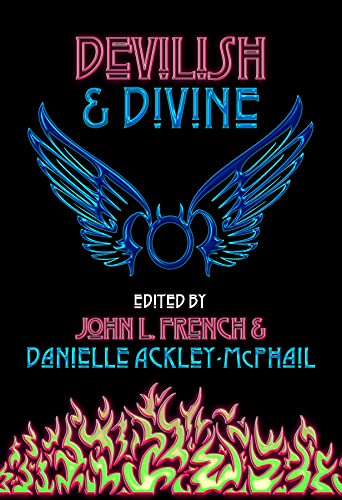
You can now preorder Devilish And Divine, edited by John L. French and Danielle Ackley-McPhail, which contains (among many, many others) three stories by me, Christopher J. Burke about those above us and from down below.
Preorder the softcover or ebook at Amazon.

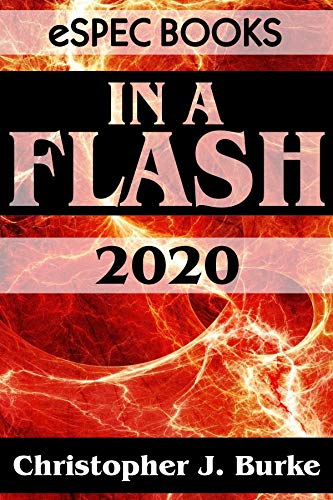
Also, check out In A Flash 2020, by Christopher J. Burke for 20 great flash fiction stories, perfectly sized for your train rides.
Available in softcover or ebook at Amazon.

If you enjoy it, please consider leaving a rating or review on Amazon or on Good Reads.


Geometry Problems of the Day (Geometry Regents, June 2013)


Now that I'm caught up with the current New York State Regents exams, I'm revisiting some older ones.

More Regents problems.

Geometry Regents, June 2013

Part I: Each correct answer will receive 2 credits.


21. In triangle ABC, m∠A = 60, m∠B = 80, and m∠C = 40. Which inequality is true?
AB > BC
2) AC > BC
3) AC < BA
4) BC < BA

Answer: 2) AC > BC


It may not look obvious, but Choices (1) and (4) are the same thing. Either they are both true or they are both false, but they cannot both be true.

For any triangle the longest side is opposite the biggest angle, and the smallest side is opposite the smallest angle. If two angles are congruent, then the opposite sides are congruent.

If ∠B is the largest angle then side AC is the longest side, which means it's bigger than BC, so Choice (2) is correct.


22. Circle O with ∠AOC and ∠ABC is shown in the diagram below.


What is the ratio of m∠AOC to m∠ABC?

1) 1:1
2) 2:1
3) 3:1
4) 1:2

Answer: 2) 2:1


∠AOC is a central angle and ∠ABC is an inscribed angle. The relationship between the two is that a central angle is twice the size of an inscribed angle that intercepts the same arc (in this case, arc AC).

So the ratio of ∠AOC to ∠ABC is 2:1. Note that the order in the question is important. It is NOT 1:2. That would be the ratio of ∠ABC to ∠AOC.


23. A rectangular prism has a base with a length of 25, a width of 9, and a height of 12. A second prism has a square base with a side of 15. If the volumes of the two prisms are equal, what is the height of the second prism?

1) 6
2) 8
3) 12
4) 15

Answer: 3) 12


Calculate the Volume of the first prism, and then solve for the height of the second one.

V = (25)(9)(12) = 2700

V = (15)(15)H = 2700
H = 2700 / 225 = 12

The slopes are not the same and they are not inverse reciprocials (that is, they do not have a product of -1). Therefore, they intersect but are not perpendicular.


24. In triangles ABC and DEF, AB = 4, AC = 5, DE = 8, DF = 10, and ∠A ≅ ∠D. Which method could be used to prove triangle ABC ∼ triangle DEF?

1) AA
2) SAS
3) SSS
4) ASA angle.

Answer: 2) SAS


When you see similarity, your first thought is to go to AA, but you are only given one angle here.

However, you are given two pairs of sides and the included angle, which is SAS. The corresponding sides are proportional. so the triangles are similar.


More to come. Comments and questions welcome.

More Regents problems.

I also write Fiction!


You can now preorder Devilish And Divine, edited by John L. French and Danielle Ackley-McPhail, which contains (among many, many others) three stories by me, Christopher J. Burke about those above us and from down below.
Preorder the softcover or ebook at Amazon.

Also, check out In A Flash 2020, by Christopher J. Burke for 20 great flash fiction stories, perfectly sized for your train rides.
Available in softcover or ebook at Amazon.

If you enjoy it, please consider leaving a rating or review on Amazon or on Good Reads.


Thursday, September 16, 2021

(x, why?) Mini: Betweenness

(Click on the comic if you can't see the full image.)
(C)Copyright 2021, C. Burke. "AnthroNumerics" is a trademark of Christopher J. Burke and (x, why?).

Between the laughs and the math lies obsession.

If B came between point A and point A, then Point A and Point B would have to be the same point. However, contrary to the large representation in the comic for the benefit of your eyesight (and especially mine), since points are dimenionalness spots in space, the only way for there not to be any other dimensional location in spot in between A and B would be for A and B to be the same point.


I also write Fiction!


You can now preorder Devilish And Divine, edited by John L. French and Danielle Ackley-McPhail, which contains (among many, many others) three stories by me, Christopher J. Burke about those above us and from down below.
Preorder the softcover or ebook at Amazon.


Come back often for more funny math and geeky comics.


Algebra 2 Problems of the Day (Algebra 2/Trigonometry Regents, June 2013)


Now that I'm caught up with the current New York State Regents exams, I'm revisiting some older ones.

More Regents problems.

Algebra 2/Trigonometry Regents, June 2013

Part I: Each correct answer will receive 2 credits.


16. Which value of r represents data with a strong positive linear correlation between two variables?

1) 0.89
2) 0.34
3) 1.04
4) 0.01

Answer: 1) 0.89


A strong positive correlation means that the value of r will be close to 1 WITHOUT GOING OVER 1. This is because the number 1 represents a 100% correlation, which would be the data is perfectly linear.

Choice (1) is Strong. Choice (2) is weak. Choice (3) is impossible. Choice (4) would suggest that there is no correlation between the two variables at all.


Which problem involves evaluating 6P4?

1) How many different four-digit ID numbers can be formed using 1, 2, 3, 4, 5, and 6 without repetition?
2) How many different subcommittees of four can be chosen from a committee having six members?
3) How many different outfits can be made using six shirts and four pairs of pants?
4) How many different ways can one boy and one girl be selected from a group of four boys and six girls?

Answer: 1) How many different four-digit ID numbers can be formed using 1, 2, 3, 4, 5, and 6 without repetition?


The permuation 6P4 refers to selecting four objects from a group of six when the order they are selected is important.

Choice (1) matches that description. This is the answer.

Choice (2) is a Combination problem because the order the members are selected is not important. (If the first person were, say, head of the committee, and the second one the assitant, etc, then it would be different.)

Choice (3) is an example of the Counting Principle, where 6 * 4 = 24 outfits can be made.

Choice (4) is an example of the Counting Principle, where 4 * 6 = 24 pairs of one boy and one girl can be selected.


18. Which equation is represented by the graph below?

1) (x - 3)2 + (y + 1)2 = 5
2) (x + 3)2 + (y - 1)2 = 5
3) (x - 1)2 + (y + 3)2 = 13
4) (x + 3)2 + (y - 1)2 = 13

Answer: 4) (x + 3)2 + (y - 1)2 = 13


The equation of a circle is given by the formula: (x - 2)2 + (y - 5)2 = r2, where (h, k) is the center and r is the radius. Notice that there are MINUS signs in the formula for (h, k).

The radius isn't obvious, and you could figure it out using Distance formula or Pythagorean Theorem. Or you could see that it is somewhere between 3 and 4, so r2 must be between 9 and 16. It could be 13, but it couldn't be 5.

Aside from this, the four choices each show a different center, so you only need to know the center to find the correct equation. The center is at (-3, 1). When you flip the signs you get (x + 3)2 + (y - 1)2.


19. If x = 3i, y = 2i, and z = m + i, the expression xy2z equals

1) -12 - 12mi
2) -6 - 6mi
3) 12 - 12mi
4) 6 - 6mi

Answer: 3) 12 - 12mi


Multiply the expressions, use the Distributive Property, and don't forget that i2 = -1.

xy2z
= (3i)(2i)2(m + i)
= (3i)(4i2)(m + i)
= (3i)(-4)(m + i)
= -12i(m + i)
= -12mi - 12i2
= -12mi + 12
= 12 - 12mi


20. An angle, P, drawn in standard position, terminates in Quadrant II if

1) cos P < 0 and csc P < 0
2) sin P > 0 and cos P > 0
3) csc P > 0 and cot P < 0
4) tan P < 0 and sec P > 0

Answer: 3) csc P > 0 and cot P < 0


In Quadrant II, x is negative (x < 0) and y is positive (y > 0).

Remember that cos is x, so it should be negative, and sin is y, so it should be positive. Also, sec, is 1/cos, so it is negative, csc is 1/sin so it should be positive, tan is sin/cos, so it is negative, and cot is cos/sin, so it is negative.

You might want to make a little chart next to the question that you can refer to.

Choice (1) has the first part right and the second part wrong.

Choice (2) has the first part right and the second part wrong.

Choice (3) has both parts correct.

Choice (4) has the first part right and the second part wrong.


More to come. Comments and questions welcome.

More Regents problems.

I also write Fiction!


You can now preorder Devilish And Divine, edited by John L. French and Danielle Ackley-McPhail, which contains (among many, many others) three stories by me, Christopher J. Burke about those above us and from down below.
Preorder the softcover or ebook at Amazon.

Also, check out In A Flash 2020, by Christopher J. Burke for 20 great flash fiction stories, perfectly sized for your train rides.
Available in softcover or ebook at Amazon.

If you enjoy it, please consider leaving a rating or review on Amazon or on Good Reads.


Geometry Problems of the Day (Geometry Regents, June 2013)


Now that I'm caught up with the current New York State Regents exams, I'm revisiting some older ones.

More Regents problems.

Geometry Regents, June 2013

Part I: Each correct answer will receive 2 credits.


16. What is the equation of a line passing through the point (6,1) and parallel to the line whose equation is 3x = 2y + 4?

1) y = -2/3 x + 5
2) y = -2/3 x - 3
3) y = 3/2 x - 8
4) y = 3/2 x - 5

Answer: 3) y = 3/2 x - 8


The point (6, 1) has to be a solution to the linear equation, and the linear equation has to have a slope that is equal to the slope of the line it is parallel to.

Rewrite 3x = 2y + 4 as 2y = 3x - 4 and then y = 3/2 - 2. The slope of the line is 3/2, so eliminate Choices (1) and (2). Those lines are perpendicular to the given line.

Substitute x = 6 into the other equations, 3/2 (6) - 8 = 9 - 8 = 1, which is the y-coordinate we are looking for. Choice (3) is the answer.

Check: 3/2 (6) - 5 = 9 - 5 = 4, which is not the point we are looking for.


17. The volume of a sphere is approximately 44.6022 cubic centimeters. What is the radius of the sphere, to the nearest tenth of a centimeter?

1) 2.2
2) 3.3
3) 4.4
4) 4.7

Answer: 1) 2.2


The Volume of a sphere, using the formula in the back of the booklet, is V = 4/3 π r3.

Write an equation using the given Volume:

4/3 π r3 = 44.6022
r3 = 44.6022 / ( (4/3)( π) )
r3 = 10.647...
r = CBRT(10.647...) = 2.199..., or about 2.2.

Check: V = (4/3)(3.141592)(2.2)3 = 44.6022...

If you don't know how to find the cube root function on your calculator, you can raise the number to the power of (1/3). Use parentheses around the fraction.


18. Points A(5,3) and B(7,6) lie on AB. Points C(6,4) and D(9,0) lie on CD. Which statement is true?

1) AB || CD
2) AB ⊥ CD
3) AB and CD are the same line.
4) AB and CD instersect, but are not perpendicular.

Answer: 4) AB and CD instersect, but are not perpendicular.


First find to two slopes to find out if either (2) or (4) are true. If the slopes are the same, check if they are the same line.

Slope of AB: (6 - 3) / (7 - 5) = 3/2

Slope of CD: (0 - 4) / (9 - 6) = -4/3

The slopes are not the same and they are not inverse reciprocials (that is, they do not have a product of -1). Therefore, they intersect but are not perpendicular.


19. Which set of equations represents two circles that have the same center?

1) x2 + (y + 4)2 = 16 and (x + 4)2 + y2 = 16
2) (x + 3)2 + (y - 3)2 = 16 and (x - 3)2 + (y + 3)2 = 25
3) (x - 7)2 + (y - 2)2 = 16 and (x + 7)2 + (y + 2)2 = 25
4) (x - 2)2 + (y - 5)2 = 16 and (x - 2)2 + (y - 5)2 = 25 angle.

Answer: 4) (x - 2)2 + (y - 5)2 = 16 and (x - 2)2 + (y - 5)2 = 25


If two circles are concentric, have the same center, then their equations will be the same excpt for the size of the radius squared, which comes are the equal sign.

Choice (1) has centers at (0, -4) and (-4, 0).

Choice (2) has centers at (-3, 3) and (3, -3).

Choice (3) has centers at (7, 2) and (-7, -2).

Choice (4) has centers at (2, 5) only.


20. Transversal EF intersects AB and CD, as shown in the diagram below.


Which statement could always be used to prove AB || CD?

1) ∠2 ≅ ∠4
2) ∠7 ≅ ∠8
3) ∠3 and ∠6 are supplementary
4) ∠1 and ∠5 are supplementary

Answer: 3) ∠3 and ∠6 are supplementary


If two lines are parallel and crossed by a transversal, then there are several statements that are true regarding corresponding, congruent and supplementary angles.

Choice (1) is true because they are vertical, but it doesn't prove anything about line CD.

Choice (2) is false. They are supplementary. Also they have nothing to do with line AB.

Choice (3) is true. Same-side interior angles will be supplementary. If they are supplementary, then the lines are parallel.

Choice (4) is false. The corresponding angles are congruent, not supplementary.


More to come. Comments and questions welcome.

More Regents problems.

I also write Fiction!


You can now preorder Devilish And Divine, edited by John L. French and Danielle Ackley-McPhail, which contains (among many, many others) three stories by me, Christopher J. Burke about those above us and from down below.
Preorder the softcover or ebook at Amazon.

Also, check out In A Flash 2020, by Christopher J. Burke for 20 great flash fiction stories, perfectly sized for your train rides.
Available in softcover or ebook at Amazon.

If you enjoy it, please consider leaving a rating or review on Amazon or on Good Reads.


Wednesday, September 15, 2021

Geometry Problems of the Day (Geometry Regents, June 2013)


Now that I'm caught up with the current New York State Regents exams, I'm revisiting some older ones.

More Regents problems.

Geometry Regents, June 2013

Part I: Each correct answer will receive 2 credits.


11. In ABC, D is the midpoint of AB and E is the midpoint of BC. If AC = 3x - 15 and DE = 6, what is the value of x?


1) 6
2) 7
3) 9
4) 12

Answer: 3) 9


If DE is the midsegment and DE = 6 then AC = 12 because the side of the triangle parallel to the midsegment is double the size of the midsegment. (And the midsegment is half the size of that side.)

So 3x - 15 = 12
and 3x = 27
then x = 9.


12. What are the coordinates of the center of a circle if the endpoints of its diameter are A(8,-4) and B(-3,2)

1) (2.5,1)
2) (2.5,-1)
3) (5.5,-3)
4) (5.5,3)

Answer: 2) (2.5,-1)


If you are given the endpoints of a diameter then the center of the circle is the midpoint. Average the two x-coordinates and the two y-coordinates.

Point M( (8 + -3)/2, (-4 + 2)/2 ) = (2.5, -1)


13. Which graph could be used to find the solution to the following system of equations?


y = (x + 3)2 - 1
x + y = 2


Answer: 2) [SEE IMAGE]


The vertex of the parabola is (-3, -1). You don't have to worry about flipping the signs because all of the choices showing the vertex at x = -3. You DO NOT flip the sign of the y-coordinate. Subtracting 1 lowers the graph. Eliminate Choices (3) and (4).

The line x + y = 2 can be rewritten as y = -x + 2, which has a slope of -1, which goes DOWN as it moves to the right.


14. What is the converse of “If an angle measures 90 degrees, then it is a right angle”

1) If an angle is a right angle, then it measures 90 degrees.
2) An angle is a right angle if it measures 90 degrees.
3) If an angle is not a right angle, then it does not measure 90 degrees.
4) If an angle does not measure 90 degrees, then it is not a right angle.

Answer: 1) If an angle is a right angle, then it measures 90 degrees.


For Converse, think of sneakers, and walking around. The converse is when the IF walks over and becomes the THEN and vice versa. INVERSE is the one with the "Nots" (or the Nots removed).

Choice (1) has the two clause reversed. This is the answer.

Choice (2) is a closed statement of fact, which is true. But it is not a conditional statement, so it is not the Converse of the original statement.

Choice (3) is the Contrapositive. The clauses are switched but they are also negated.

Choice (4) is the Inverse. The clauses are negated, not switched.


15. As shown in the diagram below, a right pyramid has a square base, computations. ABCD, and EF is the slant height.


Which statement is not true?

1) EA ≅ EC
2) EB ≅ EF
3) triangle AEB ≅ triangle BEC
4) triangle CED is isosceles

Answer: 2) EB ≅ EF


It's a right pyramid with a square base.

Choice (1) is always true. These lines will always be congruent.

Choice (2) is never true. EF is the slant height and EB is an edge. EFB forms a right triangle and EB is the hypotenuse, which means it must be longer that EF.

Choice (3) is always true. The four triangular faces will always be congruent.

Choice (4) is always true. The four triangular faces will always be isosceles.


More to come. Comments and questions welcome.

More Regents problems.

I also write Fiction!


You can now preorder Devilish And Divine, edited by John L. French and Danielle Ackley-McPhail, which contains (among many, many others) three stories by me, Christopher J. Burke about those above us and from down below.
Preorder the softcover or ebook at Amazon.

Also, check out In A Flash 2020, by Christopher J. Burke for 20 great flash fiction stories, perfectly sized for your train rides.
Available in softcover or ebook at Amazon.

If you enjoy it, please consider leaving a rating or review on Amazon or on Good Reads.


Algebra 2 Problems of the Day (Algebra 2/Trigonometry Regents, June 2013)


Now that I'm caught up with the current New York State Regents exams, I'm revisiting some older ones.

More Regents problems.

Algebra 2/Trigonometry Regents, June 2013

Part I: Each correct answer will receive 2 credits.


11.In the right triangle shown below, what is the measure of angle S, to the nearest minute?


1) 28°1'
2) 28°4'
3) 61°56'
4) 61°93'

Answer: 2) 28°4'


A minute is 1/60 of a degree, the same way that a minute is 1/60 of an hour. It is a "minute" (pronounce this last one as "my NEWT") portion.

Since there are only 60 minutes in a degrees, you can eliminate choice (4).

You are given the opposite side from S and the hypotenuse, so use Sine.

Sin x = 8/17
x = sin-1 (8/17) = 28.072..., but that's a decimal you have to convert the decimal to Sexigesmal:
0.072 * 60 = 4.32

So angle S has a measure of 28°4'.

Note that if you'd done cosine by mistake, you would've gotten choice (3).


12. Which ordered pair is in the solution set of the system of equations shown below?


y2 - x2 + 32 = 0
3y - x = 0


1) (2,6)
2) (3,1)
3) (-1,-3)
4) (-6,-2)

Answer: 4) (-6,-2)


Eliminate Choice (1) and (3) immediately. The x coordinate should be three times the y coordinate, not the other way around.

From there, you can check choices (2) and (4), but it should be obvious that 3 and 1 are too small to add 32 and make zero.

(-2)2 - (-6)2 + 32 = 4 - 36 + 32 = 0


13. Susie invests $500 in an account that is compounded continuously computations. at an annual interest rate of 5%, according to the formula A = Pert where A is the amount accrued, P is the principal, r is the rate of interest, and t is the time, in years. Approximately how many years will it take for Susie’s money to double?

1) 1.4
2) 6.0
3) 13.9
4) 14.7

Answer: 3) 13.9


Substitute what you are given into the equation A = Pert, which gives you 1000 = (500)e(.05)t.

You can take try the choices or you can solve it algebraically.

(500)e(.05)(1.4) = 536.25
(500)e(.05)(6.0) = 674.93
(500)e(.05)(13.9) = 1001.85
(500)e(.05)(14.7) = 1042.74

You want all the y values that are less than or equal to 0. There are no y values greater than 0.

Algebraically, solve for t:

1000 = (500)e(.05)t
2 = e.05t
ln 2 = ln e.05t
ln 2 = .05t
t = (ln 2) / .05 = 13.86...


14. If n is a negative integer, then which statement is always true?

1) 6n-2 < 4n-1
2) n/4 > -6n-1
3) 6n-1 < 4n-1
4) 4n-1 > (6n)-1

Answer: 3) 6n-1 < 4n-1


Let's look at the cases one at a time. Notice that the negative exponents only go with the variable, except in the last instance where it is next to parentheses.

6n-2 < 4n-1 means 6/n2 < 4/n.
Since n is a negative integer, the square of n will be be positive. Therefore 6/n2 will be positive, but 4/n will be negative. So the statement can never be true.

n/4 > -6n-1 means n/4 > -6/n.
n/4 will always be negative but -6/n will always be positive. So this statement can never be true.

6n-1 < 4n-1 means that 6/n < 4/n.
Since n is negative, this is always true.

4n-1 > (6n)-1 means 4/n > 1/6n, or 4/n > 4/24n.
Since n is negative, 4/24n would be much closer to 0 than 4/n. So this statement can never be true.


15. The expression 4 + (k=2)∑(5), 3(k-x) is equal to


1) 58 - 4x
2) 46 - 4x
3) 58 - 12x
4) 46 - 12x

Answer: 4) 46 - 12x


Write out the summation:

4 + 3(2 - x) + 3(3 - x) + 3(4 - x) + 3(5 - x)

This first thing you should see is that there will be 12x, not 4x, so eliminate Choices (1) and (2).

4 + 6 - 3x + 9 - 3x + 12 - 3x + 15 - 3x = 4 + 6 + 9 + 12 + 15 - 12x = 46 - 12x


More to come. Comments and questions welcome.

More Regents problems.

I also write Fiction!


You can now preorder Devilish And Divine, edited by John L. French and Danielle Ackley-McPhail, which contains (among many, many others) three stories by me, Christopher J. Burke about those above us and from down below.
Preorder the softcover or ebook at Amazon.

Also, check out In A Flash 2020, by Christopher J. Burke for 20 great flash fiction stories, perfectly sized for your train rides.
Available in softcover or ebook at Amazon.

If you enjoy it, please consider leaving a rating or review on Amazon or on Good Reads.


Tuesday, September 14, 2021

Algebra 2 Problems of the Day (Algebra 2/Trigonometry Regents, June 2013)


Now that I'm caught up with the current New York State Regents exams, I'm revisiting some older ones.

More Regents problems.

Algebra 2/Trigonometry Regents, June 2013

Part I: Each correct answer will receive 2 credits.


6. Which equation represents the graph below?


1) y = - 2 sin 2x
2) y = - 2 sin 1/2 x
3) y = - 2 cos 2x
4) y = - 2 cos 1/2 x

Answer: 3) y = - 2 cos 2x


Cosine (0) = 1 and Sine (0) = 0. The function is cosine, so eliminate Choices (1) and (2).

Between 0 and 2π the graph makes two cycles instead of one, so this is cos 2x.


2. What is the graph of the solution set of |2x - 1| > 5?


Answer: 1


First of all, substitute 0 for x. |2(0) - 1| > 5 is NOT a true statement. Zero is NOT a solution, so you can eliminate Choices (2) and (4).

This you only have to check if x = -3 is a solution or not to know the answer.

| 2(-3) - 1 | = | -6 - 1 | = | -7 | = 7, which IS greater than 5, so x = -3 IS a solution. This means that choice (3) is eliminated, and the answer is (1).

Algebraically, break up the equation:

2x - 1 > 5
2x > 6
x > 3

2x - 1 < -5
2x < -4
x < -2

The algebraic solution gives us graph number 1.


8. What is the range of the function shown below?


1) x < 0
2) x > 0
3) y < 0
4) y > 0

Answer:
3) y < 0


Range refers to the y-values, so eliminate choices (1) and (2).

You want all the y values that are less than or equal to 0. There are no y values greater than 0.


9. The expression sin(θ + 90)° is equivalent to

1) -sin θ
2) -cos θ
3) sin θ
4) cos θ

Answer: 4) cos θ


If you recall from rotations in Geometry, a counterclockwise rotation of 90 degrees moved point A(x, y) to point A'(-y, x).

Similarly, a point B(cos θ, sin θ) will have an image B'(-sin θ, cos θ)

So sin θ becomes cos θ


10. The points (2,3), (4, 3/4), and (6,d) lie on the graph of a function.
If y is inversely proportional to the square of x, what is the value of d?

1) 1
2) 1/3
3) 3
4) 27

Answer: 2) 1/3


If y is inversely proportional to x then as x gets bigger y will get smaller. This means that d must be smaller than 3/4. THere is only one possibility.

(2)2(3) = 12

(4)2(3/4) = 12

(6)2d = 12
36d = 12
d = 1/3


More to come. Comments and questions welcome.

More Regents problems.

I also write Fiction!


You can now preorder Devilish And Divine, edited by John L. French and Danielle Ackley-McPhail, which contains (among many, many others) three stories by me, Christopher J. Burke about those above us and from down below.
Preorder the softcover or ebook at Amazon.

Also, check out In A Flash 2020, by Christopher J. Burke for 20 great flash fiction stories, perfectly sized for your train rides.
Available in softcover or ebook at Amazon.

If you enjoy it, please consider leaving a rating or review on Amazon or on Good Reads.


Geometry Problems of the Day (Geometry Regents, June 2013)


Now that I'm caught up with the current New York State Regents exams, I'm revisiting some older ones.

More Regents problems.

Geometry Regents, June 2013

Part I: Each correct answer will receive 2 credits.


6. Which equation represents the circle whose center is (-5,3) and that passes through the point (-1,3)?

1) (x + 1)2 + (y - 3)2 = 16
2) (x - 1)2 + (y + 3)2 = 16
3) (x + 5)2 + (y - 3)2 = 16
4) (x - 5)2 + (y + 3)2 = 16

Answer: 3) (x + 5)2 + (y - 3)2 = 16


The equation of a circle is given by the formula (x - h)2 + (y - k)2 = r2, where (h, k) is the center of the circle and r is the radius. Note that there are MINUS signs in the formula, so if h or k is negative, then a plus will be indicated.

The center is (-5, 3), so eliminate choices (1) and (2) immediately. Since the x coordinate is negative there is a plus sign in the equation (x + 5). That is Choice (3).


7. As shown in the diagram below, when right triangle DAB is reflected over the x-axis, its image is triangle DCB.


Which statement justifies why AB ≅ CB?

1) Distance is preserved under reflection.
2) Orientation is preserved under reflection.
3) Points on the line of reflection remain invariant.
4) Right angles remain congruent under reflection.

Answer: 1) Distance is preserved under reflection.


The two lines remain congruent because the distance (length) is preserved.

Choice (2) says orientation is preserved in a reflection. This is not true.

Choice (3) is a true statement but doesn't have anything to do with lines AB and CB, which are not on the line of reflection.

Choice (4) is a true statement but doesn't have anything to do with lines AB and CB.


8. In ABC, m∠A = 3x + 1, m∠B = 4x - 17, and m∠C = 5x - 20. Which type of triangle is ABC?

1) right
2) scalene
3) isosceles
4) equilateral

Answer: 3) isosceles


You can immediately eliminate right because if the triangle is right, it still have to be one of the other three.

You have to find the size of each of the angles to determine how many are congruent, 0, 2, or 3.

3x + 1 + 4x - 17 + 5x - 20 = 180
12x - 36 = 180
12x = 216
x = 18

m∠A = 3x + 1 = 3(18) + 1 = 55, m∠B = 4x - 17 = 4(18) - 17 = 55, and m∠C = 5x - 20 = 5(18) - 20 = 70.

The triangle is isosceles.


9. What is the equation for circle O shown in the graph below?


1) (x - 3)2 + (y + 1)2 = 6
2) (x + 3)2 + (y - 1)2 = 6
3) (x - 3)2 + (y + 1)2 = 9
4) (x + 3)2 + (y - 1)2 = 9

Answer: 3) (x - 3)2 + (y + 1)2 = 9


The equation of a circle is given by the formula (x - h)2 + (y - k)2 = r2, where (h, k) is the center of the circle and r is the radius. Note that there are MINUS signs in the formula, so if h or k is negative, then a plus will be indicated.

The radius is 3, and 32 = 9. Eliminate (1) and (2).

The center is (3, -1). You FLIP the signs in the equation, so the answer is (3).


10. Point A is on line m. How many distinct planes will be perpendicular computations. to line m and pass through point A?

1) one
2) two
3) zero
4) infinte

Answer: 1) one


While an infinitie number of planes can be perpendicular to a given line -- think of an elevator in a videogame that keeps going up or down forever -- only ONE will be perpendicular to a line at a specific point.


More to come. Comments and questions welcome.

More Regents problems.

I also write Fiction!


You can now preorder Devilish And Divine, edited by John L. French and Danielle Ackley-McPhail, which contains (among many, many others) three stories by me, Christopher J. Burke about those above us and from down below.
Preorder the softcover or ebook at Amazon.

Also, check out In A Flash 2020, by Christopher J. Burke for 20 great flash fiction stories, perfectly sized for your train rides.
Available in softcover or ebook at Amazon.

If you enjoy it, please consider leaving a rating or review on Amazon or on Good Reads.


Monday, September 13, 2021

(x, why?) Mini: Perp

(Click on the comic if you can't see the full image.)
(C)Copyright 2021, C. Burke. "AnthroNumerics" is a trademark of Christopher J. Burke and (x, why?).

Perps don't stand a chance.

I haven't done a COPS episode in a while, which I should rectify. If I choose to do more of these, you should note the shape of things to come.


I also write Fiction!


You can now preorder Devilish And Divine, edited by John L. French and Danielle Ackley-McPhail, which contains (among many, many others) three stories by me, Christopher J. Burke about those above us and from down below.
Preorder the softcover or ebook at Amazon.


Come back often for more funny math and geeky comics.


Algebra 2 Problems of the Day (Algebra 2/Trigonometry Regents, June 2013)


Now that I'm caught up with the current New York State Regents exams, I'm revisiting some older ones.

More Regents problems.

Algebra 2/Trigonometry Regents, June 2013

Part I: Each correct answer will receive 2 credits.


1. A market research firm needs to collect data on viewer preferences for local news programming in Buffalo. Which method of data collection is most appropriate?

1) census
2) survey
3) observation
4) controlled experiment

Answer: 2) survey


A survey is the best method for collect data on viewer preferences.


2. What is the number of degrees in an angle whose radian measure is 8Ï€/5 ?

1) 576
2) 288
3) 225
4) 113

Answer: 2) 288


The conversion is π radians = 180 degrees, so multiply 8π/5 by 180/π degrees.

8Ï€/5 * 180/Ï€ = 288


3. Which diagram represents a relation that is both one-to-one and onto?


Answer: 4) [See Image]


One-to-one means that each x maps to one y and each y is mapped to by only one x. "Onto" means that there aren't any leftover elements in the range that are not mapped to.

Choice (1) is not one-to-one.

Choice (2) is one-to-one but not onto.

Choice (3) is not a function. (C has two outputs.)

Choice (4) is the answer.


4. The sum of the first eight terms of the series 3 - 12 + 48 - 192 … is
1) -13,107
2) -21,845
3) -39,321
4) -65,535

Answer: 3) -39,321


You are asked for the Sum of 8 terms in a series. There is no common difference, but there is a common ratio of -4. Use the formula in the back of the booklet for the Sum of a Finite Geometric Series.

Sn = a1(1 - rn) / (1 - r)
= 3(1 - (-4)8) / (1 - (-3))
= -39321


5. The simplest form of [IMAGE] is


1) 1 / 2
2) x / (x + 2)
3) x / 3
4) - x / (x - 2)

Answer: 2) x / (x + 2)


Multiply every term of the numerator and denominator by x2 to eliminate the fractions within the fractions.

Next, factor each expression, and then cancel out common factors.


More to come. Comments and questions welcome.

More Regents problems.

I also write Fiction!


You can now preorder Devilish And Divine, edited by John L. French and Danielle Ackley-McPhail, which contains (among many, many others) three stories by me, Christopher J. Burke about those above us and from down below.
Preorder the softcover or ebook at Amazon.


Geometry Problems of the Day (Geometry Regents, June 2013)


Now that I'm caught up with the current New York State Regents exams, I'm revisiting some older ones.

More Regents problems.

Geometry Regents, June 2013

Part I: Each correct answer will receive 2 credits.


1. 1 In trapezoid RSTV below with bases RS and VT, diagonals RT and SV intersect at Q.


If trapezoid RSTV is not isosceles, which triangle is equal in area to triangle RSV?

1) RQV
2) RST
3) RVT
4) SVT

Answer: 2) RST


To have the same area, the two triangles could be congruent, or they could just have the same size base and the same height.

Triangle RSV shares a base with triangle RST. Both triangles have a height equal to the distance between the parallel lines. Since they have the same base and height, their areas are equal.


2. In the diagram below, triangle XYV ≅ triangle TSV.


Which statement can not be proven?

1) ∠XVY ≅ ∠TVS
2) ∠VYX ≅ ∠VUT
3) XY ≅ TS
4) YV ≅ SV

Answer: 2) ∠VYX ≅ ∠VUT


A pentagon has 540 interior degrees, which is 180 * 3. A pentagon (like every other polygon) has a total of 360 exterior degrees. The difference between the two is 540 - 360 = 180.

Choice (1) shows vertical angles, which are always congruent.

Choice (2) shows two non-corresponding angles that are not related. This is the correct response.

Choice (3) can be shown by proving the two triangles congruent using ASA.

Choice (4) shows two corresponding sides that are congruent because of CPCTC.


3. In a park, two straight paths intersect. The city wants to install lampposts that are both equidistant from each path and also 15 feet from the intersection of the paths. How many lampposts are needed?

1) 1
2) 2
3) 3
4) 4

Answer: 4) 4


The locus of points that are equidistant from two intersecting paths would be a pair of perpendicular lines that goes through the intersection point of the paths. Fifteen feet from this intesection would be a circle.

The circle would intersect the perpendicular lines 4 times. Draw a sketch and you'll see.


4. What are the coordinates of A', the image of point A(-3,4), after a rotation of 180° about the origin?

1) (4, 3)
2) (-4, -3)
3) (3, 4)
4) (3, -4)

Answer:4) (3, -4)


The preimage is in Quadrant II. If you rotate 180 degrees, you will end up in Quadrant IV. The signs in Quadrant IV are (+, -).

Choice (4) is the only possible choice.

When you rotate 180 degrees, the coordinates (x, y) become (-x, -y). If they are already negative, they will flip and become positive.


5. Based on the construction below, which conclusion is not always true?


1) AB ⊥ CD
2) AB = CD
3) AE = DE
4) CE = DE

Answer: 2) AB = CD


The illustration shows a perpendicular bisector being constructed, which means that (1) and (3) will always be true.

Choice (4) is a byprouduct of the construction. Draw AC and BC and you will have two congruent triangles, using the Hypotenuse Leg Theorem.

Choice (2) is not true. The size of CD depends upon the size of the arc used in the construction, which is NOT based on the length of AB, except that it has to be more than 1/2 of AB.

When you rotate 180 degrees, the coordinates (x, y) become (-x, -y). If they are already negative, they will flip and become positive.


More to come. Comments and questions welcome.

More Regents problems.

I also write Fiction!


You can now preorder Devilish And Divine, edited by John L. French and Danielle Ackley-McPhail, which contains (among many, many others) three stories by me, Christopher J. Burke about those above us and from down below.
Preorder the softcover or ebook at Amazon.

Also, check out In A Flash 2020, by Christopher J. Burke for 20 great flash fiction stories, perfectly sized for your train rides.
Available in softcover or ebook at Amazon.

If you enjoy it, please consider leaving a rating or review on Amazon or on Good Reads.