Tuesday, September 07, 2021

(x, why?) Mini: Hausdorff Space

(Click on the comic if you can't see the full image.)
(C)Copyright 2021, C. Burke. "AnthroNumerics" is a trademark of Christopher J. Burke and (x, why?).

I could say that they're 'housed off' from each other, but that's an old joke.

So old that it's mentioned in the wiki entry.

If you want me to explain, well, you're probably better off checking out the wiki page. Topology is on of those Topics that I make jokes about better than I explain. And if you think the above joke is bad, that still wouldn't invalidate my statment.


I also write Fiction!


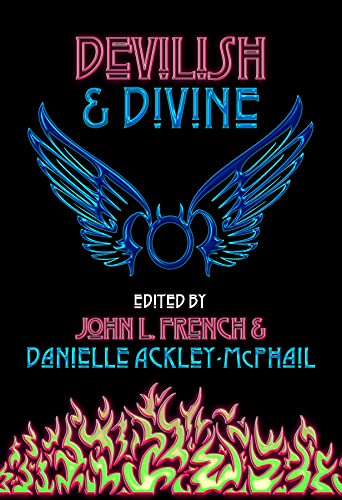
You can now preorder Devilish And Divine, edited by John L. French and Danielle Ackley-McPhail, which contains (among many, many others) three stories by me, Christopher J. Burke about those above us and from down below.
Preorder the softcover or ebook at Amazon.


Come back often for more funny math and geeky comics.


Algebra 2 Problems of the Day (Algebra 2/Trigonometry Regents, January 2014)


Now that I'm caught up with the current New York State Regents exams, I'm revisiting some older ones.

More Regents problems.

Algebra 2/Trigonometry Regents, January 2014

Part I: Each correct answer will receive 2 credits.


21. The expression (CBRT(272)(CBRT(164) is equivalent to

1) 12x2 (CBRT(2))
2) 12x (CBRT(2x))
3) 6x (CBRT(2x2))
4) 6x2 (CBRT(2))

Answer: 4) 6x2 (CBRT(2))


Combine the cube roots by multiplying and then factor the result, looking for groups of three.

27 x2 * 16 x4

27 * 16 * x6

3 * 3 * 3 * 2 * 2 * 2 * 2 * x2 * x2 * x2

Remove three factors of 3, three factors of 2, three factors of x2, and you are left with just 2 under the radical sign.

Outside of the radical you will have 3 * 2 * x2, or 6x2.


22. 2 Which sketch shows the inverse of y = ax, where a > 1?


Answer: 3) (see image)


The inverse to y = ax would be the graph of x = ay, or y = logax.

Choice (1) shows y = ax

Choice (2) shows y = ax where a < 1

CHoice (4) shows y = a2 after it's been transposed over y = x.


23. The expression (x2 + 9x - 22) / (x2 - 121) divided by (2 - x) is equivalent to

1) x - 11
2) 1 / (x - 11)
3) 11 - x
4) 1 / (11 - x)

Answer: 4) 1 / (11 - x)


Factor everything and eliminate identical factors from the numerator and the denominator.

(x2 + 9x - 22) / (x2 - 121) * 1 / (2 - x)
= ( (x + 11)(x - 2) ) / ( (x - 11)(x + 11) * 1 / ( (-1)(x - 2) )
= ( 1 ) / (x - 11) * 1 / ( (-1) )
= 1 / ( (-1)(x - 11) )
= 1 / (11 - x)


24. Which graph represents the solution set of (x + 16) / (x - 2) < 7?


Answer: 3) see image


If you graph y = (x + 16) / (x - 2) and look where it will be less or equal to 7, you will see that there is an asymptote at x = 2. As x approaches 2 from the right side, y goes to infinity, and as x approaches 2 from the left side, y goes to negative infinity.

The entire left side of the graph, when x has a value less than but NOT equal to negative two, has y-coordinates less than seven. On the right side, y will be less than or equal to 7 when x is greater than or equal to five.

Algebraically, it takes a little longer. We need to have a single fraction on the left side and a 0 on the right side.

(x + 16) / (x - 2) < 7
(x + 16) / (x - 2) - 7 < 0
(x + 16) / (x - 2) - 7(x - 2)/(x - 2) < 0
(x + 16) / (x - 2) - (7x - 14)/(x - 2) < 0
(-6x + 30) / (x - 2) < 0

Find the zeroes of the numerator and the denominator

-6x + 30 = 0
-6x = -30
x = 5

x - 2 = 0
x = 2

Check the intervals (-&inf;, 2), (2,5), and (5, &inf;).
I'll pick 0, 3 and 10 to check.
(0 + 16) / (0 - 2) = 16 / -2 = -8, which is less than 7. This is true.
(3 + 16) / (3 - 2) = 19 / 1, which is NOT less than 7. This interval is NOT part of the solution.
(10 + 16) / (10 - 2) = 26 / 8 = 3.25, which is less than 7.

Also, x =/= 2 because this is undefined, but x = 5 is a solution.

The intervals are x < 2 and x > 5.


More to come. Comments and questions welcome.

More Regents problems.

I also write Fiction!


You can now preorder Devilish And Divine, edited by John L. French and Danielle Ackley-McPhail, which contains (among many, many others) three stories by me, Christopher J. Burke about those above us and from down below.
Preorder the softcover or ebook at Amazon.

Also, check out In A Flash 2020, by Christopher J. Burke for 20 great flash fiction stories, perfectly sized for your train rides.
Available in softcover or ebook at Amazon.

If you enjoy it, please consider leaving a rating or review on Amazon or on Good Reads.


Geometry Problems of the Day (Geometry Regents, August 2013)


Now that I'm caught up with the current New York State Regents exams, I'm revisiting some older ones.

More Regents problems.

Geometry Regents, August 2013

Part I: Each correct answer will receive 2 credits.


21. Two prisms have equal heights and equal volumes. The base of one is a pentagon and the base of the other is a square. If the area of the pentagonal base is 36 square inches, how many inches are in the length of each side of the square base?

1) 6
2) 9
3) 24
4) 36

Answer: 1) 6


This entire question boils down to "A square has an Area of 36 square inches. What is the length of the side?"

The Volumes of the two objects are the same and the heights are the same, so the Areas of the two Bases are the same. The area of the pentagon is 36, so the area of the square is 36.

A = s2
36 = s2
6 = s

Choice (2) is if the Perimeter of the square was 36. Its perimeter is 24, which is Choice (3).


22.What is the difference between the sum of the measures of the interior angles of a regular pentagon and the sum of the measures of the exterior angles of a regular pentagon?

1) 36
2) 72
3) 108
4) 180

Answer: 1) 36


A pentagon has 540 interior degrees, which is 180 * 3. A pentagon (like every other polygon) has a total of 360 exterior degrees. The difference between the two is 540 - 360 = 180.

Choice (1) is the difference between one interior and one exterior angle. Divide 180 by 5 and you'll get 360.

Choice (2) is the size of the exterior angle

Choice (3) is the size of the interior angle.


23. If line ℓ is perpendicular to distinct planes P and Q, then planes P and Q

1) are parallel
2) contain line ℓ
3) are perpendicular
4) intersect, but are not perpendicular

Answer: 1) are parallel


Imagine a rectangle, or the margin running down the side of a page, or a pillar between the floor and the ceiling. If the line is perpendicular to the each plane than the planes are parallel to each other.

Neither plane can contain line ℓ because it is perpendicular, so it only touches each plane once. The planes cannot be perpendicular to a line and to each other as well because the angles don't add up. In fact, they cannot intersect at all.

Basically, the line is a transversal in three-dimensional space.


24. Which graph represents a circle whose equation is x2 + (y - 2)2 = 4?


Answer: 1) (see image)


Once again, the formula for the equation of a circle is (x - h)2 + (y - k)2 = r2, where (h, k) is the center of the circle, and r is the radius. Note that there are MINUS SIGNS in the formula. (I'm at the point where I'm literally cutting and pasting this sentence because of the HTML involved in typing it.)

The radius equals the SQRT(4) = 2, so eliminate Choices (2) and (4). There's a minus in the formula, so the center of the circle is (0, 2), not (0, -2).


More to come. Comments and questions welcome.

More Regents problems.

I also write Fiction!


You can now preorder Devilish And Divine, edited by John L. French and Danielle Ackley-McPhail, which contains (among many, many others) three stories by me, Christopher J. Burke about those above us and from down below.
Preorder the softcover or ebook at Amazon.

Also, check out In A Flash 2020, by Christopher J. Burke for 20 great flash fiction stories, perfectly sized for your train rides.
Available in softcover or ebook at Amazon.

If you enjoy it, please consider leaving a rating or review on Amazon or on Good Reads.


Monday, September 06, 2021

Happy Labor Day

(Click on the comic if you can't see the full image.)
(C)Copyright 2021, C. Burke. "AnthroNumerics" is a trademark of Christopher J. Burke and (x, why?).

Naturally, Labor Movement can have two different meanings. Speaking of Natural ...

... let me talk of Natural Numbers: one baby, two parents, three in the family ...


I also write Fiction!


You can now preorder Devilish And Divine, edited by John L. French and Danielle Ackley-McPhail, which contains (among many, many others) three stories by me, Christopher J. Burke about those above us and from down below.
Preorder the softcover or ebook at Amazon.


Come back often for more funny math and geeky comics.


Geometry Problems of the Day (Geometry Regents, August 2013)


Now that I'm caught up with the current New York State Regents exams, I'm revisiting some older ones.

More Regents problems.

Geometry Regents, August 2013

Part I: Each correct answer will receive 2 credits.


16. In a coordinate plane, the locus of points 5 units from the x-axis is the

1) lines x = 5 and x = -5
2) lines y = 5 and y = -5
3) line x = 5, only
4) line y = 5, only

Answer: 2) lines y = 5 and y = -5


The x-axis is the line y = 0.

The locus of points 5 units away from y = 0 are parallel lines 5 units above it and below it.

That would be y = -5 and y = 5.


17.The sides of a triangle are 8, 12, and 15. The longest side of a similar triangle is 18. What is the ratio of the perimeter of the smaller triangle to the perimeter of the larger triangle?

1) 2:3
2) 4:9
3) 5:6
4) 25:36

Answer: 3) 5:6


Perimeter has the same scale as the corresponding sides do.

The scale factor is 15/18, which simplifies to 5/6.

Choice (4) would be correct for Area.

Choice (1) would be correct if the question asked about the middle side instead of the largest side, with Choice (2) being about the area using the middle sides.


18. Lines m and n are in plane A. What is the converse of the statement
“If lines m and n are parallel, then lines m and n do not intersect”?

1) If lines m and n are not parallel, then lines m and n intersect.
2) If lines m and n are not parallel, then lines m and n do not intersect
3) If lines m and n intersect, then lines m and n are not parallel.
4) If lines m and n do not intersect, then lines m and n are parallel.

Answer: 4) If lines m and n do not intersect, then lines m and n are parallel.


The converse is the statment that is formed when you switch the order of the c;auses in the original conditional.

Choice (1) is the Inverse.

Choice (2) is an incorrectly written Inverse. It is nothing is relation to the original.

Choice (3) is the Contrapositive, which is the Inverse and Converse combined.


19. When the system of equations y + 2 = (x - 4)2 and 2x + y - 6 = 0 is solved graphically, the solution is
1) (-4, -2) and (-2, 2)
2) (4, -2) and (2, 2)
3) (-4, 2) and (-6, 6)
4) (4, 2) and (6, 6)

Answer: 2) (4, -2) and (2, 2)


It's a multiple-choice question, so you can solve it any way you want. However, you can rewrite the equations, putting them into "y=" form so that you can enter them into your graphing calculator.

Or you can algebraically check the points in the choices to see which points are solutions.

The "easiest" point to check is (2, 2). I say "easiest" because they're small numbers.

2 + 2 = (x - 4)2
4 = (-2)2 = 4. Check. (2, 2) is a solution.
Only one choice has (2, 2) as a solution, so that is the answer.


20. In the diagram of UVW below, A is the midpoint of UV, B is the midpoint of UW, C is the midpoint of VW, and AB and AC are drawn.


If VW = 7x - 3 and AB = 3x + 1, what is the length of VC?

1) 5
2) 13
3) 16
4) 32

Answer: 3) 16


AB is a midsegment and is half the length of VW. VC is half the length of VW and is the same length as VC.

You can write and equation that takes half of VW, but that means fractions, or you can write one that doubles AB.

7x - 3 = 2(3x + 1)
7x - 3 = 6x + 2
x = 5

VC = AB = 3x + 1 = 3(5) + 1 = 16

Note that Choice (1) is x, not VC, and Choice (4) is VW, not VC.


More to come. Comments and questions welcome.

More Regents problems.

I also write Fiction!


You can now preorder Devilish And Divine, edited by John L. French and Danielle Ackley-McPhail, which contains (among many, many others) three stories by me, Christopher J. Burke about those above us and from down below.
Preorder the softcover or ebook at Amazon.

Also, check out In A Flash 2020, by Christopher J. Burke for 20 great flash fiction stories, perfectly sized for your train rides.
Available in softcover or ebook at Amazon.

If you enjoy it, please consider leaving a rating or review on Amazon or on Good Reads.


Algebra 2 Problems of the Day (Algebra 2/Trigonometry Regents, January 2014)


Now that I'm caught up with the current New York State Regents exams, I'm revisiting some older ones.

More Regents problems.

Algebra 2/Trigonometry Regents, January 2014

Part I: Each correct answer will receive 2 credits.


16. For y = 3 / ( SQRT(x - 4) ), what are the domain and range?

1) {x | x > 4} and {y|y > 0}
2) {x | x > 4} and {y|y > 0}
3) {x | x > 4} and {y|y > 0}
4) {x | x > 4} and {y|y > 0}

Answer: 1) {x | x > 4} and {y|y > 0}


The domain cannot less than 4 because the radical would be undefined. The domain cannot contain 0 because the fracton would be undefined.

The range will go to infinity as x decreases close to 4. As x increases, the demonimator increases, so the fraction will approach zero, but it can never hit the x-axis.


17. A math club has 30 boys and 20 girls. Which expression represents the total number of different 5-member teams, consisting of 3 boys and 2 girls, that can be formed?

1) 30P3•20P2
2) 30C3•20C2
3) 30P3+20P2
4) 30C3+20C2

Answer: 2) 30C3•20C2


If a combination problem, not a permutation problem. The order the students are chosen does not matter.

The Counting Principle tells you that the number of ways to choose 3 boys and 2 girls is equal to the number of ways to choose 3 boys TIMES the number of ways to choose 2 girls.


18. 8 What is the product of the roots of x2 - 4x + k = 0 if one of the roots is 7?

1) 21
2) -11
3) -21
4) -77

Answer: 3) -21


If one of the roots is 7, the factors are (x - 7)(x - n). This means that (-7)(-n) = 7n = k. Also the sum (-7) + (-n) = -4.

So -n = 3, and n = -3

The factors are (x - 7)(x + 3). The product of the roots is (7)(-3) = -21.


19. In DEF, d = 5, e = 8, and m∠D = 32. How many distinct triangles can be drawn given these measurements?
1) 1
2) 2
3) 3
4) 0

Answer: 2) 2


Three is not possible. It's one, two, or zero.

If you have a 32 degree angle and a point 8 units away, you can draw an arc from that point that is 5 units long. It will the other line, f, in two places, so two triangles can be formed.

See the image below:


20. Liz has applied to a college that requires students to score in the top 6.7% on the mathematics portion of an aptitude test. The scores on the test are approximately normally distributed with a mean score of 576 and a standard deviation of 104. What is the minimum score Liz must earn to meet this requirement?

1) 680
2) 732
3) 740
4) 784

Answer: 2) 732


If you look at the chart of the normal distribution curve, you will see that the top 6.7% of the data will be 1.5 standard deviations away from the mean.

The mean is 576, and the standard deviation is 104.

Calculate 576 + 1.5(104) = 732

Note that Choice (1) is 576 + 1.0(104) and Choice (4) is 576 + 2.0(104), if you misread the chart.


More to come. Comments and questions welcome.

More Regents problems.

I also write Fiction!


You can now preorder Devilish And Divine, edited by John L. French and Danielle Ackley-McPhail, which contains (among many, many others) three stories by me, Christopher J. Burke about those above us and from down below.
Preorder the softcover or ebook at Amazon.

Also, check out In A Flash 2020, by Christopher J. Burke for 20 great flash fiction stories, perfectly sized for your train rides.
Available in softcover or ebook at Amazon.

If you enjoy it, please consider leaving a rating or review on Amazon or on Good Reads.


Sunday, September 05, 2021

Algebra 2 Problems of the Day (Algebra 2/Trigonometry Regents, January 2014)


Now that I'm caught up with the current New York State Regents exams, I'm revisiting some older ones.

More Regents problems.

Algebra 2/Trigonometry Regents, January 2014

Part I: Each correct answer will receive 2 credits.


11. The roots of the equation 2x2 + 4 = 9x are

1) real, rational, and equal
2) real, rational, and unequal
3) real, irrational, and unequal
4) imaginary

Answer: 2) real, rational, and unequal


Set the equation equal to zero and find the discriminant, b2 - 4ac.

If 2x2 + 4 = 9x
then 2x2 -9x + 4 = 0
and a = 2, b = -9, and c = 4

The discriminat is b2 - 4ac = (-9)2 - 4(2)(4) = 49

Since the discriminant is positive, there are two distinct solutions. Since 49 is a perfect square, those solutions will be ratioanl.

Those solutions will be (9 + 7) / (2*2) = (9+7)/4 or (9-7)/4, which is 4 or 1/2.


12. If d varies inversely as t, and d = 20 when t = 2, what is the value of t when d = -5?

1) 8
2) 2
3) -8
4) -2

Answer: 3) -8


If d varies inversely as t then d1t1 = d2t2

(20)(2) = (-5)t2

40/-5 = t

-8 = t


13. If sin A = -7/25 and ∠A terminates in Quadrant IV, tan A equals

1) -7/25
2) -7/24
3) -24/7
4) -24/25

Answer: 2) -7/24


If sin A = -7/25, then cos A = 24/25, using the Pythagorean Theorem, and the fact that we're in Quadrant IV, where x values are positive.

Tan A = sin A / cos A = (-7/25) / (24/25) = -7/24


14. Which expression is equivalent to Summation, n=1 to 4 (a - n)2?
1) 2a2 + 17
2) 4a2 + 30
3) 2a2 - 10a + 17
4) 4a2 - 20a + 30

Answer: 4) 4a2 - 20a + 30


You don't actually have to do all the math. Write out the terms and the correct answer will become obvious.

(a - 1)2 + (a - 2)2 + (a - 3)2 + (a - 4)2

Each binomial when expanded will have an a2 term. That sums to 4a2.

Each binomial when expanded will have a middle term that is -2n. Eliminate Choice (2).

Only Choice (4) remains.

Proof: a2 - 2a + 1 + a2 - 4a + 4 + a2 - 6a + 9 + a2 - 8a + 16 = 4a2 - 20a + 30


15. What are the coordinates of the center of a circle whose equation is x2 + y2 - 16x + 6y + 53 = 0?

1) (-8,-3)
2) (-8,3)
3) (8,-3)
4) (8,3)

Answer: 3) (8,-3)


Regroup the variables and complete the squares. That will put the equation in standard form.

x2 + y2 - 16x + 6y + 53 = 0
x2 - 16x + y2 + 6y = - 53
x2 - 16x + 82 + y2 + 6y + 32 = - 53 + 82 + 32
x2 - 16x + 64 + y2 + 6y + 9 = - 53 + 64 + 9
(x - 8)2 + (y + 3)2 = 20

The center of the circle is (8, -3).

Note that we didn't need the radius, so the last couple of steps weren't entirely necessary. Once you had half of -16x and half of 6y, you had enough information. But it doesn't hurt to be thorough.


More to come. Comments and questions welcome.

More Regents problems.

I also write Fiction!


You can now preorder Devilish And Divine, edited by John L. French and Danielle Ackley-McPhail, which contains (among many, many others) three stories by me, Christopher J. Burke about those above us and from down below.
Preorder the softcover or ebook at Amazon.

Also, check out In A Flash 2020, by Christopher J. Burke for 20 great flash fiction stories, perfectly sized for your train rides.
Available in softcover or ebook at Amazon.

If you enjoy it, please consider leaving a rating or review on Amazon or on Good Reads.


Geometry Problems of the Day (Geometry Regents, August 2013)


Now that I'm caught up with the current New York State Regents exams, I'm revisiting some older ones.

More Regents problems.

Geometry Regents, August 2013

Part I: Each correct answer will receive 2 credits.


11. The bases of a right triangular prism are triangle ABC and triangle DEF. Angles A and D are right angles, AB = 6, AC = 8, and AD = 12. What is the length of edge BE?

1) 10
2) 12
3) 14
4) 16

Answer: 2) 12


They word it so you think that this is a right triangle problem, but it is not.

BE is the height of the prism. AD is also the height of the prism, and AD = 12. Therefore BE =12.


12. IWhat is the equation of circle O shown in the diagram below?


1) (x + 4)2 + (y - 1)2 = 3
2) (x - 4)2 + (y + 1)2 = 3
3) (x + 4)2 + (y - 1)2 = 9
4) (x - 4)2 + (y + 1)2 = 9

Answer: 3) (x + 4)2 + (y - 1)2 = 9


Once again, the formula for the equation of a circle is (x - h)2 + (y - k)2 = r2, where (h, k) is the center of the circle, and r is the radius. Note that there are MINUS SIGNS in the formula. (I'm at the point where I'm literally cutting and pasting this sentence because of the HTML involved in typing it.)

The radius is 3, and 32 = 9. Eliminate Choices (1) and (2).

The center of the circle is at (-4, 1), so you want (x + 4) and (y - 1).


13. 3 The diagram below shows the construction of line m, parallel to line ℓ, through point P.
Which theorem was used to justify this construction?

1) If two lines are cut by a transversal and the alternate interior angles are congruent, the lines are parallel.
2) If two lines are cut by a transversal and the interior angles on the same side are supplementary, the lines are parallel.
3) If two lines are perpendicular to the same line, they are parallel
4) If two lines are cut by a transversal and the corresponding angles are congruent, they are parallel.

Answer: 4) If two lines are cut by a transversal and the corresponding angles are congruent, they are parallel.


The image shows a line parallel to the given line being constructed so that it passes through point P. The image uses corresponding angles.

Choice (1) mentions alternate interior angles, but that isn't shown in the image.

Choice (2) mentions interior angles, but the top angle isn't interior, and the angles aren't supplementary. Construction requires using congruency.

Choice (3) mentions perpendicular lines. Nothing states that the lines are perpendicular.


14. The lateral area of a right circular cone is equal to 120π cm2. If the base of the cone has a diameter of 24 cm, what is the length of the slant height, in centimeters?
1) 2.5
2) 5
3) 10
4) 15.7

Answer: 3) 10


The slant height is the length from the outer edge of the base of the cone to the top. If you take a cross section of the cone, then the height, the slant height and the radius (not the diameter) form a right triangle.

The Lateral Area of a cone is A = π rl, where l is the slant height. (This formula can be found in the back of the booklet.)

120 π = π (12) l
l = 120 π / π (12) = 10

This is the expected answer from teh calculations. However, I have a problem with this question. Since the height, the slant height and the radius form a right triangle, then the slant height shouldn't be less than the radius. That would mean that such a cone as described in the question couldn't exist.

Logically, when looking at this question for the first time, I assumed the answer would be 15.7 because it was the only choice that was larger than the radius.


15. A student wrote the following equations:

3y + 6 = 2x
2y - 3x = 6

The lines represented by these equations are

1) paralle
2) the same line
3) perpendicular
4) intersecting, but not perpendicular

Answer: 4) intersecting, but not perpendicular


Rewrite both statements in slope-intercept form.

3y + 6 = 2x
3y = 2x - 6
y = 2/3 x - 2

2y - 3x = 6
2y = 3x + 6
y = 3/2 x + 3

They don't have the same slope, so eliminate Choices (1) and (2).

They aren't perpendicular because the two slopes do not have a product of -1. (They aren't inverse reciprocals.)

Since they are not parallel, the lines will intersect, but not in a perpendicular way.


More to come. Comments and questions welcome.

More Regents problems.

I also write Fiction!


You can now preorder Devilish And Divine, edited by John L. French and Danielle Ackley-McPhail, which contains (among many, many others) three stories by me, Christopher J. Burke about those above us and from down below.
Preorder the softcover or ebook at Amazon.

Also, check out In A Flash 2020, by Christopher J. Burke for 20 great flash fiction stories, perfectly sized for your train rides.
Available in softcover or ebook at Amazon.

If you enjoy it, please consider leaving a rating or review on Amazon or on Good Reads.


Saturday, September 04, 2021

Algebra 2 Problems of the Day (Algebra 2/Trigonometry Regents, January 2014)


Now that I'm caught up with the current New York State Regents exams, I'm revisiting some older ones.

More Regents problems.

Algebra 2/Trigonometry Regents, January 2014

Part I: Each correct answer will receive 2 credits.


6. A school cafeteria has five different lunch periods. The cafeteria staff wants to find out which items on the menu are most popular, so they give every student in the first lunch period a list of questions to answer in order to collect data to represent the school. Which type of study does this represent?

1) observation
2) controlled experiment
3) population survey
4) sample survey

Answer: 4) sample survey


The list of questions is a survey. Since it is only given out in the first lunch period, it isn't a population survery. It's only a sample.


7. Which relation is both one-to-one and onto?


Answer: 2)


One-to-one means that each input has one output and it is a distinct output from the other inputs. If it was graphed, it would pass a horizontal-line test. Onto means that every element in the domain maps to an element in the range and vice versa. That is, there are any leftover elements.

Choice (1) is not one-to-one. Both h amd m map to 2. Eliminate it.

Choice (2) is both one-to-one and onto. This is the answer.

Choice (3) is not one-to-one. Both h and m map to 2, and r has 2 outputs. Eliminate it.

Choice (4) is not onto. Nothing maps to the number 1. Eliminate it.


3. Max solves a quadratic equation by completing the square. He shows a correct step:

(x + 2)2 = -9

What are the solutions to his equation?

1) 2 + 3i
2) -2 + 3i
3) 3 + 2i
4) -3 + 2i

Answer: 2) -2 + 3i


Two-step equation with imaginary numbers. Take the square root and subtract. It's similar to solving quadratics with irrational numbers in Algebra. (Imagine that the -9 was +8. Solve it in a similar manner.)

(x + 2)2 = -9
x + 2 = +3i
x = -2 +3i

Once you realize that the square root of -9 is 3i, you should have eliminated Choices (3) and (4).


9. Which expression represents the total number of different 11-letter arrangements that can be made using the letters in the word “MATHEMATICS”?
1) 11!/3!
2) 11!/8!
3) 11!/(2! + 2! + 2!)
4) 11!/(2! * 2! * 2!)

Answer: 3) 11!/(2! * 2! * 2!)


The number of ways to rearrange ABCDEFGHIJK is 11! However, the word MATHEMATICS has repeated letters, two Ms, two As, two Ts, which means that some of the rearrangements will be duplicates, and we must eliminate those.

We do that by dividing by (number of times letter is repeated)! And we have to do that for each distinct letter that is repeated. In other words, don't divide by 6!, which isn't an option, by instead we divide by 2! * 2! * 2!.


10. If $5000 is invested at a rate of 3% interest compounded quarterly, what is the value of the investment in 5 years? (Use the formula A = P(1 + r/n)nt, where A is the amount accrued, P is the principal, r is the interest rate, n is the number of times per year the money is compounded, and t is the length of time, in years.)

1) $5190.33
2) $5796.37
3) $5805.92
4) $5808.08

Answer: 3) $5805.92


The formula is given. Substitute all the values and put the expression in your calculator. Note that quarterly means 4 times per year, so n = 4.

Evalute this: 5000(1 + .03/4)^(4*5) = 5805.920...


More to come. Comments and questions welcome.

More Regents problems.

I also write Fiction!


You can now preorder Devilish And Divine, edited by John L. French and Danielle Ackley-McPhail, which contains (among many, many others) three stories by me, Christopher J. Burke about those above us and from down below.
Preorder the softcover or ebook at Amazon.

Also, check out In A Flash 2020, by Christopher J. Burke for 20 great flash fiction stories, perfectly sized for your train rides.
Available in softcover or ebook at Amazon.

If you enjoy it, please consider leaving a rating or review on Amazon or on Good Reads.


Geometry Problems of the Day (Geometry Regents, August 2013)


Now that I'm caught up with the current New York State Regents exams, I'm revisiting some older ones.

More Regents problems.

Geometry Regents, August 2013

Part I: Each correct answer will receive 2 credits.


6. In triangle ABC, ∠A ≅ ∠B and ∠C is an obtuse angle. Which statement is true?

1) AC ≅ AB and BC is the longest side.
2) AC ≅ BC and AB is the longest side.
3) AC ≅ AB and BC is the shortest side.
4) AC ≅ BC and AB is the shortest side.

Answer: 2) AC ≅ BC and AB is the longest side.


If ∠A ≅ ∠B then triangle ABC is an isosceles triangle with AC ≅ BC. If ∠C is obtuse, then it is the largest angle of the triangle (because you can only have one obtuse angle in a triangle).

The side of the triangle opposite the largest angle is the longest side. The side opposite ∠C is AB.


7. In the diagram of ABC below, medians AD and BE intersect at point F.


If AF = 6, what is the length of FD?

1) 6
2) 2
3) 3
4) 9

Answer: 3) 3


Medians meet at the centroid. The centroid splits the median into two segments with lengths in the ratio of 2:1, that is, the longer segment from the vertex is twice as big as the shorter segment to the midpoint.

If AF = 6, the FD is half of that, or 3.


8. In circle O, diameter AB intersects chord CD at E. If CE = ED, then ∠CEA is which type of angle?

1) straight
2) obtuse
3) acture
4) right

Answer: 4) right


If a diameter bisects a chord, then the diameter is perpendicular to the chord. Therefore, ∠CEA is a right angle.


9. If triangle ABC ≅ triangle JKL ≅ triangle RST, then BC must be congruent to
1) JL
2) JK
3) ST
4) RS

Answer: 3) ST


Some instructors might be sloppy with this but when naming congruent triangles, the order of the letters matters.

In this example, ∠A ≅ ∠J ≅ ∠R, and AB ≅ JK ≅ RS

Therefore, BC ≅ KL ≅ ST


10. In the diagram of ABC below, AB is extended to point D.


If m∠CAB = x + 40, m∠ACB = 3x + 10, and m∠CBD = 6x, what is m∠CAB?

1) 13
2) 25
3) 53
4) 65

Answer: 4) 65


The Remote Angle Theorem tells us that the size of the exterior angle is equal to the sum of the two remote angles. You can write an equation to solve:

x + 40 + 3x + 10 = 6x
4x + 50 = 6x
50 = 2x
25 = x

If x = 25, then m∠CAB = x + 40 = 25 + 40 = 65.


More to come. Comments and questions welcome.

More Regents problems.

I also write Fiction!


You can now preorder Devilish And Divine, edited by John L. French and Danielle Ackley-McPhail, which contains (among many, many others) three stories by me, Christopher J. Burke about those above us and from down below.
Preorder the softcover or ebook at Amazon.

Also, check out In A Flash 2020, by Christopher J. Burke for 20 great flash fiction stories, perfectly sized for your train rides.
Available in softcover or ebook at Amazon.

If you enjoy it, please consider leaving a rating or review on Amazon or on Good Reads.


Friday, September 03, 2021

(x, why?) Mini: Roads Less Traveled

(Click on the comic if you can't see the full image.)
(C)Copyright 2021, C. Burke. "AnthroNumerics" is a trademark of Christopher J. Burke and (x, why?).

It made all the difference to the Truth Table.


I also write Fiction!


You can now preorder Devilish And Divine, edited by John L. French and Danielle Ackley-McPhail, which contains (among many, many others) three stories by me, Christopher J. Burke about those above us and from down below.
Preorder the softcover or ebook at Amazon.


Come back often for more funny math and geeky comics.


Algebra 2 Problems of the Day (Algebra 2/Trigonometry Regents, January 2014)


Now that I'm caught up with the current New York State Regents exams, I'm revisiting some older ones.

More Regents problems.

Algebra 2/Trigonometry Regents, January 2014

Part I: Each correct answer will receive 2 credits.


1. What is the common difference in the sequence
2a + 1, 4a + 4, 6a + 7, 8a + 10, ...?

1) 2a + 3
2) -2a - 3
3) 2a + 5
4) -2a + 5

Answer: 1) 2a + 3


Look at the difference in each term of each binomial in each term of the sequence.

The a term has its coefficient increasing by 2. The constant term is increasing by 3.


2. Which expression is equivalent to (3x2)-1?

1) 1 / 3x2
2) -3x2
3) 1 / 9x2
4) -9x2

Answer: 1) 1 / 3x2


An exponent of -1 means that you want the reciprocal of the expression getting the exponent. In this case, it's everything inside the parentheses.

The exponent of 2 is ONLY applied to the variable next to it, but not the 3 because there are no parentheses around 3x.


3. If g(x) = 1/2 x + 8 and h(x) = 1/2 x - 2, what is the value of g(h(-8))?

1) 0
2) 9
3) 5
4) 4

Answer: 3) 5


Find the value of h(-8). Take that value and use it as the input of g(x).

h(-8) = 1/2 (-8) - 2 = (-4) - 2 = -6

g(-6) = 1/2 (-6) + 8 = (-3) + 8 = 5


4. The expression 1 / (7 - SQRT(11)) is equivalent to
1) (7 + SQRT(11)) / 38
2) (7 - SQRT(11)) / 38
3) (7 + SQRT(11)) / 60
4) (7 - SQRT(11)) / 60

Answer: 1) (7 + SQRT(11)) / 38


To rationalize the denominator, multiply it by the conjugate. And if you multiply the denominator by the conjugate, you have to multiply the numerator by it as well.

1 / (7 - SQRT(11)) * (7 + SQRT(11)) / (7 + SQRT(11))
= (7 + SQRT(11)) / ((7 - SQRT(11))(7 + SQRT(11))
= (7 + SQRT(11)) / (49 - (SQRT(11)2)
= (7 + SQRT(11)) / (49 - 11)
= (7 + SQRT(11)) / 38


5. The expression (a + b/c) / (d - b/c) is equivalent to

1) (c + 1) / (d - 1)
2) (a + b) / (d - b)
3) (ac + b) / (cd - b)
4) (ac + 1) / (cd - 1)

Answer: 3) (ac + b) / (cd - b)


Multiply the fraction by (1 / c) / (1 / c)

(a + b/c) / (d - b/c) * (1 / c) / (1 / c)

= (ca + b) / (cd - b)

Since there is a minus sign in the formula, subtracting -5 is the same as ADDING 5.


More to come. Comments and questions welcome.

More Regents problems.

I also write Fiction!


You can now preorder Devilish And Divine, edited by John L. French and Danielle Ackley-McPhail, which contains (among many, many others) three stories by me, Christopher J. Burke about those above us and from down below.
Preorder the softcover or ebook at Amazon.