Get it? Two tens! Now you know the score!


Get it? Two tens! Now you know the score!
Specifically, question 38 read as follows:
This is a question my students should be able to answer easily. They probably didn't, but they should have. There are reasons why I say this.
When I approach any question that contains the word "Prove", I try to get the students to think of any TV show courtroom drama they've ever scene. (Sit-coms are a totally different animal, here.) Few of them might know what it's like to be in a real courtroom, so I settle for the simplified version. Each side will give an opening statement, and they will state what they are setting out to prove. They were present their evidence and build a case out of all the evidence they bring forward. There isn't one magic witness or exhibit that will hand-wave the case away. (If there were, the case likely would never have been brought.) Then, in the end, there are summaries, which include the lawyers' conclusions based on the evidence that they've presented, and they implore the jury to reach the same conclusion.
Students are different. Students, who a year earlier in Algebra would have me solve a five-step problem in 17 steps, and repeat the solution and check twice because they still weren't "getting it", will look at a Geometry "proof" and say, "It's true because, you know, Math."
They're not sure what the "Math" is, but the Math is there, so it must be true.
The point is that they need to be sure.
This led to some interesting discussions online about the test question. How do you know, for example, if you gave enough information for only 2 points and not for 4 points?
Let's get to the basics
How do you prove that a quadrilateral is also a parallelogram?
You have several choices: if the opposite sides are parallel, or if the opposite sides are congruent, or if the diagonals bisect each other, then the figure is a parallelogram.
This statement, whichever one or ones you use, has to be your conclusion, but you have to back those up with evidence:
Any of those are easy to do, although I'd say that slopes and midpoints are quicker to find than the lengths. Which one you do is up to you, but you can save time if you keep the second part of the question in mind. Using the slopes for the parallelogram is fine, but it won't help you with the rhombus.
That being said, I'd probably find the slopes first just because it's pretty much second-nature to me to do that first.
How do you prove that a quadrilateral is rhombus?
You have a couple of choices: if all four sides are congruent, or if the diagonals perpendicularly bisect each other, then the figure is a rhombus.
This statement, whichever one or ones you use, has to be your conclusion, but you have to back those up with evidence:
So how much work is actually required for this problem?
Believe it or not, you could have solved this problem simply by finding the lengths of the four sides. Is that worth 6 points? No, that was worth 2 points. The rest of the points came from you conclusions and your reasons. Just because you found the lengths, you haven't (and this isn't meant to be a plotting reference) you haven't connected the dots yet. You haven't given a conclusion, nor stated under what rules this proves your case.
JKLM is a parallelogram because the opposite sides are congruent. (Work is shown for this.) JKLM is NOT a rhombus because all four sides are NOT congruent.
or
JKLM is a parallelogram because the diagonals bisect each other. (Work is shown for this.) JKLM is NOT a rhombus because the diagonals are not perpendicular. (Work is shown for this.)
Either of these would be complete answers good for full credit.
By contrast "They're parallel." ... well, just isn't.
As you can see, the slopes of the sides aren't needed for the problem, but it isn't incorrect to find them. Other work left for the reader: find the lengths of the sides, and the midpoints and slopes of the diagonals.

As far as I know, there aren't rules for displaying a flag at 45 degrees. It probably shouldn't. You probably will never have a radical-two length flag, either.

Which one is the favorite? Check out the independent rankine!

In math and in life, there's always some constant.
And in computer science, there's !=, which means "not equal to", in case you didn't know.
I'm more of a pi guy, but I wanted to use Tau-er of power in a comic.
Guillermo Bautista has an entry in Math and Multimedia, entitled 7 Funny Math Comic Sites You Will Love.
(x, why?) made the list. Well, actually, this blog made the list, but I like to give a plug to the comics-only site every now and then. These days the blog is starting to get more traffic, but without the other site, some of the comics wouldn't be readable.
What else is on the list? Well, there's . . . ah, that would spoil it. Go check it out.
Because, let's face it, I'm just a flippin' genius!
If you find this page helpful, please Like or Share or Leave a Comment. Thank you!
I really can't do Parts 3 and 4 until I take the time to create the necessary illustrations. Sorry. So here's Part 2. If you missed Part 1, it's here.
29. The coordinates of the endpoints of BC are B(5, 1) and C(-3, -2). Under the transformation R90, the image of BC is B'C'. State the coordinates of points B' and C'.
Remember, if they don't state which direction you are rotating, the default is counterclockwise. That might seem counter-intuitive, but you are moving from quadrant I to II, from II to III, etc.
Under R90, a point P(x, y) becomes P'(-y, x). So these points will become B'(-1, 5) and C'(2, -3). Interestingly enough, according to the key, you didn't need to say which was which, but you did need to include the parentheses.
30. As shown in the diagram below [COMING SOON], AS is a diagonal of trapezoid STAR, RA || ST, m<ATS = 48, m<RSA = 47, and m<ARS = 68.
Determine and state the longest side of triangle SAT.
You needed to calculate that m<AST = 65 degrees. You can get this using triangle RAS or knowing that the same-side interior angles are supplementary.
Once you know that, you can use 65 + 48 + x = 180 to find m<SAT, which is 67.
Side ST is the longest side because it is opposite the largest angle. You needed to give the side AND show some kind of work that indicates that you didn't go eeny-meeny... Seriously.
ST without any work -- even just angle sizes after you did the subtraction in your head or on your calculator -- is worth 0 points.
31. In right triangle ABC shown below [I'LL GET TO IT!], altitude BD is drawn to hypotenuse AC. If AD = 8 and DC = 10, determine and state the length of AB.
There's a short way and a long way to do this. Both are okay for full credit.
First, remember that there are three right triangles in this diagram. Both of the smaller ones are similar (and therefore proportional) to the larger one and to each other.
You could write a proportional comparing ( base / hypotenuse) = ( base / hypotenuse) of triangle BAD and triangle ABC.
You would have ( 8 / x ) = ( x / 18 ). (It's 18 because it is 10+8.)
Cross-multiply: x2 = 144.
x = 12, which is the length of AB.
The longer method: If you forgot about that proportionality, but remembered the Altitude Rule, you would have found that altitude (BD)2 = (AD)(DC), so y2 = (8)(10) or 80. So the altitude is the square root of 80. Okay, that's good for partial credit, but we aren't done.
Now you can use Pythagorean Theorem: 82 + 80 = x2. Remember: (the square root of 80) squared is just 80.
64 + 80 = x2
144 = x2
x = 12, again.
Either method is valid and will get full credit. I saw quite a few of each type. The only problem with the longer method was that some students started estimating an answer in the middle and that introduced an error into the rest of the calculations.
32. Two prisms with equal altitudes have equal volumes. The base of one prism is a square with a side length of 5 inches. The base of the second prism is a rectangle with a side length of 10 inches. Determine and state, in inches, the measure of the width of the rectangle.
I graded a lot of these. Two things: First, I can't believe how many Geometry students can do so well and still not know the Area of a rectangle or the Volume of a rectangular prism.
Second: This is a good case of Less is More. What do I mean by that? A lot of students talked or worked themselves out of a 1 or 2 points. Seriously.
Despite the fact that the word prism is used repeatedly, students draw pyramids, which by themselves, might not have been work and could've been overlooked. But then they used formulas for Volume that included 1/3 in them. That's a conceptual error. What makes this worse is that the (1/3)s cancel out and don't affect the outcome -- just the final score. I had to call over an arbitrator on this one because I didn't want to make that call.
Another error that was made repeatedly was that students assumed that the first prism was a cube even though there is nothing supporting this. They substituted 5 for the height! There is nothing about 5 being the height. This led to a discussion about whether that could be a case of "guess and check" and not an actual "conceptual error". Again, the mistake factors out.
But the worst part of it all is that because the heights were the same, the formula for Volume wasn't even needed! You only needed to compare the Area of the two bases.
This became confusing as well. People did perimeter of one and Area of the other. Or they assume that both bases were squares or other crazy stuff.
If was a very simple problem. How simple?
52 = 10x.
That simple: x = 2.5.
Funniest answer: Someone wrote 2.5in = w, with a little bit of cursive and I thought it said "2 Sin w". Okay, it was funny to me.
33. As shown in the diagram below, BO and tangents BA and BC are drawn from external point B to circle O. Radii OA and OC are drawn. If OA = 7 and DB = 18, determine and state the length of AB.
A very similar question was asked in August 2011, but that was multiple choice.
Again, there are TWO methods to solve this: Pythagorean Theorem, and Tangent-Secant.
First, realize that OD is also a radius, with length 7. That means that OB is 25. OA is perpendicular to the tangent line BA. Therefore, OAB is a right triangle with OB as its hypotenuse and OA, a radius, as one of its legs. So 72 + (AB)2 = 252.
Solving the equation, we find that AB has a length of 24.
The other way: Draw diameter DOE (make point E on the circle opposite from D). BE is now a secant line with a length of 18 + 7 + 7 = 32.
Tangent-secant rule: (BA)2 = (BD)(BE) = 18 X 32 = 576. AB = 24.
Both methods are valid.
34. Triangle RST is similar to triangle XYZ with RS = 3 inches and XY = 2 inches. If the area of triangle RST is 27 inches, determine and state the area of triangle XYZ, in square inches.
Short way: The ratio of the areas of two similar triangles is the square of the ratio of their sides. The scale factor of the sides is 3:2, so the scale factor for the areas is 9:4. If the bigger one has area 27, then ( 9 / 4 ) = ( 27 / x ).
Cross-multiply and 9x = 108, and x = 12.
LONG WAY: If you forgot about that, you could have done the following: if the large triangle has Area 27 and base 3, and A = 1/2 b h, then 27 = (1/2)(3)(h), and h = 18.
Then to find the height of the smaller triangle, ( 3 / 2 ) = ( 18 / h ). Then 3h = 36 and h = 12 inches. But that isn't the answer -- that's just the height.
A = (1/2) b h = (1/2) (2) (12) = 12 sq inches. That's the answer. Even though both numbers are 12, if you didn't complete it, you lost a point.
35.
If you find this page helpful, please Like or Share or Leave a Comment. Thank you!
I just got home from grading the Geometry Regents exams in Staten Island, so I finally had a good look at the exam. Students and teachers alike had both described it as a "fair" exam (sort of like the Algebra test), and I'd have to agree.
Here are the multiple-choice questions from Part I. Keep in mind, that I have to type all of these, so the rest of the test may not show up on my blog as quickly as you may like. Questions are always welcome. Likewise, because I've been asked to hurry with this, there are no diagrams included. They may get added at a later time.
1. Plane P is parallel to plane Q. If plane P is perpendicular to line l, then plane Q...
(3) is perpendicular to line l. Think of a fire pole at a fire station going through the second floor to the first floor.
2. In the diagram below [Diagram Omitted], quadrilateral ABCD has vertices A(-5,1), B(6, -1), C(3, 5) and D(-2, 7). What are the coordinates of the midpoint of diagonal AC?
The midpoint is the average of the two x-values and the average of the two y-values. ( (-5+3)/2, (1+5)/2 ), which is (-1, 3).
3. In the diagram below, transversal TU intersects PQ and RS at V and W, respectively. If m<TVQ = 5x - 22, and m<VWS = 3x + 10, for which value of x is PQ || RS?
You want the value of x that makes 5x - 22 = 3x + 10, because corresponding angles are congruent when parallel lines are cut by a transversal. Solve for x and you get 16.
4. The measures of the angles of a triangle are in the ratio 2:3:4. In degrees, the measure of the largest angle of the triangle is:
Take the ratio and write the following equation: 2x + 3x + 4x = 180. So 9x = 180, and x = 20. The largest angle is 4x, which is 4(20) = 80 degrees.
5. The diamter of the base of a right circular cylinder is 6 cm and the height is 15 cm. In square centimeters, the lateral area of the cylinder is
The lateral area is the circumference of the base times the height, or (pi)(d)(h), which is (pi)(6)(15), which is 90*pi.
6. When the system of equations y + 2x = x2 and y = x is graphed on a set of axes, what is the total number of points of intersection?
Substitute y = x into the other equation and you get x + 2x = x2
This can be rewritten as x2 - 3x = 0.
You don't need to solve it to know that there are two distinct solutions. You could have graphed the equations as well. Note: A parabola and a straight line can have 0, 1 or 2 intersection points. They cannot have three.
7. The vertex angle of an isosceles triangle measures 15 degrees more than one of its base angles. How many degrees are there in a base angle of the triangle?
The sum of the angles is x + x + x + 15 = 180. So 3x + 15 = 180, 3x = 165 and x = 55, which is the measure of one base angle.
8. Circle O is graphed on the set of axes below. [Diagram omitted] Which equation represents circle O?
The correct form is (x - h)2 + (y - k)2 = r2, where (h, k) is the center of the circle and r is the radius.
In the graph, the center is (-1, 3) and the radius is 3.
So the equation is (x + 1)2 + (y - 3)2 = 9.
9. In the diagram of the circle shown below [Diagram omitted], chords AC and BD intersect at Q and chords AE and BD are parallel. Which statement must always be true?
Arcs AB and DE are congruent because the arcs formed by two parallel chords are always congruent.
10. In the diagram below [Diagram omitted], triangle AEC is congruent to triangle BED. Which statement is not always true?
Angle ACE does not correspond to angle DBE, so they will not always be congruent although they could be in an isosceles or equilateral triangle.
11. What is the length of RS with R(-2, 3) and S(4, 5)?
Distance formula, a.k.a. Pythagorean Theorem. The square root of (62 + 22 is the square root of 40, which simplifies to 2 times square root of 10.
12. What are the truth values of the statement "Two is prime" and its negation?
Two is a prime number so the statement is True, which means the negation is False. Choices 2 and 3 are just silly and should have been eliminated immediately.
13. A regular polygon has an exterior angle that measures 45 degrees. How many sides does the polygon have?
If you didn't know just from constant repetition of the problem in class, remember that 360/n = 45, so n = 360/45 = 8 sides.
14. In rhombus ABCD with diagonals AC and DB, AD = 10. if the length of diagonal AC is 12, what is the length of DB?
If one side is 10, all sides are 10. The diagonals are perpendicular bisectors. This means that there are four little right triangles with hypotenuse 10. One leg of each triangle is 6 (12/2). Using Pythagorean Theorem, or just knowing the triple, the other leg of each triangle is 8. That makes the length of the entire diagonal DB 16.
15. If the surface area of a sphere is 144*pi square centimeters, what is the length of the diameter of the sphere, in centimeters?
The surface area of a sphere (given in the back of the booklet) is 4*pi*r2 = 144 * pi. Divide both sides by 4*pi, and r2 = 36, so r = 6.
The radius is half the diameter, which is 12.
16. Which numbers could represent the lengths of a the sides of a triangle?
Not a right triangle, just a triangle. The rule for the sides of a triangle is that the sum of the two smaller sides must be more than the length of the largest side. 5 + 9 = 14, 7 + 7 < 15, 1 + 2 < 4, 3 + 6 > 8.
17. The equation of a line is 3y + 2x = 12. What is the slope of the line perpendicular to the given line?
The slopes of two perpendicular lines are inverse reciprocals. (That is, change the sign, and flip the fraction over.)
First you have to find the slope of the given line. Subtract 2x from both sides and divide everything by 3 (the coefficient of y). The slope of the given line is -2/3.
That makes the perpendicular slope 3 / 2. CORRECTION.
18. In the diagram below, point K is in plane P. How many lines can be drawn through K, perpendicular to plane P?
Similar to the other question, only one line perpendicular to a plane can be drawn at any one point. Think of a pencil through a hole in your loose leaf.
19. In the diagram below, AB and CD are bases of trapezoid ABCD. (Not drawn to scale) If m<B = 123 and m<D = 73, what is the m<C?
Because it isn't an isosceles trapezoid, <C and <D can not be assumed to be congruent. However, <B and <C are supplementary. So the answer is 57.
20. What is the equation of a line passing through the point (4, -1) and parallel to the line whose equation is 2y - x = 8?
Rewrite 2y - x = 8 as y = (1/2) x + 4, slope is 1/2. So the parallel line must have the equation y = (1/2) x + b.
Plug is 4 for x and -1 for y and solve for b. You will find that b = -3, so the answer is y = (1/2) x - 3.
21. The image of rhombus VWXY preserves which properties under the transformation T2, -3?
Translations do not change shape nor orientation, so the correct answer is both parallelism and orientation.
22. The equation of a circle is (x - 3)2 + y2 = 8. The coordinates of its center and the length of its radius are
Using the form given above, the center is (3, 0) and the radius is the square root of 8, which is 2 times the square root of 2.
23. Which statement has the same truth value as the statement, "If a quadrilateral is a square, then it is a rectangle"?
Note that it didn't ask what the truth value of the statement was. That isn't important. What is important is that the statement has the same truth value as its contrapositive, which is "If a quadrilateral is not a rectangle, then it is not a square."
24. The three medians of a triangle intersect at a point. Which measurements could represent the segments of one of the medians?
The centroid occurs 2/3rds the way down the length of the median. In other words, the two segments will have a ratio of 1:2, with each segment being 1/3 or 2/3 the length of the median itself. The correct choice is 3 and 6.
25. In the diagram of triangle PQR shown below {NO, IT ISN'T], PR is extended to S, m<P = 110, m<Q = 4x and m<QRS = x2 + 5x. What is m<Q?
The sum of the measures of angles P and Q is equal to the exterior angle R. The equation to write is x2 + 5x = 4x + 110.
26. Triangle PQT with RS || QT is shown below [DONT HOLD YOUR BREATH]. If PR = 12, RQ = 8 and PS = 21, what is the length of PT?
You can set up a proportion (21 / x) = (12 / 8), which will find the length of ST, which is 14. PT = 21 + 14, which is 35.
27. In the diagram of line segment WXYZ below, WY is congruent to XZ. Which reasons can be used to prove VW is congruent to YZ?
The reflexive property (XY is congruent to XY) and subtraction postulate (WY - XY is congruent to XZ - XY).
28. The coordinates of the endpoints of the diamter of a circle are (2, 0) and (2, -8). What is the equation of the circle?
This is the third question about the equation of a circle. The center of the circle is (2, -4). The radius is 4.
* * *
So how did everyone do? More importantly, how did I do? I mean, I did rush this. Mistakes happen.
This becomes a quadratic equation, x2 + x - 110 = 0.
This factors in (x + 11)(x - 10) = 0, so x = -11 (discard the negative) or x = 10.
HOWEVER, they want the size of the angle, not of x. The size of the angle is 4x = 4(10) = 40.
The equation of the circle is (x - 2)2 + (y + 4)2 = 16.
To answer those who asked on yesterday's Part 1 thread and on Twitter, for the past year I worked at Tottenville High School in Staten Island, and before that I was at William E. Grady High School in Coney Island, Brooklyn, with some time at Boys High School in Bed-Stuy.
Okay, so here we go. Illustrations may get added later, but students seem to be in a hurry for answers:
31. A patio consisting of two semicircles and a square is shown in the diagram below. [ A SQUARE with a semicircle on top and right sides.] The lenght of each side of the square region is represented by 2x. Write an expression for the area of the entire patio, in terms of x and pi.
In terms of x and pi means that you aren't solving for x and you aren't replacing pi with 3.14 or anything else.
Two semicircles make one whole circle. The area of a circle is pi*r2. The radius is half the diameter. The diameter is the side of a square, which is 2x. So the radius is 1x. The area of a square is s2.
The area of the entire patio is (2x)2 + (pi)(x)2, which is 4x2 + (pi)(x)2. That should be enough for full credit.
You could also represent it as (4 + pi)(x)2, but that shouldn't be necessary.
32. Clayton is performing some probability experiments consisting of flipping three coins. What is the probability that when Clayton flips the three coins, he gets two tails and one heads?
I did a very similar problem in class recently. Hopefully, you made a tree diagram or a sample space because there aren't that many possible outcomes: 2 X 2 X 2 = 8 outcomes.
On your diagram you'll see the only possibilities are that the first is H and the others tails, the second is H and the others tails or the third is H and the others tails. Therefore there are 3 positive outcomes, so the probability is 3/8.
This was much easier than a Common Core two-point question!
33. Ross is installing edging around his pool, which consists of a rectangle and a semicircle, as shown in the diagram below. [RECTANGLE WITH A SEMICIRCLE ON TOP, WITH A DIAMETER THE WIDTH OF THE SMALLER END OF THE RECTANGLE.] Determine the length of edging, to the nearest tenth of a foot, that Ross will need to go completely around the pool.
Two irregular shapes in one test? That's new. And both contain semicircles. However, this is a perimeter/circumference problem, not an area problem.
The three sides of the rectangle that need edging are 30 + 15 + 30, which is 75 feet. The semicircle is (1/2)(pi)(d), which is (1/2)(3.141592...)(15), which is 23.56..., which rounds to 23.6.
The total is 75 + 23.6 = 98.6 feet.
34. Solve the following system of equations algebraically for all values of x and y. y = x2 + 2x - 8; y = 2x + 1
Algebraically means that you can't use your graphing calculator to find the answer and then use "guess and check" on the paper.
Using substitution, you get x2 + 2x - 8 = 2x + 1
Subtract 2x and subtract 1 from both sides and you have x2 - 9 = 0
This is a Difference of Squares and can be factored as: (x + 3)(x - 3) = 0
So either x + 3 = 0 or x - 3 = 0
Your solution set for x is {-3, 3}
DO NOT STOP HERE. You need the values of y as well.
If x = -3, y = 2(-3) + 1 = -6 + 1 = -5. (-3, -5)
If x = 3, y = 2(3) + 1 = 6 + 1 = 7, (3, 7)
If you plug these into the other equations, they will check.
35. A storage container in the form of a rectangular prism is measured to be 12 inches by 8 inches by 4 inches. Its actual measurements are 11.75 inches by 7.75 inches by 4 inches. Find the relative error in calculating the volume of the container, to the nearest thousandth.
Volume = length X width X height.
Relative error = (difference in the values) / (actual value)
So this problem is ( (12)(8)(4) - (11.75)(7.75)(4) ) / ( (11.75)(7.75)(4) ). If you are using a graphing or scientific calculator, and doing this in one step, those extra parentheses are needed.
This becomes ( 384 - 364.25 ) / 364.25 = 19.75 / 364.25 = 0.054221..., which is 0.054 to the nearest thousandth.
DO NOT make it into a percentage.
36. Perform the indicated operations and express the answer in simplest radical form.
This is new, using the Distributive Property with radicals. Good luck.
Keep in mind, this is how I would do it. As long as you did similar steps, possibly in the same order, and achieved the same solution, you're fine. This would've taken longer if I hadn't seen a number pattern and multiplied the sevens before finding the largest perfect squares.

Again, you didn't have to do it my way, as long as you multiplied, factored, added and came up with 189 times the square root of 2.
If I made a mistake here, feel free to point it out and I'll correct it.
37. During its first week of business, a market sold a total of 108 apples and oranges. the second week, five times the number of apples and three times the number of oranges were sold. A total of 452 apples and oranges were sold during the second week. Determine how many apples and how many oranges were sold the first week. [Only an algebraic solution can receive full credit.]
We'll let x = the number of apples sold the first week and y = the number of oranges sold the first week. I won't use A and O, because O looks like 0 and that can be confusing.
We know that x + y = 108 and 5x + 3y = 452. Multiply (x + y = 108) by (-3) and you get -3x + -3y = -324.
Combine 5x + 3y = 452 and -3x + -3y = -324 and you get 2x = 128. The y (number of oranges) is eliminated.
If 2x = 128, then x = 64.
64 + y = 108, so y = 44.
Check: 5(64) + 3(44) = 452?
320 + 132 = 452?
452 = 452 (check!)
38. On the set of axes below, solve the following systems of inequalities graphically. Label the solution set S.
If you want to use your calculator as a guide, you need to rewrite these equations in slope-intercept form.
Note that the first line will be a broken or dashed line. The second inequality has a solid line.
A picture of the graph will have to wait until later but, you will shade below the first line and above the second line. The solution set will be the section on the left side of the graph between the two lines. That's where the S goes.
39. During the last 15 years of his baseball career, Andrew hit the following number of home runs each season: 35, 24, 32, 36, 40, 32, 40, 38, 36, 33, 11, 20, 19, 22, 8. State and label the values of the minimum, 1st quartile, median, 3rd quartile and maximum. Using the line below, construct a box-and-whisker plot for this set of data.
First, put the numbers in order to make life easier. Your graphing calculator can do this. (It can also make the box-and-whisker plot, too!)
The numbers, in order, are: 8, 11, 19, 20, 22, 24, 32, 32, 33, 35, 36, 36, 38, 40, 40.
There are 15 numbers, so the 8th number is the median (32). The middle of the first 7 numbers, the 4th number, is Q1 (20). The middle of the back 7 numbers, the 12th number, is Q3 (36). The minimum is 8 and the maximum is 40.
I would use a scale of 2 on the number line, which should allow the numbers from 0 to 50 if you wanted. Plot the five numbers we found above. Draw the box around the middle three and the extend the whiskers to the first and last.
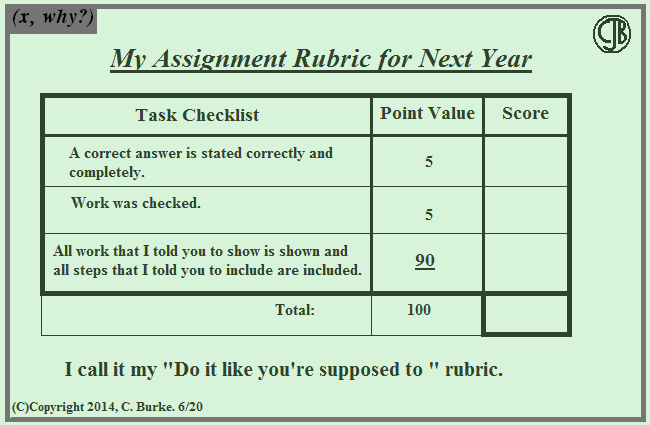
What part of ''Show Your Work'' are you still not getting? And ''well, duh!'' is NOT a valid explanation!