
This exam was adminstered in January 2026.
January 2026 Algebra, Part II
Each correct answer is worth up to 2 credits. Partial credit can be given. Work must be shown or explained.
25. Solve the equation for x:
Answer:
Use the Distributive property, Combine like terms, and then Inverse operations:
14x = 3(1 + 2x) - 4x
14x = 3 + 6x - 4x
14x = 3 + 2x
12x = 3
x = 3/12 = 1/4
26. Graph f(x) = 3(2)x over the interval -1 < x < 2.
Answer:
Put the equation into your graphing calculator and plot the points that appear in the Table of Values. Start at x = -1 and end at x = 2. Do NOT go beyond. Do NOT draw arrows. You MUST have TWO endpoints on your graph.
Your graph should look like this:

27. Determine the product of (2x + 3) and (-6x2 + 5x - 1). Express the product in standard form.
Answer:
Multiply and combine like terms.
(2x + 3) (-6x2 + 5x - 1)
(2x)(-6x2 + 5x - 1) + (3)(-6x2 + 5x - 1)
(-12x3 + 10x2 - 2x) + (-18x2 + 15x - 3)
-12x3 - 8x2 + 13x - 3
28. A student’s test scores for the semester are listed below.
Construct a box plot for this data set, using the number line below.
Answer:
You can use a graphing calculator to give you a Five Number Summary of this data by putting it into a List.
Or you can find the Five-Number Summary yourself after you put the data into order.
70, 72, 83, 83, 85, 87, 88, 90, 93, 94, 94, 95, 98.
The minimum is 70, and the maximum is 98. The median of 13 pieces of data will be the 7th entry, which is 88.
There are six numbers less than 88. The two numbers in the middle are both 83, so Q1 is 83.
There are six numbers greater than 88. The two numbers in the middle are both 94, so Q1 is 94.
Plot these five points. Draw the box around the three middle points and draw the whiskers.
You should get something like this.

29. Write an equation, in slope-intercept form, of a line that passes through the point (6, 3) and has a slope of 2/3.
Answer:
You can start with point-slope form and rewrite the equation in slope-intercept form, or you can start with slope-intercept form, and solve for the y-intercept.
Method 1:
y - 3 = 2/3 (x - 6)
y - 3 = 2/3 x - 4
y = 2/3 x - 1
Method 2:
y = mx + b
3 = (2/3)(6) + b
3 = 4 + b
-1 = b
y = 2/3 x - 1
30. Abby has $20 to spend at a community festival. She uses $8.50 to purchase food coupons for
popcorn, a hot dog, and a soda.
She can buy individual ride tickets for $2.25 each. Determine algebraically the maximum number
of ride tickets Abby can buy.
Answer:
Write an inequality and then solve it.
2.25x + 8.50 < 20
2.25x < 11.50
x < 5.11...
She can buy five ride tickets.
End of Part II
How did you do?
Questions, comments and corrections welcome.
I also write Fiction!A Bucket Full of Moonlight, written by Christopher J. Burke, contains 30+ pieces of short stories and flash fiction. It's available from eSpec Books! Order the softcover or ebook at Amazon. Vampires, werewolves, angels, demons, used-car salesmen, fairies, superheroes, space and time travel, and little gray aliens talking to rock creatures and living plants. |
 |
 |
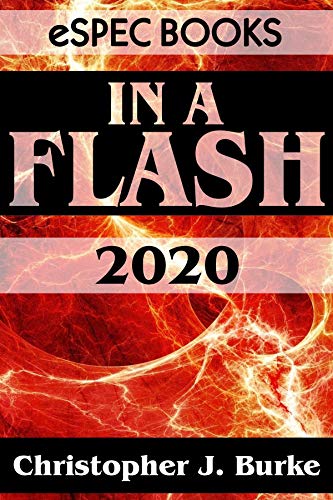
| My other books include my Burke's Lore Briefs series and In A Flash 2020. |  |
 |
|
If you enjoy my books, please consider leaving a rating or review on Amazon or on Good Reads. Thank you! |
 |
 |



No comments:
Post a Comment