Thursday, August 19, 2021

Geometry Problems of the Day (Geometry Regents, June 2014)


Now that I'm caught up with the current New York State Regents exams, I'm revisiting some older ones.

More Regents problems.

Geometry Regents, June 2014

Part I: Each correct answer will receive 2 credits.


26. Triangle PQT with RS || QT is shown below.


If PR = 12, RQ = 8, and PS = 21, what is the length of PT?

1) 14
2) 17
3) 35
4) 38

Answer: 3) 35


Since RS || QT, then triangles PRS and PQT are similar. That means that their corresponding angles are congruent and their corresponding sides are proportional. (And the ratio of two corresponding side would be the scale factor.)

Remember that PR corresponds to PQ, but you weren't given PQ, you were given RQ. PQ = PR + RQ = 12 + 8 = 20.

Also note that they asked for PT, not ST.

Set up a proportion and cross-multiply:

12 / 20 = 21 / PT
12 PT = 420
PT = 35

Note that Choice (1) 14 is the length of ST.


27. In the diagram of WX computations. YZ below, WY ≅ XZ.


Which reasons can be used to prove Wx ≅ YZ?

1) reflexive property and addition postulate
2) reflexive property and subtraction postulate
3) transitive property and addition postulate
4) transitive property and subtraction postulate

Answer: 2) reflexive property and subtraction postulate


The reflexive property says that XY ≅ XY. If you remove XY from each of the two congruent lines, what remains will be congruent because of the subtraction postulate.

Consider this: You and a friend have the same amount of money. It doesn't matter how much that is. You both buy the same ticket to the same movie at the same theater. You each buy the same size popcorn and the same drink. Afterward, you will both still have the same amount of money although it will be considerably less than it was before.


28. The coordinates of the endpoints of the diameter of a circle are (2,0) and (2,-8). What is the equation of the circle?

1) (x - 2)2 + (y + 4)2 = 16
2) (x + 2)2 + (y - 4)2 = 16
3) (x - 2)2 + (y + 4)2 = 8
4) (x + 2)2 + (y - 4)2 = 8

Answer: 1) (x - 2)2 + (y + 4)2 = 16


Another equation of a circle question. There were a few in Part I of this test. Must be important!

If the two endpoints are (2, 0) and (2, -8) then the circle of the circle must be in the middle, which is (2, -4). It was nice of them to make it a simple vertical line. If you couldn't tell this, you could have made a simple sketch on the graph paper in the back of the booklet.

The general formula for the equation of a circle is (x - h)2 + (y - k)2 = r2, where (h, k) is the center of the circle.

Because -4 is already negative, -(-4) becomes + 4. Eliminate Choices (2) and (4).

The radius is 4 because 0 - (-4) = 4 and (-4) - (-8) = 4. Or count the boxes on your sketch. The diameter is 8 and half of 8 is 4. Square 4 and you get 16. That's Choice (1).


End of Part I.

More to come. Comments and questions welcome.

More Regents problems.

Wednesday, August 18, 2021

Lips and Lies

(Click on the comic if you can't see the full image.)
(C)Copyright 2021, C. Burke. "AnthroNumerics" is a trademark of Christopher J. Burke and (x, why?).

Three chances out of four that's true.

But truth tables mean little to nothing to some people.

For the sake of argument: some ventriloquists lie a lot without moving their lips.


I also write Fiction!


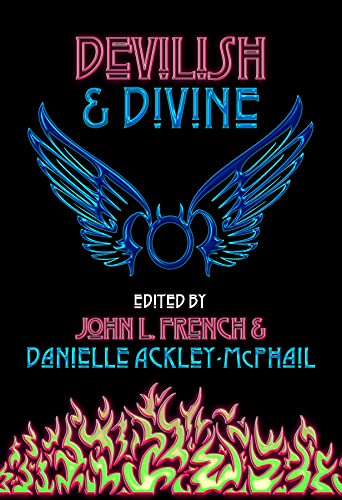
You can now preorder Devilish And Divine, edited by John L. French and Danielle Ackley-McPhail, which contains (among many, many others) three stories by me, Christopher J. Burke about those above us and from down below.
Preorder the softcover or ebook at Amazon.


Come back often for more funny math and geeky comics.


Geometry Problems of the Day (Geometry Regents, June 2014)


Now that I'm caught up with the current New York State Regents exams, I'm revisiting some older ones.

More Regents problems.

Geometry Regents, June 2014

Part I: Each correct answer will receive 2 credits.


21. The image of rhombus VWXY preserves which properties under the transformation T2,-3?

1) parallelism, only
2) orientation, only
3) both parallelism and orientation
4) neither parallelism nor orientation

Answer: 3) both parallelism and orientation


A translation is a Rigid Transformation, meaning that the size, shape and orientation of the object is preserved in its image. The sides will still be parallel and the orientation will not change.


22. The equation of a circle is (x - 3)2 + y2 = 8. The coordinates of its center and the length of its radius are

1) (-3, 0) and 4
2) (3, 0) and 4
3) (-3, 0) and 2 SQRT(2)
4) (3, 0) and 2 SQRT(2)

Answer: 4) (3, 0) and 2 SQRT(2)


The general form is (x - h)2 + (y - k)2 = r2, where (h, k) is the center and r is the radius. Since there is no k, it is 0. The square root of 8 is NOT 4, so eliminate Choices (1) and (2).

There is a minus sign in the form, so h is the number after the sign, which is 3.


23. Which statement has the same truth value as the statement “If a quadrilateral is a square, then it is a rectangle”?

1) If a quadrilateral is a rectangle, then it is a square.
2) If a quadrilateral is a rectangle, then it is not a square.
3) If a quadrilateral is not a square, then it is not a rectangle.
4) If a quadrilateral is not a rectangle, then it is not a square.

Answer: 4) If a quadrilateral is not a rectangle, then it is not a square.


The Contrapositive has the same truth as the original conditional statement.

To get the contrapositive, you negate both parts of the conditional and then reverse the order. In other words, you take the inverse of the converse (or vice versa).

Choice (1) is the converse. Eliminate it.

Choice (2) is neither the converse or the contrapositive. It is an unrelated statement. Eliminate it.

Choice (3) is the inverse. Eliminate it.

Choice (4) is the contrapositive, which is the correct answer.


24.The three medians of a triangle intersect at a point. Which measurements could represent the segments of one of the medians?

1) 2 and 3
2) 3 and 4.5
3) 3 and 6
4) 3 and 9

Answer: 3) 3 and 6


Three medians of a triangle intersect at the centroid. The centroid will divide each median into two segments, one of which will be twice the length of the other. (The segment from the vertex to the centroid will always be the longer side, 2/3 of the length of the median.)

Only choice (3) has one segment that is twice the size of the other.


20. In the diagram of PQR shown below, PR is extended to S, m∠P = 110, m∠Q = 4x, and m∠QRS = x2 + 5x.


What is m∠Q?

1) 44
2) 40
3) 11
4) 10

Answer: 2) 40


The exterior angle is the sum of the two remote angles. Write an equation that states this. Then solve the quadratic by setting it equal to 0 and factoring. Throw out the negative result.

x2 + 5x = 4x + 110
x2 + 5x - 4x - 110 = 0
x2 + x - 110 = 0
(x + 11)(x - 10) = 0
x + 11 = 0 or x - 10 = 0
x = -11 or x = 10

The value of angle Q is 4x (not just x). Since 4(-11) or -44 degrees is not a valid amount for an angle in a triangle, discard that result.

Therefore, m∠Q = 4(10) = 40.

Note that the other choices are 10, 11, and 4(11), so it's easy to pick the incorrect choice.


More to come. Comments and questions welcome.

More Regents problems.

Tuesday, August 17, 2021

Lettuce Count

(Click on the comic if you can't see the full image.)
(C)Copyright 2021, C. Burke. "AnthroNumerics" is a trademark of Christopher J. Burke and (x, why?).

Lettuce, get a head. Or surely, we'll fall behind.

That might've been Ben Franklin.

I was tempted to put Grandpa and Uncle Brother in this comic, since it looks like Grandpa's community garden. However, I just used those two and the punchline would've been similar to the last one.


I also write Fiction!


You can now preorder Devilish And Divine, edited by John L. French and Danielle Ackley-McPhail, which contains (among many, many others) three stories by me, Christopher J. Burke about those above us and from down below.
Preorder the softcover or ebook at Amazon.


Come back often for more funny math and geeky comics.


Geometry Problems of the Day (Geometry Regents, June 2014)


Now that I'm caught up with the current New York State Regents exams, I'm revisiting some older ones.

More Regents problems.

Geometry Regents, June 2014

Part I: Each correct answer will receive 2 credits.


16. Which numbers could represent the lengths of the sides of a triangle?

1) 5, 9, 14
2) 7, 7, 15
3) 1, 2, 4
4) 3, 6, 8

Answer: 4) 3, 6, 8


For three line segments to form a triangle, the sum of the two smaller sides must be greater than the length of the third side. If they are equal, the segments for a line. If they are less, then the triangle cannot be closed.

5 + 9 = 14, 14 is not greater than 14.

7 + 7 < 15

1 + 2 < 4

3 + 6 > 8


17. The equation of a line is 3y + 2x = 12. What is the slope of the line perpendicular to the given line?

1) 2/3
2) 3/2
3) -2/3
4) -3/2

Answer: 2) 3/2


The slope of a line perpendicular to a given line is the Inverse Reciprocal of the slope of the given line. The two slopes will have a product of -1. The exception is for that horizontal lines (which have Zero slope) are perpendicular to vertical lines (which have No Slope).

If you convert 3y + 2x = 12 into slope-intercept form you will have
3y = -2x + 12
y = -2/3 x + 4

The inverse reciprocal to -2/3 is +3/2.


18. In the diagram below, point K is in plane P


How many lines can be drawn through K, perpendicular to plane P ?

1) 1
2) 2
3) 0
4) an infinite number

Answer: 1) 1


Only one line can be drawn perpendicular to a plane that goes through a specific point. An infinite number of perpendicular lines can be drawn through the plane, but only one through any one given point.


19. n the diagram below, AB and CD are bases of trapezoid ABCD.


If m∠B =123 and m∠D =75, what is m∠C?

1) 57
2) 75
3) 105
4) 123

Answer: 1) 57


Angles B and C are supplementary because of the parallel lines. Angles C and D have no relationship at all because it is not an isosceles trapezoid. For one thing, it doesn't say that it is, and for another the given numbers don't add up to 180.

Since B and C are supplementary, 180 - 123 = 57 = m∠C.

Choice (2), 75, is if you thought that it was isosceles, or you were just making a lazy guess.

Choice (3), 105, is if you thought ∠C and ∠D had to be supplementary for some reason.

Choice (4), 123, is not only lazy, but really silly. Even in an isosceles trapezoid, these would not be the two congruent angles.

If you look at the incorrect choices, 1) 8 assumes that you forgot to double the answer in the last step, 3) assumes you used 12 as the hypotenuse and 10 as a leg, and 4) assumes you used 10 and 6 as legs and tried to find the hypotenuse.


20. What is the equation of a line passing through the point (4,-1) and parallel to the line whose equation is 2y - x = 8?

1) y = 1/2 x - 3
2) y = 1/2 x - 1
3) y = -2x + 7
4) y = -2x + 2

Answer: 1) y = 1/2 x - 3


Parallel lines have the same slope. Once you know the slope of the given line, you can eliminate two of the choices.

2y - x = 8
2y = x - 8
y = 1/2 x - 4

Eliminate choices (3) and (4).

Plug in (4, -1) into the two remaining choices and see which is true:

-1 = 1/2 (4) - 3 = 2 - 3 = -1, TRUE!

-1 = 1/2 (4) - 1 = 2 - 1 = 1, False.


r2 = 36
r = 6

D = 2 * 6 = 12

Don't forget that you were asked for the diameter, not the radius.


More to come. Comments and questions welcome.

More Regents problems.

Monday, August 16, 2021

New Quadrant

(Click on the comic if you can't see the full image.)
(C)Copyright 2021, C. Burke. "AnthroNumerics" is a trademark of Christopher J. Burke and (x, why?).

If he thought about it, there's a point he could reflect upon.

Unless the point got lost in translation.


I also write Fiction!


You can now preorder Devilish And Divine, edited by John L. French and Danielle Ackley-McPhail, which contains (among many, many others) three stories by me, Christopher J. Burke about those above us and from down below.
Preorder the softcover or ebook at Amazon.


Come back often for more funny math and geeky comics.


Sunday, August 15, 2021

Geometry Problems of the Day (Geometry Regents, June 2014)


Now that I'm caught up with the current New York State Regents exams, I'm revisiting some older ones.

More Regents problems.

Geometry Regents, June 2014

Part I: Each correct answer will receive 2 credits.


11. What is the length of RS with R(-2,3) and S(4,5)?

1) 2 SQRT(2)
2) 40
3) 2 SQRT(10)
4) 2 SQRT(17)

Answer: 3) 2 SQRT(10)


You can use the Distance Formula, or sketch the points on graph paper and use Pythagorean Theorem, which by now you should realize are essentially the same thing in different forms.

The difference in the x-values is 4 - (-2) = 6. The difference in the y-values is 5 - 3 = 2.

The square root of (62 + 22) = SQRT(36 + 4) = SQRT (40).

At this point, you can eliminate Choice (2) 40. Since radical 40 is not a choice, you either have to simplify the radical, or you can convert it to a decimal and convert the other choices to decimals, too.

SQRT(40) = SQRT (2 * 2 * 2 * 5) = 2 * SQRT (2 * 5) = 2 SQRT(10).

2 SQRT(2) = 2.8

2 SQRT(10) = 6.3

2 SQRT(17) = 8.2

The square root of 40 has be between 6 and 7.


12. What are the truth values of the statement “Two is prime” and its negation?

1) The statement is false and its negation is true.
2) The statement is false and its negation is false.
3) The statement is true and its negation is true
4) The statement is true and its negation is false.

Answer: 4) The statement is true and its negation is false.


A statement and its negation cannot both be true or both be false. If one is true, the other must be false, and vice versa.

Two is a prime number. The statement is True. The negation is "Two is not a prime number", which is false.


13. A regular polygon has an exterior angle that measures 45°. How many sides does the polygon have?

1) 10
2) 8
3) 6
4) 4

Answer: 2) 8


The sum of the exterior angles of a polygon is 360°. If it is a regular polygon, then all of the angles are the same size.

Divide 360/45 = 8. There are 8 exterior angles, so the polygon has 8 sides.

The longer way is the find the regular polygon with interior angles = 135°. You might have memorized the fact that that would be an octagon, or you could work it out with the formula.

The formula is (n - 2) (180) / n = 135. You can substitute the choices or solve.

(n - 2) (180) / n = 135
180n - 360 = 135n
45n - 360 = 0
45n = 360
n = 8

The point (h, k) is (-1, 3), so the correct choice is (1).

Choice (2) does not have the signs reversed.


14. In rhombus ABCD, with diagonals AC and DB, AD = 10.


If the length of diagonal AC is 12, what is the length of DB?

1) 8
2) 16
3) SQRT (44)
4) SQRT (136)

Answer: 2) 16


Call the intersection of AC and BD point E. The two diagonals form right angles, and thus create four right triangles. The two diagonals also bisect each other. So if AC = 12, then AE = 6.

You now have a right triangle with legs 6 and DE and hypotenuse 10. Using Pythagorean Theorem, or just by memorizing a very simple Pythagorean Triple, DE = 8. Therefore, DB = 16 because E is the midpoint of DB.

If you look at the incorrect choices, 1) 8 assumes that you forgot to double the answer in the last step, 3) assumes you used 12 as the hypotenuse and 10 as a leg, and 4) assumes you used 10 and 6 as legs and tried to find the hypotenuse.


15. If the surface area of a sphere is 144Ï€ square centimeters, what is the length of the diameter of the sphere, in centimeters?

1) 36
2) 18
3) 12
4) 6

Answer: 3) 12


The Surface Area of a sphere is S = 4 π r2.

S = 4 π r2 = 144 π
r2 = 144 π / (4 π)
r2 = 36
r = 6

D = 2 * 6 = 12

Don't forget that you were asked for the diameter, not the radius.


More to come. Comments and questions welcome.

More Regents problems.

Saturday, August 14, 2021

Geometry Problems of the Day (Geometry Regents, June 2014)


Now that I'm caught up with the current New York State Regents exams, I'm revisiting some older ones.

More Regents problems.

Geometry Regents, June 2014

Part I: Each correct answer will receive 2 credits.


6. When the system of equations y + 2x = x2 and y = x is graphed on a set of axes, what is the total number of points of intersection?

1) 1
2) 2
3) 3
4) 0

Answer: 2) 2


A straight line and a parabola can have 0, 1, or 2 intersection points. They can NEVER have 3. Eliminate Choice (3).

Both equations have a y-intercept of 0, so there is at least one point of intesection at (0, 0). The question becomes, is there a second? You probably already "know" there is, but let's make certain.

If you graph y = x and y = x2 - 2x, you will see that they have 2 intersection points.

If you wanted to solve this algebraically, you can use Substitution:

x = x2 - 2x
0 = x2 - 3x
0 = x (x - 3)

The equations will intersect at when x = 0 and x = 3. Since y = x, the points of intersection will be (0,0) and (3, 3).


7. The vertex angle of an isosceles triangle measures 15 degrees more than one of its base angles. How many degrees are there in a base angle of the triangle?
1) 50
2) 55
3) 65
4) 70

Answer: 2) 55


You can right an equation or you can check each of the choices. Remember that there are TWO base angles and ONE vertex angle.

50 + 50 + 65 = 165, not a triangle. Eliminate Choice (1).

55 + 55 + 70 = 180. This is a triangle. Choice (2) is the answer.

65 + 65 + 80 = 210, not a triangle. Eliminate Choice (3).

70 + 70 + 85 = 225, not a triangle. Eliminate Choice (4).

Or you can set up an equation:

x + x + x + 15 = 180
3x + 15 = 180
3x = 155
x = 55

There are 55 degrees in the Base Angle, which means that there are 70 degrees in the vertex. Make sure you select the correct answer.


8. Circle O is graphed on the set of axes below. Which equation represents circle O?

1) (x + 1)2 + (y - 3)2 = 9
2) (x - 1)2 + (y + 3)2 = 9
3) (x + 1)2 + (y - 3)2 = 6
4) (x - 1)2 + (y + 3)2 = 6

Answer: 1) (x + 1)2 + (y - 3)2 = 9


The formula for a circle is (x - h)2 + (y - k)2 = r2, where (h, k) is the center of the circle.

Note that the radius is 3 and that 32 = 9. Eliminate Choice (3) and (4).

The point (h, k) is (-1, 3), so the correct choice is (1).

Choice (2) does not have the signs reversed.


9. In the diagram of the circle shown below, chords AC and BD intersect at Q, and chords AE and BD are parallel.


Which statement must always be true.

1) Arc AB ≅ Arc CD
2) Arc DE ≅ Arc CD
3) Arc AB ≅ Arc DE
4) Arc BD ≅ Arc AE

Answer: 3) Arc AB ≅ Arc DE


If two chords in a circle are parallel, then the arcs that they intercept will be congruent. This can be shown by drawing, for example, chord AD, which would be a transversal across BD and AE. The alternate interior angles would be congruent and therefore the arcs that they intercept would be congruent.

There is no guarantee that arcs AB and CD will be the same size. It would only happen if QB ≅ QC and QA ≅ QD.


10. In the diagram below, triangle AEC ≅ triangle BED.
Which statement is not always true?

1) AC ≅ BD
2) CE ≅ DE
3) ∠ EAC ≅ ∠ EBD
4) ∠ ACE ≅ ∠ DBE

Answer: 4) ∠ ACE ≅ ∠ DBE


This question relies on the fact that you understand that triangle AEC ≅ triangle BED means that ∠A ≅ ∠B, ∠E ≅ ∠E, and ∠C ≅ ∠D. Otherwise, you are going on what LOOKS to be correct, which you should never rely on.

AC and BD are corresponding sides of congruent triangles, so they are always congruent.

CE and DE are corresponding sides of congruent triangles, so they are always congruent.

∠EAC and ∠EBD are corresponding angles of congruent triangles, so they are always congruent.

∠ACE and ∠DBE are NOT corresponding angles of congruent triangles. They do NOT have to be congruent. This is the answer.


More to come. Comments and questions welcome.

More Regents problems.
Friday, August 13, 2021

Fibonacci Day 8-13-21

(Click on the comic if you can't see the full image.)
(C)Copyright 2021, C. Burke. "AnthroNumerics" is a trademark of Christopher J. Burke and (x, why?).

To say that I've had this planned out all along would be a Fib.

My only thought was to use "comic timing" to let this carry on for a couple of years. The pandemic muddled a lot for the past 16 months, and I didn't see the point and continuing on until, say, next June, before the baby arrived. I guess all the "planning for parenthood" stuff can be left to Fan Fiction. I could make a little archive of my own side fiction.

As for the Math portion of today's comic: the date 8-13-21 consists of three Fibonacci numbers in a row. Since the number 13 isn't on our calendar, unless a new month is invented by 2034, there will not be any more Fibonacci dates this century. The next one will occur on January 1, 2102, and thus can be celebrated all around the world.

For sharp-eyed readers, there is nothing wrong with your browser. Real life has called upon me several times in the past few days, so this couldn't be completed by Friday night. An actual Friday the 13th scenario for yours truly. I don't make a habit of back-dating comics.


I also write Fiction!


You can now preorder Devilish And Divine, edited by John L. French and Danielle Ackley-McPhail, which contains (among many, many others) three stories by me, Christopher J. Burke about those above us and from down below.
Preorder the softcover or ebook at Amazon.


Come back often for more funny math and geeky comics.


Geometry Problems of the Day (Geometry Regents, June 2014)


Now that I'm caught up with the current New York State Regents exams, I'm revisiting some older ones.

More Regents problems.

Geometry Regents, June 2014

Part I: Each correct answer will receive 2 credits.


1. Plane P is parallel to plane Q. If plane P is perpendicular to line â„“, then plane Q

1) contains line â„“
2) is parallel to line â„“
3) is perpendicular to line â„“
4) intersects, but is not perpendicular to line â„“

Answer: 3) is perpendicular to line â„“


If two planes are parallel to each other and a line is perpendicular to one of them, it must be parallel to the other.

Think of a line on the wall that runs from the floor to the ceiling, or the leg of a table that is perpendicular to the floor. Or even a pencil between two sheets of paper.


2. In the diagram below, quadrilateral ABCD has vertices A(-5,1), B(6,-1), C(3,5), and D(-2,7).


What are the coordinates of the midpoint of diagonal AC?
1) (-1, 3)
2) (1, 3)
3) (1, 4)
4) (2, 3)

Answer: 1) (-1, 3)


If you draw the line connecting them, you will see that you will move 8 boxes along the x axis and 4 boxes along the y axis. That means the midpoint is the point that is 4 units more than the x-coordinate of point A (and 4 less than that of C) and it will be 2 units more than the y-coordinate of point A (and 2 less than that of C).

Midpoint = (-5 + 4, 1 + 2) = (-1, 3).


3. In the diagram below, transversal intersects and at V and W, respectively.


If m∠TVQ = 5x - 22 and m∠VWS = 3x + 10, for which value of x is PQ || RS?
1) 6
2) 16
3) 24
4) 28

Answer: 2) 16


Angles TVQ and VWS are corresponding angles. If PQ || RS then the corresponding angles would be congruent. Conversely, if the corresponding angles are congruent, then the lines are parallel.

Set up an equation that says that 5x - 22 = 3x + 10

5x - 22 = 3x + 10
2x - 22 = 10
2x = 32
x = 16

If you had written 5x - 22 + 3x + 10 = 180, you would have gotten x = 24, which is Choice (3), and you wouldn't have known you made a mistake.

If you had written 5x - 22 + 3x + 10 = 90, you would have gotten x = 51/4, which isn't one of the choices, so you would've been lucky.

I'm surprised 4 isn't an option because 8x = 32 (one computational error) would give x = 4 as a result.


4. The measures of the angles of a triangle are in the ratio 2:3:4. In degrees, the measure of the largest angle of the triangle is
1) 20
2) 40
3) 80
4) 100

Answer: 3) 80


Common sense should tell you that the largest anlge of a triangle cannot be 20 or 40. Eliminate these two Choices. The least amount that the largest angle can be is 60, which would be an equilateral triangle. (And you could argue that there is no "largest" angle in an equilateral triangle, but that is outside the scope of this question.)

Set up an equation using multiples of x for each value in the ratio.

2x + 3x + 4x = 180
9x = 180
x = 20
The largest angle is 4x, which is 4(20) = 80.


5.The diameter of the base of a right circular cylinder is 6 cm and its height is 15 cm. In square centimeters, the lateral area of the cylinder is

1) 180Ï€
2) 135Ï€
3) 90Ï€
4) 45Ï€

Answer: 3) 90Ï€


The lateral area is the surface area of the rectangle around the cylinder without the two circles on the top and bottom. Think of it as the label on a soup can or a can of vegetables.

A = L * W, but the length is the circumference of the circle and the width is the height of the cylinder, so:

A = π D h = π (6) (15) = 90π


More to come. Comments and questions welcome.

More Regents problems.

Thursday, August 12, 2021

Algebra Problems of the Day (Integrated Algebra Regents, June 2012)


Now that I'm caught up with the current New York State Regents exams, I'm revisiting some older ones.

More Regents problems.

June 2012

Part IV: Each correct answer will receive 4 credits. Partial credit is possible.


37. Mike buys his ice cream packed in a rectangular prism-shaped carton, while Carol buys hers in a cylindrical-shaped carton. The dimensions of the prism are 5 inches by 3.5 inches by 7 inches. The cylinder has a diameter of 5 inches and a height of 7 inches.

Which container holds more ice cream? Justify your answer.

Determine, to the nearest tenth of a cubic inch, how much more ice cream the larger container holds.

Answer:


You need to find the Volume of both of these containers and state which one has more.

Volume of a rectangular prism is V = L W H = (5)(3.5)(7) = 122.5 cubic inches

Volume of a cylinder is V = pi R2 H = (3.141592)((1/2)(5))2(7) = 137.4

The cylinder holds more.

Note that if you made a computational error, like forgetting to take half of the diameter, you would have lost a point even though the cylinder would still be more.

137.4 - 122.5 = 14.9

If you hadn't been required to find the difference of the Volumes, you could have just compared the two:

Is the Prism > the Cylinder ?

(5)(3.5)(7) > (3.141592)((1/2)(5))2(7) ?

(5)(3.5) > (3.141592)(2.5)2 ?

(5)(3.5) > (3.141592)(6.25) ?

(3.5) > (3.141592)(1.25) ?

(3.5) > 3.92699 Not true.

The cylinder holds more.


38. Solve algebraically for x: 3(x + 1) - 5x = 12 - (6x - 7)

Answer:


Unecessarily complicated, but it's a Part IV question. Surprisingly, it's not even quadratic!

3(x + 1) - 5x = 12 - (6x - 7)
3x + 3 - 5x = 12 - 6x + 7
-2x + 3 = 19 - 6x
4x + 3 = 19
4x = 16
x = 4

You're not required to check your work, but you can. You probably should if it seemed too easy, or was too difficult.

Also, notice that they don't tell you to round your answer, so if you got an infinite decimal, you probably made a mistake.

Check:

3(4 + 1) - 5(4) = 12 - (6(4) - 7)
3(5) - 20 = 12 - (24 - 7)
15 - 20 = 12 - 17
-5 = -5
Check!


39. A large company must chose between two types of passwords to log on to a computer. The first type is a four-letter password using any of the 26 letters of the alphabet, without repetition of letters. The second type is a six-digit password using the digits 0 through 9, with repetition of digits allowed.

Determine the number of possible four-letter passwords.

Determine the number of possible six-digit passwords.

The company has 500,000 employees and needs a different password for each employee. State which type of password the company should choose. Explain your answer.

Answer:


Use the Counting Principle. Without repetition means that the number of possibilities is going to decrease with each choice. With repetition means that the number will not change.

Four-letter PWs: 26 * 25 * 24 * 23 = 358,800

Six-digit PWs: 10 * 10 * 10 * 10 * 10 * 10 = 106 = 1,000,000

The company should use the six-digit PWs because there are not 500,000 four-letter PWs available to use.


End of Part IV.

End of Exam.

More to come. Comments and questions welcome.

More Regents problems.

Wednesday, August 11, 2021

Algebra Problems of the Day (Integrated Algebra Regents, June 2012)


Now that I'm caught up with the current New York State Regents exams, I'm revisiting some older ones.

More Regents problems.

June 2012

Part III: Each correct answer will receive 3 credits. Partial credit is possible.


34. On the set of axes below, graph the equation y = x2 + 2x - 8.

Using the graph, determine and state the roots of the equation x2 + 2x - 8 = 0.

Answer:


If you don't make the graph, the best you can get is 1 credit out of 3 for the roots.

You graphing calculator can give you a Table of Values, or you can compute them yourself. You know that the Axis of Symmetry is x = -b/(2a) = -2/2 = -1, and all the points away from that one will be mirror images.

Points on the graph looks like this:
y = (-1)2 + 2(-1) - 8 = -9, (-1, -9)
y = (0)2 + 2(0) - 8 = -8, (0, -8) and (-2, -8)
y = (1)2 + 2(1) - 8 = -5, (1, -5) and (-3, -5)
y = (2)2 + 2(2) - 8 = 0, (2, 0) and (-4, 0)
y = (3)2 + 2(3) - 8 = 7, (3, 7) and (-5, 7).

You may have noticed that the points go up by 1, then 3, then 5, then 7, ...

The graph looks like this:

The roots of the equation are -4 and 2.

Yes, you must state it, you can't just leave it on the graph. Do NOT say that the answer is (-4, 0) and (2, 0). Those are points on the graph and they are looking for solutions to a one-variable equation. Seriously.


35. A 28-foot ladder is leaning against a house. The bottom of the ladder is 6 feet from the base of the house. Find the measure of the angle formed by the ladder and the ground, to the nearest degree.

Answer:


The ladder leaning against the house forms a right triangle when you include the ground. The length of the ladder is the hypotenuse, and the distance from the house, 6 feet, is the side adjacent to the angle we are interesting in. That means that we have to use cosine.

Cos x = adj / hyp = 6/28

x = cos-1 (6/28) = 77.6 = 78 degrees

Don't forget to round to the nearest degree. And don't forget to put the calculator in Degree mode if it's in Radians mode.


36. Express ( 3 SQRT(75) + SQRT(27) ) / 3 in simplest form.


Answer:


If you are copying my answers for your homework, please make sure you use the radical symbols and not the letters SQRT, which are a holdover from computer programming. It'll be less frustrating for your teachers. Thank you.

Simplify the radicals by finding the largest perfect sqaures that are factors. Or just factor the and eliminate the doubles by taking the square root.

( 3 SQRT(75) + SQRT(27) ) / 3

= ( 3 SQRT(3 * 5 * 5) + SQRT(3 * 3 * 3) ) / 3

= ( 3 * 5 * SQRT(3) + 3 * SQRT(3) ) / 3

= ( 15 * SQRT(3) + 3 * SQRT(3) ) / 3

= ( 18 * SQRT(3) ) / 3

= 6 * SQRT(3)


End of Part III.

More to come. Comments and questions welcome.

More Regents problems.